
Filter
2588
Text search:
national
TB
guidelines
Featured
286
869
Language
2319
127
61
59
13
13
10
7
6
5
3
2
2
2
1
1
1
1
1
1
1
1
1
1
1
1
1
1
1
Document type
1584
356
325
115
104
42
34
13
6
3
3
1
1
Countries
182
109
108
81
71
70
68
61
57
56
56
51
48
47
46
44
42
39
39
36
32
30
28
27
25
24
24
20
18
18
18
16
15
15
14
13
12
12
12
11
11
10
9
8
8
7
7
7
7
6
5
5
5
5
5
4
4
4
4
4
4
4
4
4
3
3
3
3
3
3
3
3
3
3
2
2
2
2
2
2
2
2
2
2
1
1
1
1
1
1
1
1
1
1
1
1
1
1
1
1
1
1
1
1
1
1
1
1
1
1
1
1
1
1
1
1
1
1
1
1
1
1
1
1
1
1
Authors & Publishers
265
138
62
61
57
49
44
32
26
25
23
22
21
21
20
18
17
17
16
16
15
15
15
15
14
14
13
13
12
12
12
11
11
11
11
10
10
10
10
10
10
10
9
8
8
8
8
8
8
8
7
7
7
7
7
7
7
7
7
6
6
6
6
6
6
6
6
6
6
6
6
6
6
5
5
5
5
5
5
5
5
5
5
5
5
5
5
5
5
5
5
5
5
4
4
4
4
4
4
4
4
4
4
4
4
4
4
4
4
4
4
4
4
4
4
4
4
4
4
4
4
4
4
4
4
4
4
3
3
3
3
3
3
3
3
3
3
3
3
3
3
3
3
3
3
3
3
3
3
3
3
3
3
3
3
3
3
3
3
3
3
3
3
3
3
3
3
3
3
3
3
3
3
3
3
3
3
3
3
3
3
3
3
3
3
3
3
2
2
2
2
2
2
2
2
2
2
2
2
2
2
2
2
2
2
2
2
2
2
2
2
2
2
2
2
2
2
2
2
2
2
2
2
2
2
2
2
2
2
2
2
2
2
2
2
2
2
2
2
2
2
2
2
2
2
2
2
2
2
2
2
2
2
2
2
2
2
2
2
2
2
2
2
2
2
2
2
2
2
2
2
2
2
2
2
2
2
2
2
2
2
2
2
2
2
2
2
2
2
2
2
2
2
2
2
2
2
2
2
2
2
2
2
2
2
2
2
2
2
2
2
2
2
2
2
2
2
2
2
2
2
2
2
2
2
2
2
2
2
2
2
2
2
2
2
2
2
2
2
2
2
2
2
2
2
2
2
2
2
2
2
2
2
2
2
2
2
2
1
1
1
1
1
1
1
1
1
1
1
1
1
1
1
1
1
1
1
1
1
1
1
1
1
1
1
1
1
1
1
1
1
1
1
1
1
1
1
1
1
1
1
1
1
1
1
1
1
1
1
1
1
1
1
1
1
1
1
1
1
1
1
1
1
1
1
1
1
1
1
1
1
1
1
1
1
1
1
1
1
1
1
1
1
1
1
1
1
1
1
1
1
1
1
1
1
1
1
1
1
1
1
1
1
1
1
1
1
1
1
1
1
1
1
1
1
1
1
1
1
1
1
1
1
1
1
1
1
1
1
1
1
1
1
1
1
1
1
1
1
1
1
1
1
1
1
1
1
1
1
1
1
1
1
1
1
1
1
1
1
1
1
1
1
1
1
1
1
1
1
1
1
1
1
1
1
1
1
1
1
1
1
1
1
1
1
1
1
1
1
1
1
1
1
1
1
1
1
1
1
1
1
1
1
1
1
1
1
1
1
1
1
1
1
1
1
1
1
1
1
1
1
1
1
1
1
1
1
1
1
1
1
1
1
1
1
1
1
1
1
1
1
1
1
1
1
1
1
1
1
1
1
1
1
1
1
1
1
1
1
1
1
1
1
1
1
1
1
1
1
1
1
1
1
1
1
1
1
1
1
1
1
1
1
1
1
1
1
1
1
1
1
1
1
1
1
1
1
1
1
1
1
1
1
1
1
1
1
1
1
1
1
1
1
1
1
1
1
1
1
1
1
1
1
1
1
1
1
1
1
1
1
1
1
1
1
1
1
1
1
1
1
1
1
1
1
1
1
1
1
1
1
1
1
1
1
1
1
1
1
1
1
1
1
1
1
1
1
1
1
1
1
1
1
1
1
1
1
1
1
1
1
1
1
1
1
1
1
1
1
1
1
1
1
1
1
1
1
1
1
1
1
1
1
1
1
1
1
1
1
1
1
1
1
1
1
1
1
1
1
1
1
1
1
1
1
1
1
1
1
1
1
1
1
1
1
1
1
1
1
1
1
1
1
1
1
1
1
1
1
1
1
1
1
1
1
1
1
1
1
1
1
1
1
1
1
1
1
1
1
1
1
1
1
1
1
1
1
1
1
1
1
1
1
1
1
1
1
1
1
1
1
1
1
1
1
1
1
1
1
1
1
1
1
1
1
1
1
1
1
1
1
1
1
1
1
1
1
1
1
1
1
1
1
1
1
1
1
1
1
1
1
1
1
1
1
1
1
1
1
1
1
1
1
1
1
1
1
1
1
1
1
1
1
1
1
1
1
1
1
1
1
1
1
1
1
1
1
1
1
1
1
1
1
1
1
1
1
1
1
1
1
1
1
1
1
1
1
1
1
1
1
1
1
1
1
1
1
1
1
1
1
1
1
1
1
1
1
1
1
1
1
1
1
1
1
1
1
1
1
1
1
1
1
1
1
1
1
1
1
1
1
1
1
1
1
1
1
1
1
1
1
1
1
1
1
1
1
1
1
1
1
1
1
1
1
1
1
1
1
1
1
1
1
1
1
1
1
1
1
1
1
1
1
1
1
1
1
1
1
1
1
1
1
1
1
1
1
1
1
1
1
1
1
1
1
1
1
1
1
1
1
1
1
1
1
1
1
1
1
1
1
1
1
1
1
1
1
1
1
1
1
1
1
1
1
1
1
1
1
1
1
1
1
1
1
1
1
1
1
1
1
1
1
1
1
1
1
1
1
1
1
1
1
1
1
1
1
1
1
1
1
1
1
1
1
1
1
1
1
1
1
1
1
1
1
1
1
1
1
1
1
1
1
1
1
1
1
1
1
1
1
1
1
1
1
1
1
1
1
1
1
1
1
1
1
1
1
1
1
1
1
1
1
1
1
1
1
1
1
1
1
1
1
1
1
1
1
1
1
1
1
1
1
1
1
1
1
1
1
1
1
1
1
1
1
1
1
1
1
1
1
1
1
1
1
1
1
1
1
1
1
1
1
1
1
1
1
1
1
1
1
1
1
1
1
1
1
1
1
1
1
1
1
1
1
1
1
1
1
1
1
1
1
1
1
1
1
1
1
1
1
1
1
1
1
1
1
1
1
1
1
1
1
1
1
1
1
1
1
1
1
1
1
1
1
1
1
1
1
1
1
1
1
1
1
1
1
1
1
1
1
1
1
1
1
1
1
1
1
1
1
1
1
1
1
1
1
1
1
1
1
1
1
1
1
1
1
1
1
1
1
1
1
1
1
1
1
1
1
1
1
1
1
1
1
1
1
1
1
1
1
1
1
1
1
1
1
1
1
1
1
1
1
1
1
1
1
1
1
1
1
1
1
1
1
1
1
1
1
1
1
1
1
1
1
1
1
1
1
1
1
1
1
1
1
1
1
1
1
1
1
1
1
1
1
1
1
1
1
1
1
1
1
1
1
1
1
1
1
1
1
1
1
1
1
1
1
1
1
1
1
1
1
1
1
1
1
1
1
1
1
1
1
1
1
1
1
1
1
1
1
1
1
1
1
1
1
1
1
1
1
1
1
1
1
1
1
1
1
1
1
1
1
1
1
1
1
1
1
1
1
1
1
1
1
1
1
1
1
1
1
1
1
1
1
1
1
1
1
1
1
1
1
1
1
1
1
1
1
1
1
1
1
1
1
1
1
1
1
1
1
1
1
1
1
1
1
1
1
1
1
1
1
1
1
1
1
1
1
1
1
1
1
1
1
1
1
1
1
1
1
1
1
1
1
1
1
1
1
1
1
1
1
1
1
1
1
1
1
1
1
1
1
1
1
1
1
1
1
1
1
1
1
1
1
1
1
1
1
1
1
1
1
1
1
1
1
1
1
1
1
1
1
1
1
1
1
1
1
1
1
1
1
1
1
1
1
1
1
1
1
1
1
1
1
1
1
1
1
1
1
1
1
1
1
1
1
1
1
1
1
1
1
1
1
1
1
1
1
1
1
1
1
1
1
1
1
1
1
1
1
1
1
1
1
1
1
1
1
1
1
1
1
1
1
1
1
1
1
1
1
1
1
1
1
1
1
1
1
1
1
1
1
1
1
1
1
1
1
1
1
1
1
1
1
1
1
1
1
1
1
1
1
1
1
1
1
1
1
1
1
1
1
1
1
1
1
1
1
1
1
1
1
1
1
1
1
1
1
1
1
1
1
1
1
1
1
1
1
1
1
1
1
1
1
1
1
1
1
1
1
1
1
1
1
1
1
1
1
1
1
1
1
1
1
1
1
1
1
1
1
1
1
1
1
1
1
1
1
1
1
1
1
1
1
1
1
1
1
1
1
1
1
1
1
1
1
1
1
1
1
1
1
1
1
1
1
1
1
1
1
1
1
1
1
1
1
1
1
1
1
1
1
1
1
1
1
1
1
1
1
1
1
1
1
1
1
1
1
1
1
1
1
1
1
1
1
1
1
1
1
1
1
1
1
1
1
1
1
1
1
1
1
1
1
1
1
1
1
1
1
1
1
1
1
1
1
1
1
1
1
1
1
1
1
1
1
1
1
1
1
1
1
1
1
1
1
1
1
1
1
1
1
1
1
1
1
1
1
1
1
1
1
1
1
1
1
1
1
1
1
1
1
1
1
1
1
1
1
1
1
1
1
1
1
1
1
1
1
1
1
1
1
1
1
1
1
1
1
1
1
1
1
1
1
1
1
1
Publication Years
571
1734
276
7
Category
1406
194
97
79
77
42
30
1
Toolboxes
520
178
112
81
59
53
46
46
35
33
28
27
24
22
22
20
17
15
13
13
12
7
5
3
3
Charting the Course of Education and HIV
UNESCO Publishing (United Nations Educational, Scientific and Cultural Organization)
(2014)
C2
Education on the move
Meeting Report ECDC/WHO Joint Meeting on European HIV/AIDS Surveillance 10-11 March 2016, Bratislava
ECDC European Center for disease prevention and control; World Health Organization (Europe); EACS European AIDS Clinical Society
(2019)
C2
Accessed: 20.11.2019
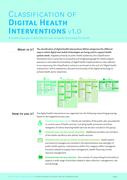
The classification of digital health interventions (DHIs) categorizes the different ways in which digital and mobile technologies are being used to support health system needs. Historically, the diverse communities working in digital health—including government stakeholders, technologists, clinic
...
ians, implementers, network operators, researchers, donors— have lacked a mutually understandable language with which to assess and articulate functionality. A shared and standardized vocabulary was recognized as necessary to identify gaps and duplication, evaluate effectiveness, and facilitate alignment across different digital health implementations. Targeted primarily at public health audiences, this Classification framework aims to promote an accessible and bridging language for health program planners to articulate functionalities of digital health implementations.
more
Senegal private health sector assessment: Selected health products and services
Brunner B., J. Barnes, A. Carmona et. al.
United States Agency for International Development
(2016)
C2
SHOPS and HIA finalized a scope of work with USAID Senegal in April 2015, and a team of five private sector experts conducted the onsite assessments between May and June 2015. The Private Sector Assessment (PSA) team worked closely with Senegalese key stakeholders throughout the process. The PSA tea
...
m interviewed more than120 individuals from approximately 78 organizations, including the government of Senegal (GOS), donors, USAID implementing partners, private sector umbrella organizations, private insurance companies, faith-based organizations (FBOs), nongovernmental organizations (NGOs), private health care facilities, and private pharmacies.
Through stakeholder interviews and review of government reports and online resources, the assessment team noted the following findings by theme.
more
Securing the future from drug-resistant infections
Interagency Coordination Group on Antimicrobial Resistance IAGG
World Health Organisation WHO
(2019)
C_WHO
Antimicrobial resistance is a global crisis that threatens a century of progress in health and achievement of the Sustainable Development Goals. There is no time to wait. Unless the world acts urgently, antimicrobial resistance will have disastrous impact within a generation.
Unstable settings present challenges for the effective provision of antiretroviral treatment (ART). In this paper, we summarize the experience and results of providing ART and implementing contingency plans during acute instability in the Central African Republic (CAR) and Yemen.
Private health sector assessment: selected health products and services in Sénégal
Brunner B., J. Barnes, A. Carmona et. al.
United States Agency for International Development
(2016)
C2
USAID Senegal and Health in Africa (HIA) initiative of the World Bank Group engaged the Strengthening Health Outcomes through the Private Sector (SHOPS) project to conduct an assessment of the private health sector in Senegal. The assessment’s primary focus is family planning, and its secondary fo
...
cus is maternal, neonatal and child health (MNCH), HIV and AIDS, malaria, and nutrition.
more

Market and technology landscape HIV rapid diagnostic tests for self-testing
O. Ajose; C. Pérez Casas; H. Ingold; et al.
Unitaid (Innovation in Global Health); World Health Organization (WHO)
(2018)
C2
4th edition
Infectious diseases are constantly in transition. New diseases develop, known dis-eases become widespread or reemerge, and occasionally a disease is eradicated.Infectious diseases such as HIV, tuberculosis, and cholera are significant causes ofillness and death in many parts of the world. Health car
...
e personnel are on thefront lines, helping to protect their clients from infectious diseases and treatingthem when infections occur. During the course of their work, health care person-nel perform clinical procedures or other activities that can expose both them andtheir clients to potentially infectious microorganisms. Many of their clients aresick and thus may be more susceptible to infections or may have infections thatcan be transmitted to others. Fortunately, all staff working at health care facilities can perform simple proce-dures to minimize risk—to themselves and clients—and reduce the spread ofinfections. These practices can be integrated at minimal cost into the routineworkday at clinics and hospitals around the world. This reference booklet isspecifically designed for use at all levels of the health care system, from thelargest hospitals to the smallest dispensaries or health posts, in settings whereresources are scarce. This booklet, which was first published in 1999, has now been updated. Whilemost practices remain the same, there have been a few important changes—forexample, in recommendations related to hand hygiene and standard precautions.Nonetheless, this booklet continues to present practical recommendations forsimple and relatively low-cost procedures that can be implemented anywhere,with basic supplies and little to no high-technology equipment.
more
Interim Guidcance March 2020
People affected by humanitarian crises, particularly those displaced and/or living in camps and camp-like settings, are often faced with specific challenges and vulnerabilities that must be taken into consideration when planning for readiness and response operations for
...
the COVID-19 outbreak. They are frequently neglected, stigmatized, and may face difficulties in accessing health services that are otherwise available to the general population. In the context of this Interim Guidance, the people in humanitarian situations affected by this guidance may include internally displaced persons (IDPs), host communities, asylum seekers, refugees and returnees, and migrants when in similar situations. While further adaptations might be needed for some population groups, including those living in slums this interim guidance is issued to assist field staff to immediately respond to urgent needs.
more

Nepal has only recently started its journey on the path to an integrated response to the challenge of antimicrobial resistance (AMR). Despite this, it is notable that the Nepal Health Sector Strategy Plan (HSSP)-2 mentions growing antibiotic resistanceas a public health challenge.
Antimicrobial resistant (AMR) organisms are increasing globally, threatening to render existing treatments ineffective against many infectious diseases. In Africa, AMR has already been documented to be a problem for HIV and the pathogens that cause malaria, tuberculosis, typhoid, cholera, meningitis
...
, gonorrhea, and dysentery. Recognizing the urgent need for action, the World Health Assembly adopted the Global Action Plan on Antimicrobial Resistance in May 2015. In accordance with the Global Action Plan and to meet needs specific to Africa, Africa CDC will establish the Anti-Microbial Resistance Surveillance Network (AMRSNET). AMRSNET is a network of public health institutions and leaders from human and animal health sectors who will collaborate to measure, prevent, and mitigate harms from AMR organisms.
more
Jin et al. Military Medical Research (2020) 7:4 https://doi.org/10.1186/s40779-020-0233-6
Position Article und Guideline
People living with HIV depend on life-saving antiretroviral therapy (ART) and access to ART must be maintained during periods of travel restrictions and lockdowns resulting from the COVID-19 pandemic. The Information note on HIV and COVID-19 addresses common concerns people living with HIV have rega
...
rding the risks of COVID-19 and how to minimize them. For HIV programme managers and health facilities providing HIV services, it identifies key points related to ensuring uninterrupted provision of ART, while protecting clients and staff from the risk of infection with the SARS-CoV-2 virus.
more

First published in 2020, this toolkit is intended for clinicians working in acute care, managing adult and paediatric patients with acute respiratory infection, including severe pneumonia, acute respiratory distress syndrome, sepsis and septic shock. The main objective is to provide key tools for us
...
e in the care of critically ill patients – from hospital entry to hospital discharge.
The 2022 updated version includes new tools and adapted algorithms, checklists, memory aids for COVID-19 and influenza, and the latest clinical evidence regarding clinical management of SARI. It is intended to help clinicians care for SARI patients: from epidemiology of severe acute respiratory infections, screening and triage, infection prevention and control, monitoring of patients, laboratory diagnosis, principles of oxygen therapy and different types of ventilation (invasive and non-invasive), as well as antimicrobial and immunomodulator therapies, to ethical and quality of care assessments.
The first edition is availbel in Ukrainian and Russian
more
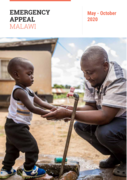
Coronavirus Disease-19 (COVID-19) was declared a global pandemic on 11 March 2020, and Malawi declared its first case on 2 April. As of 30 April, there were 36 confirmed positive cases of COVID-19 and 3 deaths. A State of Disaster was declared by President Arthur Peter Mutharika on 20 March and a 21
...
-day lockdown was implemented from 18 April to 9 May. The lockdown measures include: bans on public gatherings; closure of schools; and bans on international flights and cross-border passenger buses.
more

The WHO COVID-19 Clinical management: living guidance contains the Organization’s most up-to-date recommendations for the clinical management of people with COVID-19. Providing guidance that is comprehensive and holistic for the optimal care of COVID-19 patients throughout their entire illness is
...
important. The latest version of this living guideline is available in pdf format (via the ‘Download’ button) and via an online platform, and is updated regularly as new evidence emerges. No further updates to the previous existing recommendations were made in this latest version.
This updated (fifth) version contains 16 new recommendations for the rehabilitation of adults with post COVID-19 condition (see Chapter 24)
This updated (fourth) version contains three new recommendations regarding hospitalized patients with severe or critical COVID-19
more

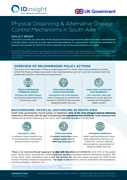
Rapid Review of Physical Distancing and Alternative Disease Control Measures in South Asia
Divya Nair, Nisha Hariharan, Raghav Adlakha, et al.
Department for International Development DFID
(2020)
CC
Policy Brief

While much progress has been achieved over the past year, the Region of the Americas has stubbornly remained the epicenter of the COVID-19 pandemic. PAHO is launching its 2021 COVID-19 Response Strategy and Donor Appeal to continue supporting Latin American and Caribbean countries and territories i
...
n their fight against COVID-19. This document outlines PAHO’s regional strategy for the year 2021 to sustain and scale-up the response to COVID‑19 pandemic in the Americas, suppress the community transmission of the virus and mitigate the longer-term health impact of the pandemic.
US$ 239 million is needed to support critical response efforts in the Americas between 1 January and 31 December 2021
more
