
Filter
6955
Text search:
WHO,
United
Nations
Featured
Recommendations
518
New Publications
1771
Language
Document type
No document type
3805
Studies & Reports
1362
Guidelines
716
Manuals
347
Strategic & Response Plan
298
Fact sheets
161
Training Material
106
Situation Updates
84
Infographics
37
Resource Platforms
25
Brochures
6
Online Courses
5
Dashboards/Maps
1
App
1
Countries / Regions
Global
359
Kenya
189
Ethiopia
155
Myanmar / Burma
145
Nigeria
139
Nepal
131
Western and Central Europe
128
Sierra Leone
126
Liberia
126
Syria
121
India
119
Uganda
110
Latin America and the Carribbean
109
Zambia
105
Africa
105
Ukraine
99
Bangladesh
98
Rwanda
97
Malawi
96
South Africa
91
Tanzania
78
Ghana
77
Namibia
73
Congo, Democratic Republic of
68
South Sudan
67
Philippines
65
Lesotho
65
Yemen
58
South–East Asia Region
54
Indonesia
53
Eastern Europe
50
Zimbabwe
49
Mozambique
49
Guinea
46
Haiti
46
Russia
46
Asia
44
Cambodia
43
Senegal
40
East and Southern Africa
36
Middle East and North Africa
36
West and Central Africa
35
Venezuela
35
Burkina Faso
32
Eastern Europe and Central Asia
31
Afghanistan
30
Cameroon
27
Pakistan
26
Germany
26
Central African Republic
25
Botswana
24
Sudan
23
Brazil
23
Colombia
22
Thailand
21
Somalia
20
Jordan
20
Vietnam
20
Benin
19
Lebanon
18
Madagascar
18
Mali
17
China
17
Eswatini/ Swaziland
17
Western Pacific Region
15
Iraq
14
Côte d’Ivoire / Ivory Coast
13
Sri Lanka
12
Laos
12
Tajikistan
12
Moldova
12
Peru
11
Turkey
10
Albania
10
Mexico
9
USA
8
North Macedonia
8
Angola
8
Paraguay
8
Palestine
8
Kyrgyzstan
8
Argentina
7
Libya
7
Iran
7
North America
7
Niger
6
Togo
6
Chad
6
Burundi
6
Chile
6
Georgia
6
Portugal
6
Guinea-Bissau
5
Malaysia
5
Papua New Guinea
5
Armenia
5
Kazakhstan
5
Jamaica
5
Spain
5
Saudi Arabia
4
Egypt
4
Hungary
4
Bolivia
4
Greece
4
Southern Africa
4
Japan
4
Belarus
4
Gambia
3
Singapore
3
Serbia
3
El Salvador
3
Guatemala
3
Bhutan
3
Italy
3
Timor Leste/ East Timor
3
Estonia
3
Uzbekistan
3
Turkmenistan
3
France
3
Mauritius
3
United Kingdom
3
Azerbaijan
3
Bosnia and Herzegovina
3
Mauritania
2
Croatia
2
Ecuador
2
Poland
2
North Korea
2
Djibouti
2
Congo-Brazzaville
2
Canada
2
Qatar
2
Bulgaria
2
Romania
2
Lithuania
2
Morocco
1
Ireland
1
Vanuatu
1
Dominican Republic
1
Honduras
1
Nicaragua
1
Other region
1
Solomon Islands
1
Mongolia
1
Slovakia
1
Uruguay
1
Denmark
1
Belgium
1
Maldives
1
Tunisia
1
Norway
1
South Korea
1
Israel
1
Authors & Publishers
Publication Years
Category
Countries
2534
Key Resources
469
Women & Child Health
462
Clinical Guidelines
365
Public Health
348
Capacity Building
112
Pharmacy & Technologies
49
Annual Report MEDBOX
1
Toolboxes
HIV
653
Mental Health
506
COVID-19
496
Disability
407
Planetary Health
337
Conflict
280
TB
251
AMR
173
Global Health Education
171
Refugee
160
Ebola & Marburg
150
Caregiver
140
Health Financing Toolbox
122
NTDs
117
Rapid Response
103
NCDs
101
Natural Hazards
97
Pharmacy
86
2.0 Rapid Response
67
Malaria
52
Specific Hazards
46
Cholera
37
Social Ethics
37
Polio
34
Zika
28
Typhoon
6
South Sudan
2
Current evidence indicates that the COVID-19 virus is transmitted through respiratory droplets or contact. Contact transmission occurs when contaminated hands touch the mucosa of the mouth, nose, or eyes; the virus can also be transferred from one surface to another by contaminated hands, which fac
...
Les pays progressent vers la réalisation de l’objectif mondial tendant à ce que, d’ici 2025, 95 pour cent des personnes qui vivent avec le VIH connaissent leur statut sérologique. Cependant, en 2020, on estimait encore à 6 millions le nombre de personnes séropositives non diagnostiquées da
...
New and updated information.
Adverse health effects of hot weather and heat-waves are largely preventable. Prevention requires a portfolio of actions at different levels:from health system preparedness, coordinated with meteorological early warning systems, to timely public
...

A study conducted by the World Health Organisation Regional Office for Africa. The COVID-19 pandemic has had a significant impact on older persons both globally and in the African region. Although overall the region’s population is younger relative to many other world regions, the
...
Known avoidable environmental risks to health cause at least 12.6 million deaths every year, and account for about one quarter of the global burden of disease (2016 data) (1). Air pollution alone causes about 7 million
deaths a year, placing it among the top global risks to health (2). Global envir
...

The Western Pacific Regional Action Plan for the Prevention and Control of Noncommunicable Diseases (2014–2020) was developed in response to a resolution adopted at the sixty-second session of the WHO Regional Committee for the Western
...

National emergency medical teams are the best option for providing immediate and appropriate surge response for emergencies directly affecting populations, while international teams may help relieve overwhelmed health systems. The efficiency and effectiveness of countries and local authorities in mo
...
International Health Regulations (2005)
recommended
Third edition. The International Health Regulations (2005) (IHR) provide an overarching legal framework that defines countries’ rights and obligations in handling public health events and emergencies that have the potential to cross borders.

Working towards better COVID-19 outcomes in the WHO European Region.From the first COVID-19 cases in Europe reported on
24 January 2020, the pandemic reached 1 million cases
within 3 months, 10 million cases within 8 months, and
100 million cases
...
Fact Sheet, May 2018.
Nipah virus (NiV) is a zoonotic virus (it is transmitted from animals to humans) and can also be transmitted through contaminated food or directly between people. In infected people, it causes a range of illnesses from asymptomatic (subclinical) infection to acute respiratory
...

Alcohol use is deeply embedded in the social landscape of many societies, and some 2300 million people drink alcoholic beverages in most parts of the world. At the same time, more than half of the global population aged 15 years and older reported having abstained from drinking alcohol during the pr
...
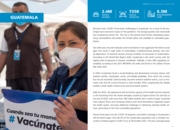
Recovery from COVID-19 has been challenging in Guatemala. As a result of the prolonged socio-economic impact of the pandemic, the average poverty rate nationwide has increased by almost 5%. This rise in the poverty level further exacerbates preexisting vulnerabilities and erodes the limited safety n
...

Integrating the prevention and control of noncommunicable diseases in HIV/AIDS, tuberculosis, and sexual and reproductive health programmes: implementation guidance

Guidelines for drinking-water quality: Fourth edition incorporating the first and second addenda
recommended
Guidance has been updated on a number of chemicals: asbestos, bentazone, chromium, iodine, manganese, microcystins, nickel, silver, tetrachloroethene and trichloroethene. Guidance has also been added for chemicals not previously assessed in the Guidelines: anatoxin-a and analogues, cylindrospermopsi
...

This annual report highlights the work of the WHO from January to June 2021 ( December 2021). The activities featured herein are by no means exhausted but implemented with technical and financial support through
...

A two-week mission was conducted by WASH and quality UHC technical experts from WHO headquarters and supported by the WHO Ethiopia Country Office (WASH and health systems teams) in July 2016, to und
...
The checklist is based on efforts by various national and international institutions, including WHO, CDC and UN OCHA. It
identifies 10 key components and tasks for both countries and the international community. This tool establishes timelines
wit
...
