
Filter
2995
Filtered Results: 2995
Text search:
foods
Featured
Recommendations
264
New Publications
886
Language
Document type
No document type
1505
Studies & Reports
626
Guidelines
320
Manuals
162
Strategic & Response Plan
143
Training Material
81
Fact sheets
73
Situation Updates
40
Brochures
13
Resource Platforms
13
Infographics
13
Dashboards/Maps
3
Videos
3
Countries / Regions
Global
169
India
160
Kenya
101
Myanmar / Burma
90
Nepal
85
Ethiopia
66
Sierra Leone
55
Nigeria
53
Bangladesh
49
Tanzania
45
South Africa
44
Uganda
44
Liberia
42
Malawi
39
Philippines
38
South Sudan
36
Ghana
35
Namibia
34
Zambia
33
Zimbabwe
31
Mozambique
31
Syria
30
Congo, Democratic Republic of
30
Rwanda
27
South–East Asia Region
27
Africa
25
Latin America and the Carribbean
25
Haiti
23
Indonesia
20
Yemen
19
Cambodia
18
Pakistan
17
Lesotho
16
Ukraine
15
Venezuela
15
Afghanistan
13
Sudan
13
Botswana
13
Guinea
12
Western and Central Europe
12
Central African Republic
12
Senegal
11
Burkina Faso
11
Asia
11
Western Pacific Region
11
West and Central Africa
10
Somalia
10
Eswatini/ Swaziland
10
East and Southern Africa
9
Laos
7
Middle East and North Africa
7
Russia
7
Colombia
6
Thailand
6
Cameroon
6
USA
6
Eastern Europe and Central Asia
6
Vietnam
6
Eastern Europe
6
Papua New Guinea
6
Palestine
6
Madagascar
6
Tajikistan
5
Turkey
5
Niger
5
North America
5
Brazil
5
Kazakhstan
4
Paraguay
4
Lebanon
4
Moldova
4
Timor Leste/ East Timor
3
Mexico
3
Iran
3
Kyrgyzstan
3
Peru
3
Turkmenistan
3
Sri Lanka
3
Chad
3
Ecuador
3
North Macedonia
2
Togo
2
China
2
Chile
2
Burundi
2
Jordan
2
United Kingdom
2
Bosnia and Herzegovina
2
Mali
2
Guatemala
2
North Korea
1
El Salvador
1
Australia
1
Benin
1
Gambia
1
Canada
1
Fiji
1
Singapore
1
Uzbekistan
1
Malaysia
1
Vanuatu
1
Morocco
1
Mauritania
1
Guinea-Bissau
1
Croatia
1
Germany
1
Gabon
1
Jamaica
1
Denmark
1
Maldives
1
Mauritius
1
Tunisia
1
Portugal
1
Spain
1
Azerbaijan
1
Israel
1
Latvia
1
Southern Africa
1
Côte d’Ivoire / Ivory Coast
1
Argentina
1
Djibouti
1
Honduras
1
Angola
1
Bhutan
1
Iraq
1
Solomon Islands
1
Bahamas
1
Authors & Publishers
Publication Years
Category
Countries
1246
Key Resources
303
Women & Child Health
214
Public Health
184
Clinical Guidelines
179
Capacity Building
76
Pharmacy & Technologies
6
Toolboxes
Planetary Health
291
COVID-19
178
Natural Hazards
142
Mental Health
116
NCDs
115
Conflict
108
AMR
98
Global Health Education
89
HIV
79
Caregiver
75
Refugee
62
Disability
58
Cholera
53
Rapid Response
50
Ebola & Marburg
47
Pharmacy
37
2.0 Rapid Response
35
TB
34
NTDs
28
Health Financing Toolbox
25
Specific Hazards
20
Malaria
18
Zika
10
Social Ethics
9
Typhoon
3
South Sudan
2
Polio
2

The 2024 edition reviews more than 50 health-related indicators from the Sustainable Development Goals and WHO’s Thirteenth General Programme of Work. It also highlights the findings from the Global health estimates 2021, notably the impact of the COVID-19 pandemic on life expectancy and healthy l...

Breastfeeding is a cornerstone of healthy infant nutrition, development and survival. It is critical for countries* to improve breastfeeding rates in order to achieve global targets for newborn and child health and survival, as well as economic growth and environmental sustainability

Noncommunicable diseases (NCDs) (e.g., cardiovascular diseases, cancers, diabetes, and chronic respiratory diseases) and mental health conditions (e.g., Alzheimer’s disease and related dementias, depression, anxiety, autism spectrum disorders) are the world’s leading cause of preventable illness...
Las enfermedades no transmisibles (ENT) (por ejemplo, las enfermedades cardiovasculares, el cáncer, la diabetes y las enfermedades respiratorias crónicas) y los problemas de salud mental (por ejemplo, la enfermedad de Alzheimer y las demencias relacionadas, la depresión, la ansiedad y los trastor...

Non-Communicable Diseases (NCDs) have emerged as conditions of great public health concern in Kenya accounting for 39% of deaths annually. The Ministry of Health through the Department of Non-Communicable Diseases has adopted the vision of achieving a nation free from preventable burden of NCDs. Fur...

Drawing on the World Health Organization’s package of NCD best buys, the report demonstrates how these evidence-based measures can help countries reduce premature deaths, strengthen health systems, and advance progress towards the Sustainable Development Goals. It provides policymakers, donors, ad...

The health impacts of climate change are no longer a distant threat. They are being felt here and now and becoming more extreme.
To address these threats, the WHO Asia-Pacific Centre for Environment and Health in the Western Pacific Region (ACE) was established in 2019 through a partnership with ...

On Global Handwashing Day, WHO and UNICEF have released the first-ever global Guidelines on Hand Hygiene in Community Settings to support governments and practitioners in promoting effective hand hygiene outside health care – across households, public spaces and institutions. Framing hand hygiene ...

The Best Buys for Disease Elimination is a practical, evidence-based guide to the most effective actions for countries to implement in order to eliminate communicable diseases. The guide highlights the efficient use of resources and prioritizing populations in vulnerable situations.
“The Region...

The primary audience for this guideline includes policy-makers or service providers who are responsible for developing national and local health-care protocols and policies related to care during pregnancy, childbirth and the postnatal period, and those directly providing care to women during pregna...
Essential medicines are those that satisfy the priority health care needs of a population. They are selected with due regard to disease prevalence and public health relevance, evidence of efficacy and safety and comparative cost-effectiveness. They are intended to be available in functioning health ...
With this quick reference guide, providers can easily recognize diseases and side effects related to climate change, implement appropriate management and provide guidance to exposed populations, provide up-to-date information on the relationship between the adverse effects of certain drugs and the w...
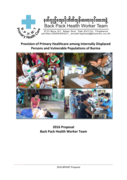
Project Programs:
A. Medical Care Program
B. Community Health Promotion and Prevention Program
C. Maternal and Child Health Program
Target Population: 228,000 people living within the Mon, Kayah, Kayan, Karen,Shan, Kachin, Pa O, Chin and Arakan areas
Projec...January to December 2016
A. Medical Care Program
B. Community Health Promotion and Prevention Program
C. Maternal and Child Health Program
Target Population: 228,000 people living within the Mon, Kayah, Kayan, Karen,Shan, Kachin, Pa O, Chin and Arakan areas
Projec...January to December 2016
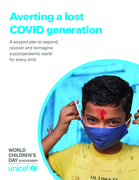
The report finds that, as of 3 November, in 87 countries with age-disaggregated data, children and adolescents under 20 years of age accounted for 1 in 9 of COVID-19 infections, or 11 per cent of the 25.7 million infections reported by these countries. More reliable, age-disaggregated data on infect...
It is too early to know the full impact of COVID-19 on Africa. To date the experience has been varied. There are causes for concern, but also reasons for hope. Early estimates were pessimistic regarding the pandemic’s impact on the continent. But the relatively low numbers of COVID-19 cases report...
Limpieza y desinfección de las superficies del entorno inmediato en el marco de la COVID-19
recommended
El propósito de este documento es proporcionar orientación sobre la limpieza y desinfección de las superficies ambientales en el contexto de COVID-19. Esta orientación está destinada a los profesionales de la salud, los profesionales de la salud pública y las autoridades sanitarias que están ...
Antimicrobial resistance (AMR) is a global threat that requires urgent collaborative action within and among countries. AMR makes standard treatments ineffective and facilitates the spread of antimicrobial resistant infections rendering communities vulnerable. The Ministry of Health (MOH) and Minist...
