
Filter
3881
Text search:
water
&
sanitation
Featured
385
1256
Language
3643
139
95
72
49
44
23
14
12
9
8
6
6
6
6
5
5
5
5
4
4
4
4
3
3
3
3
2
2
2
2
2
2
2
1
1
1
1
1
1
1
1
1
1
1
1
Document type
1999
675
443
218
216
115
72
67
33
17
9
9
6
1
Countries
169
162
149
131
103
97
95
87
86
82
75
68
64
63
56
54
54
54
52
50
50
50
48
38
37
37
33
32
29
27
26
26
25
24
24
21
20
18
18
18
18
16
16
15
14
14
13
13
13
13
12
12
11
11
11
10
10
9
9
8
8
8
8
7
7
7
7
7
7
6
6
6
5
5
5
4
4
4
4
4
4
3
3
3
3
3
3
3
3
3
3
3
3
3
2
2
2
2
2
2
2
2
2
2
2
2
2
1
1
1
1
1
1
1
1
1
1
1
1
1
1
1
1
1
1
1
1
1
1
1
Authors & Publishers
438
145
117
98
90
90
82
55
44
40
38
32
26
24
24
24
23
23
22
21
21
21
19
19
18
17
17
17
17
15
14
14
12
12
12
12
11
11
11
11
11
11
11
11
11
10
10
10
10
10
10
10
10
10
10
9
9
9
9
8
8
8
8
8
8
8
8
8
8
8
8
7
7
7
7
7
7
7
7
7
7
7
7
7
7
7
7
7
6
6
6
6
6
6
6
6
6
6
6
6
6
6
6
6
6
6
6
5
5
5
5
5
5
5
5
5
5
5
5
5
5
5
5
5
5
5
5
5
5
5
5
5
5
5
5
4
4
4
4
4
4
4
4
4
4
4
4
4
4
4
4
4
4
4
4
4
4
4
4
4
4
4
4
4
4
4
4
4
4
4
4
4
4
4
4
4
4
4
3
3
3
3
3
3
3
3
3
3
3
3
3
3
3
3
3
3
3
3
3
3
3
3
3
3
3
3
3
3
3
3
3
3
3
3
3
3
3
3
3
3
3
3
3
3
3
3
3
3
3
3
3
3
3
3
3
3
3
3
3
3
3
3
3
3
3
3
3
3
3
3
3
3
3
3
3
3
3
3
3
3
3
3
3
3
3
3
3
3
2
2
2
2
2
2
2
2
2
2
2
2
2
2
2
2
2
2
2
2
2
2
2
2
2
2
2
2
2
2
2
2
2
2
2
2
2
2
2
2
2
2
2
2
2
2
2
2
2
2
2
2
2
2
2
2
2
2
2
2
2
2
2
2
2
2
2
2
2
2
2
2
2
2
2
2
2
2
2
2
2
2
2
2
2
2
2
2
2
2
2
2
2
2
2
2
2
2
2
2
2
2
2
2
2
2
2
2
2
2
2
2
2
2
2
2
2
2
2
2
2
2
2
2
2
2
2
2
2
2
2
2
2
2
2
2
2
2
2
2
2
2
2
2
2
2
2
2
2
2
2
2
2
2
2
2
2
2
2
2
2
2
2
2
2
2
2
2
2
2
2
2
2
2
2
2
2
2
2
2
2
2
2
2
2
2
2
2
2
2
2
2
2
2
2
2
2
2
2
2
2
2
2
1
1
1
1
1
1
1
1
1
1
1
1
1
1
1
1
1
1
1
1
1
1
1
1
1
1
1
1
1
1
1
1
1
1
1
1
1
1
1
1
1
1
1
1
1
1
1
1
1
1
1
1
1
1
1
1
1
1
1
1
1
1
1
1
1
1
1
1
1
1
1
1
1
1
1
1
1
1
1
1
1
1
1
1
1
1
1
1
1
1
1
1
1
1
1
1
1
1
1
1
1
1
1
1
1
1
1
1
1
1
1
1
1
1
1
1
1
1
1
1
1
1
1
1
1
1
1
1
1
1
1
1
1
1
1
1
1
1
1
1
1
1
1
1
1
1
1
1
1
1
1
1
1
1
1
1
1
1
1
1
1
1
1
1
1
1
1
1
1
1
1
1
1
1
1
1
1
1
1
1
1
1
1
1
1
1
1
1
1
1
1
1
1
1
1
1
1
1
1
1
1
1
1
1
1
1
1
1
1
1
1
1
1
1
1
1
1
1
1
1
1
1
1
1
1
1
1
1
1
1
1
1
1
1
1
1
1
1
1
1
1
1
1
1
1
1
1
1
1
1
1
1
1
1
1
1
1
1
1
1
1
1
1
1
1
1
1
1
1
1
1
1
1
1
1
1
1
1
1
1
1
1
1
1
1
1
1
1
1
1
1
1
1
1
1
1
1
1
1
1
1
1
1
1
1
1
1
1
1
1
1
1
1
1
1
1
1
1
1
1
1
1
1
1
1
1
1
1
1
1
1
1
1
1
1
1
1
1
1
1
1
1
1
1
1
1
1
1
1
1
1
1
1
1
1
1
1
1
1
1
1
1
1
1
1
1
1
1
1
1
1
1
1
1
1
1
1
1
1
1
1
1
1
1
1
1
1
1
1
1
1
1
1
1
1
1
1
1
1
1
1
1
1
1
1
1
1
1
1
1
1
1
1
1
1
1
1
1
1
1
1
1
1
1
1
1
1
1
1
1
1
1
1
1
1
1
1
1
1
1
1
1
1
1
1
1
1
1
1
1
1
1
1
1
1
1
1
1
1
1
1
1
1
1
1
1
1
1
1
1
1
1
1
1
1
1
1
1
1
1
1
1
1
1
1
1
1
1
1
1
1
1
1
1
1
1
1
1
1
1
1
1
1
1
1
1
1
1
1
1
1
1
1
1
1
1
1
1
1
1
1
1
1
1
1
1
1
1
1
1
1
1
1
1
1
1
1
1
1
1
1
1
1
1
1
1
1
1
1
1
1
1
1
1
1
1
1
1
1
1
1
1
1
1
1
1
1
1
1
1
1
1
1
1
1
1
1
1
1
1
1
1
1
1
1
1
1
1
1
1
1
1
1
1
1
1
1
1
1
1
1
1
1
1
1
1
1
1
1
1
1
1
1
1
1
1
1
1
1
1
1
1
1
1
1
1
1
1
1
1
1
1
1
1
1
1
1
1
1
1
1
1
1
1
1
1
1
1
1
1
1
1
1
1
1
1
1
1
1
1
1
1
1
1
1
1
1
1
1
1
1
1
1
1
1
1
1
1
1
1
1
1
1
1
1
1
1
1
1
1
1
1
1
1
1
1
1
1
1
1
1
1
1
1
1
1
1
1
1
1
1
1
1
1
1
1
1
1
1
1
1
1
1
1
1
1
1
1
1
1
1
1
1
1
1
1
1
1
1
1
1
1
1
1
1
1
1
1
1
1
1
1
1
1
1
1
1
1
1
1
1
1
1
1
1
1
1
1
1
1
1
1
1
1
1
1
1
1
1
1
1
1
1
1
1
1
1
1
1
1
1
1
1
1
1
1
1
1
1
1
1
1
1
1
1
1
1
1
1
1
1
1
1
1
1
1
1
1
1
1
1
1
1
1
1
1
1
1
1
1
1
1
1
1
1
1
1
1
1
1
1
1
1
1
1
1
1
1
1
1
1
1
1
1
1
1
1
1
1
1
1
1
1
1
1
1
1
1
1
1
1
1
1
1
1
1
1
1
1
1
1
1
1
1
1
1
1
1
1
1
1
1
1
1
1
1
1
1
1
1
1
1
1
1
1
1
1
1
1
1
1
1
1
1
1
1
1
1
1
1
1
1
1
1
1
1
1
1
1
1
1
1
1
1
1
1
1
1
1
1
1
1
1
1
1
1
1
1
1
1
1
1
1
1
1
1
1
1
1
1
1
1
1
1
1
1
1
1
1
1
1
1
1
1
1
1
1
1
1
1
1
1
1
1
1
1
1
1
1
1
1
1
1
1
1
1
1
1
1
1
1
1
1
1
1
1
1
1
1
1
1
1
1
1
1
1
1
1
1
1
1
1
1
1
1
1
1
1
1
1
1
1
1
1
1
1
1
1
1
1
1
1
1
1
1
1
1
1
1
1
1
1
1
1
1
1
1
1
1
1
1
1
1
1
1
1
1
1
1
1
1
1
1
1
1
1
1
1
1
1
1
1
1
1
1
1
1
1
1
1
1
1
1
1
1
1
1
1
1
1
1
1
1
1
1
1
1
1
1
1
1
1
1
1
1
1
1
1
1
1
1
1
1
1
1
1
1
1
1
1
1
1
1
1
1
1
1
1
1
1
1
1
1
1
1
1
1
1
1
1
1
1
1
1
1
1
1
1
1
1
1
1
1
1
1
1
1
1
1
1
1
1
1
1
1
1
1
1
1
1
1
1
1
1
1
1
1
1
1
1
1
1
1
1
1
1
1
1
1
1
1
1
1
1
1
1
1
1
1
1
1
1
1
1
1
1
1
1
1
1
1
1
1
1
1
1
1
1
1
1
1
1
1
1
1
1
1
1
1
1
1
1
1
1
1
1
1
1
1
1
1
1
1
1
1
1
1
1
1
1
1
1
1
1
1
1
1
1
1
1
1
1
1
1
1
1
1
1
1
1
1
1
1
1
1
1
1
1
1
1
1
1
1
1
1
1
1
1
1
1
1
1
1
1
1
1
1
1
1
1
1
1
1
1
1
1
1
1
1
1
1
1
1
1
1
1
1
1
1
1
1
1
1
1
1
1
1
1
1
1
1
1
1
1
1
1
1
1
1
1
1
1
1
1
1
1
1
1
1
1
1
1
1
1
1
1
1
1
1
1
1
1
1
1
1
1
1
1
1
1
1
1
1
1
1
1
1
1
1
1
1
1
1
1
1
1
1
1
1
1
1
1
1
1
1
1
1
1
1
1
1
1
1
1
1
1
1
1
1
1
1
1
1
1
1
1
1
1
1
1
1
1
1
1
1
1
1
1
1
1
1
1
1
1
1
1
1
1
1
1
1
1
1
1
1
1
1
1
1
1
1
1
1
1
1
1
1
1
1
1
1
1
1
1
1
1
1
1
1
1
1
1
1
1
1
1
1
1
1
1
1
1
1
1
1
1
1
1
1
1
1
1
1
1
1
1
1
1
1
1
1
1
1
1
1
1
1
1
1
1
1
1
1
1
1
1
1
1
1
1
1
1
1
1
1
1
1
1
1
1
1
1
1
1
1
1
1
1
1
1
1
1
1
1
1
1
1
1
1
1
1
1
1
1
1
1
1
1
1
1
1
1
1
1
1
1
1
1
1
1
1
1
1
1
1
1
1
1
1
1
1
1
1
1
1
1
1
1
1
1
1
1
1
1
1
1
1
1
1
1
1
1
1
1
1
1
1
1
1
1
1
1
1
1
1
1
1
1
1
1
1
1
1
1
1
1
1
1
1
1
1
1
1
1
1
1
1
1
1
1
1
1
1
1
1
1
1
1
1
1
1
1
1
1
1
1
1
1
1
1
1
1
1
1
1
1
1
1
1
1
1
1
1
1
1
1
1
1
1
1
1
1
1
1
1
1
1
1
1
1
1
1
1
1
1
1
1
1
1
1
1
1
1
1
1
1
1
1
1
1
1
1
1
1
1
1
1
1
1
1
1
1
1
1
1
1
1
1
1
1
1
1
1
1
1
1
1
1
1
1
1
1
1
1
1
1
1
1
1
1
1
1
1
1
1
1
1
1
1
1
1
1
1
1
1
1
1
1
1
1
1
1
1
1
1
1
1
1
1
1
1
1
1
1
1
1
1
1
1
1
1
1
1
1
1
1
1
1
1
1
1
1
1
1
1
1
1
1
1
1
1
1
1
1
1
1
1
1
1
1
1
1
1
1
1
1
1
1
1
1
1
1
1
1
1
1
1
1
1
1
1
1
1
1
1
1
1
1
1
1
1
1
1
1
1
1
1
1
1
1
1
1
1
1
1
1
1
1
1
1
1
1
1
1
1
1
1
1
1
1
1
1
1
1
1
1
1
1
1
1
1
1
1
1
1
1
1
1
1
1
1
1
1
1
1
1
1
1
1
1
1
1
1
1
1
1
1
1
1
1
1
1
1
1
1
1
1
1
1
1
1
1
1
1
1
1
1
1
1
1
1
1
1
1
1
1
1
1
1
1
1
1
1
1
1
1
1
1
1
1
1
1
1
1
1
1
1
1
1
1
1
1
1
1
1
1
1
1
1
1
1
1
1
1
1
1
1
1
1
1
1
1
1
1
1
1
1
1
1
1
1
1
1
1
1
1
1
1
1
1
1
1
1
1
1
1
1
1
1
1
1
1
1
1
1
1
1
1
1
1
1
1
1
1
1
1
1
1
1
1
1
1
1
1
1
1
1
1
1
1
1
1
1
1
1
1
1
1
1
1
1
1
1
1
1
1
1
1
1
1
1
1
1
1
1
1
1
1
1
1
1
1
1
1
1
1
1
1
1
1
1
1
1
1
1
1
1
1
1
1
1
1
1
1
1
1
1
1
1
1
1
1
1
1
1
1
1
1
1
1
1
1
1
1
1
1
1
1
1
1
1
1
1
1
1
1
1
1
1
1
1
1
1
1
1
1
1
1
1
1
1
1
1
1
1
1
1
1
1
1
1
1
1
Publication Years
1228
2321
313
17
2
Category
1697
516
178
159
136
87
12
1
Toolboxes
351
234
205
182
169
156
153
139
120
111
98
93
93
85
62
35
31
26
22
20
18
17
13
12
12
4
2
The document provides comprehensive guidelines on cholera outbreak management, including prevention, diagnosis, and treatment. It emphasizes rapid response measures, the importance of rehydration therapy (oral and intravenous), and public health interventions such as
...
water sanitation, hygiene promotion, and disease surveillance to control the spread of cholera in affected communities. It is designed as a resource for healthcare providers and public health officials.
more
The document provides comprehensive guidelines on cholera outbreak management, including prevention, diagnosis, and treatment. It emphasizes rapid response measures, the importance of rehydration therapy (oral and intravenous), and public health interventions such as
...
water sanitation, hygiene promotion, and disease surveillance to control the spread of cholera in affected communities. It is designed as a resource for healthcare providers and public health officials.
more
The WHO Guide on Cholera Control in Complex Emergencies provides key steps for preparedness, prevention, and response to cholera and other diarrheal diseases in crisis situations. It highlights the importance of early warning systems, rapid response, and coordination among health agencies. The guide
...
outlines measures for case management, water sanitation, hygiene promotion, and outbreak containment, particularly in refugee camps and disaster-affected areas. It emphasizes community involvement, surveillance, and proper health infrastructure to reduce mortality and control disease spread in vulnerable populations.
more
The document outlines comprehensive guidelines for managing cholera outbreaks in South Africa, focusing on prevention, diagnosis, treatment, and public health measures. It emphasizes the importance of rehydration therapy, sanitation, clean
...
water access, and community involvement to control the spread of the disease. It also provides protocols for handling outbreaks, including case identification, laboratory confirmation, and multi-sectoral coordination to reduce morbidity and mortality rates.
more
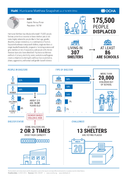
Hurricane Matthew has displaced around 175,500 people. Serious protection concerns in these shelters put at risk some highly vulnerable people due to their age, gender, disability, sexual orientation, or a combination of factors. Separated and unaccompanied children, single mothers or single-headed
...
households, pregnant or lactating women and girls, families at risk of separation, and people with chronic illnesses have also been identified. Psychosocial distress and lack of privacy, electricity, water, sanitation and hygiene create a situation in which girls and boys face exploitation, abuse, aggression, and sexual and gender based violence.
more
On 19 August 2016, the former UN Secretary-General announced a new approach to cholera in Haiti, consisting of two tracks. Track 1 focuses on reducing cholera transmission, improving access to care, and addressing water,
...
sanitation, and health system issues. Track 2 aims to provide material assistance to those most affected by cholera. The Secretary-General urged Member States to show solidarity with Haiti by increasing contributions. The UN General Assembly, in resolution 71/161, recognized the UN's moral responsibility to cholera victims and called for support to eliminate cholera and address its victims' suffering. The Secretary-General was requested to provide an update on the progress of this approach.
more
This article describes WHO's efforts to combat a cholera outbreak in South Sudan in July 2017. The organization received 500,000 doses of oral cholera vaccine (OCV) and was working with South Sudan's Ministry of Health to launch a vaccination campaign from July 28 to August 3, 2017. At the time, the
...
country had reported 17,785 cholera cases and 320 deaths since the outbreak began in June 2016. The vaccination campaign targeted four counties with high transmission rates: Tonj East, Kapoeta South, Kapoeta North, and Kapoeta East. South Sudan was implementing an integrated approach to control cholera, combining patient care, surveillance, social mobilization, water and sanitation improvements, and vaccination. The article notes that approximately 6 million people in South Sudan were facing starvation, with food insecurity and drought exacerbating the risk of cholera spread as people resorted to using contaminated water sources.
more
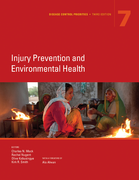
The substantial burden of death and disability that results from interpersonal violence, road traffic injuries, unintentional injuries, occupational health risks, air pollution, climate change, and inadequate water and
...
sanitation falls disproportionally on low- and middle-income countries. Injury Prevention and Environmental Health addresses the risk factors and presents updated data on the burden, as well as economic analyses of platforms and packages for delivering cost-effective and feasible interventions in these settings. The volume's contributors demonstrate that implementation of a range of prevention strategies-presented in an essential package of interventions and policies-could achieve a convergence in death and disability rates that would avert more than 7.5 million deaths a year
more
(August 28 – October 10, 2017)
A nutrition and mortality assessment using SMART methodology was applied and the survey covered 15 statistical (14 districts plus 1) domains countrywide. The main objective of the survey was to assess the current nutrition status of the population, especially ch ... ildren 6-59 months old and women of reproductive age (15-49 years of age). The survey also looked at the major contextual factors contributing to undernutrition such as infant and young child feeding (IYCF) practices; food security indicators; water, sanitation and hygiene indicators; and health situation in Sierra Leone more
A nutrition and mortality assessment using SMART methodology was applied and the survey covered 15 statistical (14 districts plus 1) domains countrywide. The main objective of the survey was to assess the current nutrition status of the population, especially ch ... ildren 6-59 months old and women of reproductive age (15-49 years of age). The survey also looked at the major contextual factors contributing to undernutrition such as infant and young child feeding (IYCF) practices; food security indicators; water, sanitation and hygiene indicators; and health situation in Sierra Leone more
Punjab Province Report: Nutrition Political Economy, Pakistan
Zaidi, Shehla; Bhutta, Zulfiqar et al.
Institute of Development Studies, Aga Khan University
(2015)
C1
In this report a nutrition governance framework was applied to research and analyse the provincial experience with nutrition policy in Pakistan, looking both at chronic and acute malnutrition. Twenty-one in-depth interviews with key stakeholders were also conducted along with a review of published a
...
nd grey literature. Findings were validated and supplemented by consultative provincial roundtable meetings. Punjab’s nutritional puzzle is that it has high levels of chronic malnutrition and micro-nutrient deficiencies despite a surplus production of food and a low poverty level. Under-nutrition is mainly linked to insufficient attention to preventive health strategies and to a lack of connection between relevant sectors such as Education, Health, Poverty, Safe Water and Sanitation, and Food. Strategic opportunities are recommended which include cross-party political support and ownership for nutrition, with steering by executive leadership; multi-sectoral action and functional integration of various departments and programmes with the creation of a central convening structure for effective cross-sectoral coordination; broadening of nutritional activities beyond salt iodization and vitamin A coverage; central co-ordination of monitoring and evaluation and effective partnerships between the state and non-state sector around data production, awareness, advocacy, and monitoring.
more

This document highlights the key aspects of safe health-care waste management in order to guide policy-makers, practitioners and facility managers to improve such services in health-care facilities. It is based on the comprehensive WHO handbook Safe management of wastes from health-care activities (
...
WHO, 2014), and also takes into consideration relevant World Health Assembly resolutions, other UN documents and emerging global and national developments on water, sanitation and hygiene and infection prevention and control.
more
Based on the Vulnerability Index developed in this review, an estimated 22.7 million persons in Myanmar, or 44% of the population, were found to have some form of vulnerability related to human development and/or exposure to active conflict/violence. These people experience varying combinations of p
...
oor housing, lack of education, poor educational attainment, lack of access to safe sanitation and improved drinking water, and direct exposure to conflict.
Shan and Ayeyarwady have the largest populations of vulnerable persons, a function of both their size and relative vulnerability in comparison to other States and Regions. Yangon and Shan show the widest variation in vulnerability across townships (in terms of the number of vulnerable persons and their level of vulnerability), followed by Mandalay, Chin and Rakhine.
Original file: 15 MB more
Shan and Ayeyarwady have the largest populations of vulnerable persons, a function of both their size and relative vulnerability in comparison to other States and Regions. Yangon and Shan show the widest variation in vulnerability across townships (in terms of the number of vulnerable persons and their level of vulnerability), followed by Mandalay, Chin and Rakhine.
Original file: 15 MB more
By December of 2019, an estimated 5.3 million Venezuelans would have left the country, migrating in search of opportunities, health services and an overall search to improve the socio-economic conditions of themselves and their families. This is the largest migration in the history of the Americas.
...
Migrants are one of the most vulnerable populations, exposed to human trafficking, abuse, exploitation and violence.
This Emergency Appeal seeks funds to reach this vulnerable population through a range of services that are aimed at preserving the dignity of migrant populations and increasing their wellbeing. These services are: shelter; livelihoods and basic needs; health services; water, sanitation and hygiene services; protection gender and inclusion. T
more
https://doi.org/10.1016/j.vaccine.2019.09.099
The article "Economic burden of cholera in Asia" examines the financial impact of cholera in 14 Asian countries. It analyzes costs related to treatment, out-of-pocket expenses, and lost productivity due to illness and premature deaths. The study estimat
...
es that cholera caused approximately $41 million in direct costs and $946 million in lost productivity in 2015. It highlights the significant economic burden on public health systems and households, emphasizing the need for investments in cholera prevention, including improved sanitation, clean water access, and vaccination programs.
more

Antimicrobial resistance (AMR) is an important public health concern shared by developed and developing countries. In developing countries the burden of infectious diseases is greater and exacerbated by limited access to, and availability and affordability of, antimicrobials required to treat infect
...
ions caused by AMR organisms. With drugs not listed on the essential drugs list (EDL), problems of increased morbidity, costs of extended hospitalisation and mortality are extremely serious. The problem of susceptibility to and spread of infections caused by multidrug-resistant (MDR) infectious agents is fuelled by factors such as limited access to clean water and sanitation to ensure personal hygiene, malnutrition, and the HIV/TB epidemic.
more
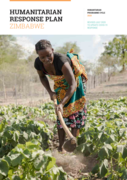
Across Zimbabwe, 7 million people in urban and rural areas are in urgent need of humanitarian assistance, compared to 5.5 million in August 2019. Since the launch of the Revised Humanitarian Appeal in August 2019, circumstances for millions of Zimbabweans have worsened. Drought and crop failure, exa
...
cerbated by macro-economic challenges and austerity measures, have directly affected vulnerable households in both rural and urban communities. Inflation continues to erode purchasing power and affordability of food and other essential goods is a daily challenge. The delivery of health care, clean water and sanitation, and education has been constrained and millions of people are facing challenges to access vital services.
more
The document provides a detailed overview of cholera, including its clinical features, diagnosis, treatment, and prevention. It explains the causes of cholera, its symptoms such as severe diarrhea and dehydration, and the importance of rehydration therapy (oral or intravenous) to reduce mortality. T
...
he document also emphasizes public health measures, including access to clean water, proper sanitation, and vaccination, as essential strategies to control and prevent cholera outbreaks. It serves as a comprehensive resource for healthcare professionals managing cholera cases and outbreaks.
more
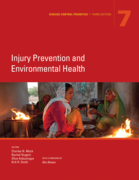
The substantial burden of death and disability that results from interpersonal violence, road traffic injuries, unintentional injuries, occupational health risks, air pollution, climate change, and inadequate water and
...
sanitation falls disproportionally on low- and middle-income countries. Injury Prevention and Environmental Health addresses the risk factors and presents updated data on the burden, as well as economic analyses of platforms and packages for delivering cost-effective and feasible interventions in these settings. The volume's contributors demonstrate that implementation of a range of prevention strategies-presented in an essential package of interventions and policies-could achieve a convergence in death and disability rates that would avert more than 7.5 million deaths a year.
more
On September 10, 2022, the Ministry of Health (MOH) announced a cholera outbreak in Aleppo governorate with 15 laboratory confirmed cases reported between August 25 and September 9, 2022. Activities under this plan seek to address the immediate needs stemming from this outbreak and highlight respons
...
e priorities across all areas of the response and key sectors involved. This plan initially focuses on the Health, Water Sanitation and Hygiene (WASH), and Risk Communication and Community Engagement (RCCE) responses for an initial period of 90 days. The activities detailed in this plan are also within the programmatic scope of the 2022-2023 Humanitarian Response Plan (HRP).
more
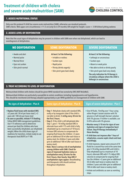
The document is a comprehensive practical guide for managing cholera epidemics. It includes detailed instructions on outbreak investigation, control measures, case management, and the organization of treatment facilities. It emphasizes strategies such as rehydration therapy,
...
water sanitation, hygiene promotion, and vaccination to prevent the spread of cholera. The guide serves as a resource for healthcare professionals, logisticians, and public health officials to respond effectively to cholera outbreaks.
more
