
Filter
3006
Text search:
reproductive
age
Featured
243
1052
Language
2914
75
47
26
23
13
10
9
4
4
3
2
2
2
2
2
2
2
2
2
2
2
1
1
1
1
1
1
1
1
1
1
1
1
1
1
1
1
1
1
Document type
1852
455
323
125
112
56
40
21
10
3
3
1
1
Countries
166
137
106
97
95
93
81
80
75
75
70
68
67
63
61
60
43
42
37
32
32
32
31
31
31
27
26
26
23
21
19
19
18
16
14
14
14
13
13
12
11
11
10
9
9
9
8
8
8
8
8
8
6
6
6
4
4
4
4
4
4
4
4
3
3
3
3
3
3
3
3
2
2
2
2
2
2
2
2
1
1
1
1
1
1
1
1
1
1
1
1
1
1
1
1
1
1
1
1
1
1
1
1
1
1
1
Authors & Publishers
348
88
79
74
68
66
65
63
51
49
44
38
37
26
26
25
24
21
20
17
16
16
16
15
15
14
14
13
13
13
12
12
12
11
11
11
10
10
10
10
9
9
9
8
8
8
8
8
7
7
7
7
7
7
7
7
7
7
6
6
6
6
6
6
6
6
6
6
6
6
6
6
6
6
6
6
6
5
5
5
5
5
5
5
5
5
5
5
5
5
5
5
5
5
5
5
5
5
5
5
5
5
4
4
4
4
4
4
4
4
4
4
4
4
4
4
4
4
4
4
4
4
4
4
4
4
4
4
4
4
4
4
4
4
4
4
4
4
4
4
3
3
3
3
3
3
3
3
3
3
3
3
3
3
3
3
3
3
3
3
3
3
3
3
3
3
3
3
3
3
3
3
3
3
3
3
3
3
3
3
3
3
3
3
3
3
3
3
3
3
3
3
3
3
3
3
3
3
3
3
3
3
2
2
2
2
2
2
2
2
2
2
2
2
2
2
2
2
2
2
2
2
2
2
2
2
2
2
2
2
2
2
2
2
2
2
2
2
2
2
2
2
2
2
2
2
2
2
2
2
2
2
2
2
2
2
2
2
2
2
2
2
2
2
2
2
2
2
2
2
2
2
2
2
2
2
2
2
2
2
2
2
2
2
2
2
2
2
2
2
2
2
2
2
2
2
2
2
2
2
2
2
2
2
2
2
2
2
2
2
2
2
2
2
2
2
2
2
2
2
2
2
2
2
2
2
2
2
2
2
2
2
2
2
2
2
2
2
2
2
2
2
2
2
2
2
2
2
2
2
2
2
2
2
2
2
2
2
2
2
2
2
2
2
2
2
2
2
2
2
2
2
2
2
2
2
2
2
2
2
2
2
2
2
2
2
2
2
2
2
2
1
1
1
1
1
1
1
1
1
1
1
1
1
1
1
1
1
1
1
1
1
1
1
1
1
1
1
1
1
1
1
1
1
1
1
1
1
1
1
1
1
1
1
1
1
1
1
1
1
1
1
1
1
1
1
1
1
1
1
1
1
1
1
1
1
1
1
1
1
1
1
1
1
1
1
1
1
1
1
1
1
1
1
1
1
1
1
1
1
1
1
1
1
1
1
1
1
1
1
1
1
1
1
1
1
1
1
1
1
1
1
1
1
1
1
1
1
1
1
1
1
1
1
1
1
1
1
1
1
1
1
1
1
1
1
1
1
1
1
1
1
1
1
1
1
1
1
1
1
1
1
1
1
1
1
1
1
1
1
1
1
1
1
1
1
1
1
1
1
1
1
1
1
1
1
1
1
1
1
1
1
1
1
1
1
1
1
1
1
1
1
1
1
1
1
1
1
1
1
1
1
1
1
1
1
1
1
1
1
1
1
1
1
1
1
1
1
1
1
1
1
1
1
1
1
1
1
1
1
1
1
1
1
1
1
1
1
1
1
1
1
1
1
1
1
1
1
1
1
1
1
1
1
1
1
1
1
1
1
1
1
1
1
1
1
1
1
1
1
1
1
1
1
1
1
1
1
1
1
1
1
1
1
1
1
1
1
1
1
1
1
1
1
1
1
1
1
1
1
1
1
1
1
1
1
1
1
1
1
1
1
1
1
1
1
1
1
1
1
1
1
1
1
1
1
1
1
1
1
1
1
1
1
1
1
1
1
1
1
1
1
1
1
1
1
1
1
1
1
1
1
1
1
1
1
1
1
1
1
1
1
1
1
1
1
1
1
1
1
1
1
1
1
1
1
1
1
1
1
1
1
1
1
1
1
1
1
1
1
1
1
1
1
1
1
1
1
1
1
1
1
1
1
1
1
1
1
1
1
1
1
1
1
1
1
1
1
1
1
1
1
1
1
1
1
1
1
1
1
1
1
1
1
1
1
1
1
1
1
1
1
1
1
1
1
1
1
1
1
1
1
1
1
1
1
1
1
1
1
1
1
1
1
1
1
1
1
1
1
1
1
1
1
1
1
1
1
1
1
1
1
1
1
1
1
1
1
1
1
1
1
1
1
1
1
1
1
1
1
1
1
1
1
1
1
1
1
1
1
1
1
1
1
1
1
1
1
1
1
1
1
1
1
1
1
1
1
1
1
1
1
1
1
1
1
1
1
1
1
1
1
1
1
1
1
1
1
1
1
1
1
1
1
1
1
1
1
1
1
1
1
1
1
1
1
1
1
1
1
1
1
1
1
1
1
1
1
1
1
1
1
1
1
1
1
1
1
1
1
1
1
1
1
1
1
1
1
1
1
1
1
1
1
1
1
1
1
1
1
1
1
1
1
1
1
1
1
1
1
1
1
1
1
1
1
1
1
1
1
1
1
1
1
1
1
1
1
1
1
1
1
1
1
1
1
1
1
1
1
1
1
1
1
1
1
1
1
1
1
1
1
1
1
1
1
1
1
1
1
1
1
1
1
1
1
1
1
1
1
1
1
1
1
1
1
1
1
1
1
1
1
1
1
1
1
1
1
1
1
1
1
1
1
1
1
1
1
1
1
1
1
1
1
1
1
1
1
1
1
1
1
1
1
1
1
1
1
1
1
1
1
1
1
1
1
1
1
1
1
1
1
1
1
1
1
1
1
1
1
1
1
1
1
1
1
1
1
1
1
1
1
1
1
1
1
1
1
1
1
1
1
1
1
1
1
1
1
1
1
1
1
1
1
1
1
1
1
1
1
1
1
1
1
1
1
1
1
1
1
1
1
1
1
1
1
1
1
1
1
1
1
1
1
1
1
1
1
1
1
1
1
1
1
1
1
1
1
1
1
1
1
1
1
1
1
1
1
1
1
1
1
1
1
1
1
1
1
1
1
1
1
1
1
1
1
1
1
1
1
1
1
1
1
1
1
1
1
1
1
1
1
1
1
1
1
1
1
1
1
1
1
1
1
1
1
1
1
1
1
1
1
1
1
1
1
1
1
1
1
1
1
1
1
1
1
1
1
1
1
1
1
1
1
1
1
1
1
1
1
1
1
1
1
1
1
1
1
1
1
1
1
1
1
1
1
1
1
1
1
1
1
1
1
1
1
1
1
1
1
1
1
1
1
1
1
1
1
1
1
1
1
1
1
1
1
1
1
1
1
1
1
1
1
1
1
1
1
1
1
1
1
1
1
1
1
1
1
1
1
1
1
1
1
1
1
1
1
1
1
1
1
1
1
1
1
1
1
1
1
1
1
1
1
1
1
1
1
1
1
1
1
1
1
1
1
1
1
1
1
1
1
1
1
1
1
1
1
1
1
1
1
1
1
1
1
1
1
1
1
1
1
1
1
1
1
1
1
1
1
1
1
1
1
1
1
1
1
1
1
1
1
1
1
1
1
1
1
1
1
1
1
1
1
1
1
1
1
1
1
1
1
1
1
1
1
1
1
1
1
1
1
1
1
1
1
1
1
1
1
1
1
1
1
1
1
1
1
1
1
1
1
1
1
1
1
1
1
1
1
1
1
1
1
1
1
1
1
1
1
1
1
1
1
1
1
1
1
1
1
1
1
1
1
1
1
1
1
1
1
1
1
1
1
1
1
1
1
1
1
1
1
1
1
1
1
1
1
1
1
1
1
1
1
1
1
1
1
1
1
1
1
1
1
1
1
1
1
1
1
1
1
1
1
1
1
1
1
1
1
1
1
1
1
1
1
1
1
1
1
1
1
1
1
1
1
1
1
1
1
1
1
1
1
1
1
1
1
1
1
1
1
1
1
1
1
1
1
1
1
1
1
1
1
1
1
1
1
1
1
1
1
1
1
1
1
1
1
1
1
1
1
1
1
1
1
1
1
1
1
1
1
1
1
1
1
1
1
1
1
1
1
1
1
1
1
1
1
1
1
1
1
1
1
1
1
1
1
1
1
1
1
1
1
1
1
1
1
1
1
1
1
1
1
1
1
1
1
1
1
1
1
1
1
1
1
1
1
1
1
1
1
1
1
1
1
1
1
1
1
1
1
1
1
1
1
1
1
1
1
1
1
1
1
1
1
1
1
1
1
1
1
1
1
1
1
1
1
1
1
1
1
1
1
1
1
1
1
1
1
1
1
1
1
1
1
1
1
1
1
1
1
1
1
1
1
1
1
1
1
1
1
1
1
1
1
1
1
1
1
1
1
1
1
1
1
1
1
1
1
1
1
1
1
1
1
1
1
1
1
1
1
1
1
1
1
1
1
1
1
1
1
1
1
1
1
1
1
1
1
1
1
1
1
1
1
1
1
1
1
1
1
1
1
1
1
1
1
1
1
1
1
1
1
1
1
1
1
1
1
1
1
1
1
1
1
1
1
1
1
1
1
1
1
1
1
1
1
1
1
1
1
1
1
1
1
1
1
1
1
1
1
1
1
1
1
1
1
1
1
1
1
1
1
1
1
1
1
1
1
1
1
1
1
1
1
1
1
1
1
1
1
1
1
1
1
1
1
1
1
1
1
1
1
1
1
1
1
1
1
1
1
1
1
1
1
1
1
1
1
1
1
1
1
1
1
1
1
1
1
1
1
1
1
1
1
1
1
1
1
1
1
1
1
1
1
1
1
1
1
1
1
1
1
1
1
1
1
1
1
1
1
1
1
1
1
1
1
1
1
1
1
1
1
1
1
1
1
1
1
1
1
1
1
1
1
1
1
1
1
1
1
1
1
1
1
1
1
1
1
1
1
1
1
1
1
1
1
1
1
1
1
1
1
1
1
1
1
1
1
1
1
1
1
1
1
1
1
1
1
1
1
1
1
1
1
1
1
1
1
1
1
1
1
1
1
1
1
1
1
1
1
1
1
1
1
1
1
1
1
1
1
1
1
1
1
1
1
1
1
1
1
1
1
1
1
1
1
1
1
1
1
1
1
1
1
1
1
1
1
1
1
1
1
1
1
1
1
1
1
1
1
1
1
1
1
1
1
1
1
1
1
1
1
1
1
1
1
1
1
1
1
1
1
1
1
1
1
1
1
1
1
1
1
1
1
1
1
1
1
1
1
1
1
1
1
1
1
1
1
1
1
1
1
1
1
1
1
1
1
1
1
1
1
1
1
1
1
1
1
1
1
1
1
1
1
1
1
1
1
1
1
1
1
1
1
1
1
1
1
1
1
1
1
1
1
1
1
1
1
1
1
1
1
1
1
1
1
1
1
Publication Years
807
1945
248
5
1
Category
1634
310
172
128
116
105
10
Toolboxes
175
165
108
105
82
79
61
60
50
46
44
42
41
35
28
28
27
26
19
14
12
3
2
2
2
1
This WHO Guidance Note advocates for a comprehensive approach to cervical cancer prevention and control and is aimed at senior policy makers and programme managers. It describes the need to deliver effective interventions across the female life course from childhood through to adulthood. These inclu
...
de community education, social mobilization, HPV vaccination, screening, treatment and palliative care. It outlines the complementary strategies for comprehensive cervical cancer prevention and control, and highlights collaboration across national health programmes (particularly immunization, reproductive health, cancer control and adolescent health), organizations and partners.
more
WHO clinical guidelines.
For the first time, WHO has published guidelines to help (primarily) front-line healthcare providers give high-quality, compassionate, and respectful care to children and adolescents (up to age 18) who have or may have expe
...
rienced sexual abuse, including sexual assault or rape.
more
This study of Adolescent Boys and Young Men highlights the importance of engaging adolescent boys and young men in sexual and reproductive health and rights (srhr) and gender equality. This paper establishes a conceptual framework for engaging adol
...
escent boys and young men. It reviews current research on boys’ and young men’s specific risks and realities in relation to their general health status, violence, sexuality and sexual and reproductive health, media violence, sexual exploitation, and other vulnerabilities.
more
Commissioned by Plan International the report draws on data from research conducted in Bangladesh in April 2018. It explores how adolescent girls within two age brackets (10-14 and 15-19) understand the unique impact the crisis has upon them, and ho
...
w they have responded to the challenges they face.
Despite the numbers of adolescent girls affected so profoundly by the ongoing Rohingya crisis, and of course, by many crises around the world, it is rare that either their own communities or the humanitarian sector at large pay much attention to them. This research is an attempt to rectify that: to acknowledge that girls and young women do have rights and that their ideas are worth listening to and acting upon.
Among the many learnings, we discovered that girls feel isolated. They have settled among strangers, and parents worry about their safety, keeping them even more trapped inside their new, makeshift homes.
75% of girls interviewed said they have no ability to make decisions about their own lives. more
Despite the numbers of adolescent girls affected so profoundly by the ongoing Rohingya crisis, and of course, by many crises around the world, it is rare that either their own communities or the humanitarian sector at large pay much attention to them. This research is an attempt to rectify that: to acknowledge that girls and young women do have rights and that their ideas are worth listening to and acting upon.
Among the many learnings, we discovered that girls feel isolated. They have settled among strangers, and parents worry about their safety, keeping them even more trapped inside their new, makeshift homes.
75% of girls interviewed said they have no ability to make decisions about their own lives. more
Policy Brief, Updated in March 2017
Key messages
• Meaningful involvement of sex workers in the HIV response through peer-based education and outreach and consultation in policy making and programme planning is vital to reduce their vulnerability to HIV and other sexually transmitted inf ... ections (STIs) and ensure that the challenges they face are addressed adequately.
• Sex workers (female, transgender and male) have the right to protect their health through accessing comprehensive and evidence-informed HIV and sexual and reproductive health (SRH) interventions.
• Innovative HIV prevention strategies and creative use of combination interventions are needed to reach mobile and ”hard to reach” sex workers. more
Key messages
• Meaningful involvement of sex workers in the HIV response through peer-based education and outreach and consultation in policy making and programme planning is vital to reduce their vulnerability to HIV and other sexually transmitted inf ... ections (STIs) and ensure that the challenges they face are addressed adequately.
• Sex workers (female, transgender and male) have the right to protect their health through accessing comprehensive and evidence-informed HIV and sexual and reproductive health (SRH) interventions.
• Innovative HIV prevention strategies and creative use of combination interventions are needed to reach mobile and ”hard to reach” sex workers. more
Case study
Alliance Ukraine’s experience integrating HIV, harm reduction and sexual and reproductive health programming
The DHS report itself explains the purpose was, “to obtain and provide information on basic indicators of social progress including fertility, childhood mortality, reproductive and child health, nutritional status of children, and awareness of HIV
...
/AIDS and other health-related issues” in PNG. This is important because a DHS then provides the evidence base for PNG officials themselves to track progress in PNG over time, compare trends with other comparable countries, and then allocate financial and human resources to where they are needed most.
more
Facilitator's Guide
Refresher Training Module for Health Care Providers implementing the MISP
Inter-agency Working Group on Reproductive Health in Crises Training Partnership
These guidelines provide new and updated recommendations on the use of point-of-care testing in children under 18 months of age and point-of-care tests to monitor treatment in people living with HIV; the treatment monitoring algorithm; and timing of
...
antiretroviral therapy (ART) among people living with HIV who are being treated for tuberculosis.
New recommendations launched today outline key new actions that countries can take to improve the delivery of HIV testing, treatment and care services by providing greater options for differentiated approaches such as, supporting HIV treatment start in the community, ensuring that children are diagnosed and treated early, and that viral load treatment monitoring is more accessible, focused and triggers clinical action
more

UNFPA supports the Youth Health Line (YHL), launched in 2012, as a nationwide, youth friendly health service to provide information and counseling for adolescents and youth on issues related to their health and reproductive health. The YHL is provid
...
ing a vital service to young people around the country who are dialing the toll-free number ‘120’ from any phone to speak to a professionally trained youth health counselor. These conversations are confidential, free of judgment, and do not require parental consent. The average reach of the YHL per year is 120,000 adolescents and youth served by full-time male and female counselors.
This Standard Operating Procedure for YHL provides a critical resource for the administration and day-to-day management. The SOP is designed to provide direction to all staff responsible for carrying out the administrative and managerial functions of the YHL. The SOP is intended to guide UNFPA Implementing Partners in running the YHL with a consistent approach to ensure improved access and quality of services provided to adolescents and youth in Afghanistan.
more

It is against this background that the Ministry of Health and Sanitation with its partners have
taken the lead to develop Essential Health Services Package (EHSP). The MOHS believes that the
development of EHSP; defining the services that should be available at each level of care
(community to
...
tertiary level), for each age cohort, and across each public health functions, not
only allows for more effective and equitable health service delivery, but also for the
establishment of a functional referral system and allocation of appropriate investments for high
impact interventions. The package is expected to set precedence in defining ‘essential’ set of
services for the population in Sierra Leone, structurally promoting integration of health services,
and providing succinct guidance to partners and stakeholders on the country priorities.
more
DHS Further Analysis Reports No. 108 - This report examines levels, trends, and inequalities in maternal health in Rwanda from 2010 to 2014-15 among women age 15-49 with a recent birth. The analysis uses Demographic and Health Survey (DHS) data for
...
15 key indicators of maternal health: 6 for antenatal care, 3 for delivery, 1 for postnatal care, and 5 for barriers to accessing medical care. Levels and trends in these indicators were analyzed overall and by three background characteristics: women’s education, household wealth quintile, and region.
more
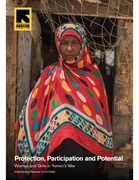
Women and girls are paying the price of the war in Yemen – Humanitarian actors must increase the priority given to women and girls’ needs, with specific attention to GBV prevention and response, and reproductive health services

Malnutrition in childhood and pregnancy has many adverse consequences for child survival and long-term well-being. It
also has far-reaching consequences for human capital, economic productivity, and national development overall. The
consequences of malnutrition should be a significant concern for
...
policy makers in Burkina Faso, since around 672,000
children under 5 years (21 percent) suffer from chronic malnutrition (stunting or low height-for-age) and 10 percent
suffer from acute malnutrition (wasting or low weight-for-height) (Ministère de la Santé [MOH] et al. 2018).
more

Obesity and diabetes are affecting the peoples of the Americas at high and increasing rates. National surveys demonstrate that obesity is increasing in prevalence among all age groups; 7% to 12% of children under 5 years old and
one-fi fth of adole
...
scents are obese, while rates of overweight and obesity among adults approach 60%. Obesity is the major modifi able risk factor for diabetes.
more
Recent Trends in HIV-Related Knowledge and Behaviors in Rwanda, 2005-2010: Further Analysis of the Demographic and Health Surveys.
Hong, Rathavuth, Jean de Dieu, Jeanine Umutesi Condo, Muhayimpundu Ribakare, and Egidie Murekatete
Calverton, Maryland, USA: ICF International
(2013)
C2
DHS Further Analysis Reports No. 89 - The 2010 Rwanda Demographic and Health Survey shows that 3 percent of Rwandan adults age 15-49 have been infected with HIV. The prevalence was much higher in urban areas, among women, and among adults who had mu
...
ltiple lifetime sexual partners and used a condom at last sexual intercourse. The
level of and differences in HIV prevalence in Rwanda in 2010 are very similar to those observed in 2005. Using data from the two recent Rwanda Demographic and Health Surveys, implemented in 2005 and
2010, this study examined changes in key HIV-related knowledge, attitudes, and sexual behavior indicators. Significant changes in selected indicators during 2005 and 2010 were determined by Student ttest with p-values less than 0.05.
more
This report is from the National study on living conditions among people
with disabilities carried out in Nepal in 2014-2015. The study was carried
out as a household survey with two-stage stratified sampling, including a screening/listing procedure using the Washington Group on Disability
Statis
...
tics 6 questions, one Household questionnaire administered to
households with (Case HHs) and without disabled members (Control
HHs), one Individual Case questionnaire administered to individuals who were found to qualify as being disabled in the screening (Case
individuals), and an Individual Control questionnaire administered to
matched non-disabled individuals in the Control HHs (Control individuals). The study covers a range of indicators on level of living, such as socioeconomic indicators, economic activity, income, ownership and infrastructure, health (including reproductive health), access to health information, access to services, education, access to information, social participation, and exposure to discrimination and abuse (see all
questionnaires in Appendix).
more
In the last 5 years, the conflict in South Sudan has displaced 4 million people and placed 7 million in need of humanitarian assistance.
This report commissioned by Plan International draws on research conducted with girls and members of their families and communities in multiple sites in South ... Sudan and Uganda.
It explores how adolescent girls within two age brackets (aged 10-14 and 15-19) understand and respond to the unique impact their country’s crisis has upon them.
It seeks to amplify their voices and their perceptions of the crisis and presents their views on how the humanitarian sector might respond. more
This report commissioned by Plan International draws on research conducted with girls and members of their families and communities in multiple sites in South ... Sudan and Uganda.
It explores how adolescent girls within two age brackets (aged 10-14 and 15-19) understand and respond to the unique impact their country’s crisis has upon them.
It seeks to amplify their voices and their perceptions of the crisis and presents their views on how the humanitarian sector might respond. more

It is the policy of the GoR to ensure that children’s rights are met through the provision of basic needs and services for all children in the country, and protect them from abuse and exploitation. Children are defined as persons below the age of
...
18 years and the ICRP covers children from the time before their birth until they complete the age of 18 years. The Integrated Child Rights Policy of Rwanda is based on seven key themes: Identity and Nationality; Family and Alternative Care; Survival, Health and Standards of Living; Education; Protection; Justice; and Child Participation.
more
Census Report Volume 4-L
Myanmar’s 2014 Census enumerated 4.5 million people aged 60 and over and by 2050 Myanmar is projected to have 13 million people in this age group.
Myanmar’s population has aged between 1973 and 2014; while the ... total population increased at an annual rate of 1.4 per cent, the population aged 60 and over increased annually by 2.4 per cent. Within the older population, the oldest age group, those over 80 years old, has been growing much faster than those aged 60-79. In 2014, the urban population was slightly older than the rural population. This is the result of a more rapid decline in urban fertility, offset by net migration to urban areas by youth and young adults. more
Myanmar’s 2014 Census enumerated 4.5 million people aged 60 and over and by 2050 Myanmar is projected to have 13 million people in this age group.
Myanmar’s population has aged between 1973 and 2014; while the ... total population increased at an annual rate of 1.4 per cent, the population aged 60 and over increased annually by 2.4 per cent. Within the older population, the oldest age group, those over 80 years old, has been growing much faster than those aged 60-79. In 2014, the urban population was slightly older than the rural population. This is the result of a more rapid decline in urban fertility, offset by net migration to urban areas by youth and young adults. more
