
Filter
581
Filtered Results: 581
Text search:
informal
healing
centres
Featured
Recommendations
58
New Publications
151
Language
Document type
No document type
375
Studies & Reports
71
Guidelines
56
Manuals
38
Strategic & Response Plan
20
Training Material
9
Situation Updates
5
Fact sheets
4
Resource Platforms
3
Countries / Regions
Syria
25
India
20
Global
18
South Africa
17
Kenya
16
Western and Central Europe
15
Bangladesh
15
Nepal
13
Uganda
13
Myanmar / Burma
13
Sierra Leone
11
Ghana
10
Liberia
10
Zambia
9
Malawi
8
Ukraine
7
Ethiopia
7
Nigeria
6
Eastern Europe
6
Lesotho
5
Rwanda
5
Philippines
5
Africa
5
Tanzania
5
Zimbabwe
4
Guinea
4
Mozambique
4
Jordan
4
Congo, Democratic Republic of
4
Namibia
4
Botswana
4
Indonesia
4
Thailand
3
Cambodia
3
Latin America and the Carribbean
3
Lebanon
3
Eswatini/ Swaziland
3
Pakistan
3
China
2
Cameroon
2
USA
2
Haiti
2
Asia
2
Germany
2
Vietnam
2
Sri Lanka
2
South Sudan
2
Guatemala
2
Tajikistan
1
Switzerland
1
Colombia
1
Togo
1
Iran
1
Canada
1
Singapore
1
Laos
1
Burkina Faso
1
Afghanistan
1
Austria
1
Mongolia
1
Bulgaria
1
Venezuela
1
Lithuania
1
Eastern Europe and Central Asia
1
Turkmenistan
1
Russia
1
Egypt
1
Sudan
1
Yemen
1
Greece
1
Palestine
1
Central African Republic
1
Angola
1
Libya
1
Authors & Publishers
Publication Years
Category
Countries
188
Public Health
39
Key Resources
30
Women & Child Health
25
Clinical Guidelines
22
Capacity Building
6
Pharmacy & Technologies
2
Toolboxes
Disability
105
Mental Health
78
COVID-19
44
Conflict
42
HIV
24
Refugee
19
Planetary Health
19
TB
17
Global Health Education
17
Natural Hazards
16
Caregiver
13
Ebola & Marburg
12
NTDs
12
Pharmacy
10
Rapid Response
7
Social Ethics
6
AMR
6
NCDs
5
2.0 Rapid Response
5
Specific Hazards
2
Cholera
2
Malaria
2
Zika
2
Polio
1

Terminology used to describe the transmission of pathogens through the air varies across scientific disciplines, organizations and the general public. While this has been the case for decades, during the coronavirus disease (COVID-19) pandemic, the terms ‘airborne’, ‘airborne transmission’ a...
A new publication - Waste Management during the COVID-19 Pandemic: from response to recovery - reviews current practices for managing waste from healthcare facilities, households and quarantine locations accommodating people with confirmed or suspected cases of COVID-19. Jointly produced by UNEP, th...
This handbook aims to give practical guidance to support development organisations to mainstream disability into their work. It is primarily intended for VSO programmes, but could be useful to other development actors interested in mainstreaming disability, such as NGOs, gover...

This important issue of Forced Migration Review draws our attention to the current challenges facing displaced Syrians and the continuing search for solutions. The statistics of Syrian displacement are staggering – and the numbers continue to rise. Half of Syria’s population has been displaced: ...
The COVID-19 pandemic is having far reaching impacts, well beyond the health crisis and needs, with the most severe impacts experienced in the poorest countries and those most vulnerable to humanitarian crises including natural disasters, such as Nepal.
A 2013 Plan study across 30 countries found that children with disabilities were on average 10 times less likely to go to school than children without disabilities. This report presents the findings of a follow-up second phase to the research with a qualitative study on barriers and enablers to educ...
Miscellaneous
Chapter J.6
Health Systems in Transition. Vol. 5 No.3 2015

In the initial chapters, you will find different approaches that describe how to support job creation for entrepreneurs or employees who live with disabilities. The interventions are often initiated by the readiness to find and pick the right opportunities, such as an engaged entrepreneur or an open...
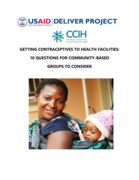
Getting Contraceptives To Health Facilities: 10 Questions For Community-Based Groups To Consider
recommended
This Guide helps all the health care providers in the non- public sector to explore alternative means of access to contraceptives and skills to determine quantities required and management of stock. Health care providers include community health workers, nurses and midwives, clinical officers and me...
This interim guidance is for LTCF managers and corresponding infection prevention and control (IPC) focal persons in LTCF and updates the guidance published in March 2020. The objective of this document is to provide guidance on IPC in LTCFs in the context of COVID-19 to 1) prevent COVID-19-virus fr...

The duration of breastfeeding and support from health services to improve feeding practices among mothers living with HIV
This operational guidance, developed by WHO, UNICEF and ENN, outlines the duration of breastfeeding and support from health services to improve infant feeding practices amon...
This operational guidance, developed by WHO, UNICEF and ENN, outlines the duration of breastfeeding and support from health services to improve infant feeding practices amon...
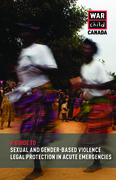
The guide summarizes an assessment of War Child Canada’s three-pronged legal protection model as implemented with South Sudanese refugees in Northern Uganda and uses it to identify the most important lessons for ensuring legal protection mechanisms are in place at the onset of an emergency
This document seeks to help health communication professionals working on the topic of immunization more effectively communicate about Events Supposedly Attributed to Vaccination and Immunization (ESAVI) by building trust in National Immunization Programs, understanding risk perceptions related to v...

An Indicator-based Approach - This manual presents an indicator-based approach for rapidly assessing pharmaceutical management systems and programs. The manual contains a set of 46 indicators of performance, grouped under eight topics of pharmaceutical management, with each topic being covered by a ...
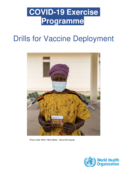
This drill package is part of a broader COVID-19 simulation exercise package, including vaccine tabletop exercises(TTX). For exercises to be most effective, it is recommended they should be part of a comprehensive programme made up of progressively complex exercises, each exercise ...
