
Filter
2296
Text search:
health
worker
distribution
Featured
247
768
Language
2254
48
23
18
14
8
7
4
3
2
2
2
2
2
2
2
2
1
1
1
1
1
1
1
1
1
1
1
1
Document type
1390
322
279
117
92
53
20
17
2
2
1
1
Countries
157
89
87
86
75
72
70
65
58
57
48
47
41
41
38
36
30
28
28
23
23
21
20
17
17
16
15
15
14
13
12
12
11
11
11
10
10
9
9
9
9
8
7
6
6
5
5
5
5
4
4
4
4
4
4
4
4
3
3
3
3
3
3
3
2
2
2
2
2
2
2
2
1
1
1
1
1
1
1
1
1
1
1
1
1
1
1
1
Authors & Publishers
297
114
59
55
55
54
42
41
29
24
18
18
17
16
15
13
13
12
12
11
10
10
10
10
10
10
10
9
9
9
9
8
8
8
7
7
7
7
7
7
6
6
6
6
6
6
6
6
6
6
6
6
5
5
5
5
5
5
5
5
5
5
5
5
5
5
5
5
4
4
4
4
4
4
4
4
4
4
4
4
4
4
4
4
4
4
4
4
4
4
4
4
4
4
4
4
4
4
4
3
3
3
3
3
3
3
3
3
3
3
3
3
3
3
3
3
3
3
3
3
3
3
3
3
3
3
3
3
3
3
3
3
3
3
3
3
3
3
3
3
3
3
3
3
3
3
2
2
2
2
2
2
2
2
2
2
2
2
2
2
2
2
2
2
2
2
2
2
2
2
2
2
2
2
2
2
2
2
2
2
2
2
2
2
2
2
2
2
2
2
2
2
2
2
2
2
2
2
2
2
2
2
2
2
2
2
2
2
2
2
2
2
2
2
2
2
2
2
2
2
2
2
2
2
2
2
2
2
2
2
2
2
2
2
2
2
2
2
2
2
2
2
2
2
2
2
2
2
2
2
2
2
2
2
2
2
2
2
2
2
2
2
2
2
2
2
2
2
2
2
2
2
2
2
2
2
2
2
1
1
1
1
1
1
1
1
1
1
1
1
1
1
1
1
1
1
1
1
1
1
1
1
1
1
1
1
1
1
1
1
1
1
1
1
1
1
1
1
1
1
1
1
1
1
1
1
1
1
1
1
1
1
1
1
1
1
1
1
1
1
1
1
1
1
1
1
1
1
1
1
1
1
1
1
1
1
1
1
1
1
1
1
1
1
1
1
1
1
1
1
1
1
1
1
1
1
1
1
1
1
1
1
1
1
1
1
1
1
1
1
1
1
1
1
1
1
1
1
1
1
1
1
1
1
1
1
1
1
1
1
1
1
1
1
1
1
1
1
1
1
1
1
1
1
1
1
1
1
1
1
1
1
1
1
1
1
1
1
1
1
1
1
1
1
1
1
1
1
1
1
1
1
1
1
1
1
1
1
1
1
1
1
1
1
1
1
1
1
1
1
1
1
1
1
1
1
1
1
1
1
1
1
1
1
1
1
1
1
1
1
1
1
1
1
1
1
1
1
1
1
1
1
1
1
1
1
1
1
1
1
1
1
1
1
1
1
1
1
1
1
1
1
1
1
1
1
1
1
1
1
1
1
1
1
1
1
1
1
1
1
1
1
1
1
1
1
1
1
1
1
1
1
1
1
1
1
1
1
1
1
1
1
1
1
1
1
1
1
1
1
1
1
1
1
1
1
1
1
1
1
1
1
1
1
1
1
1
1
1
1
1
1
1
1
1
1
1
1
1
1
1
1
1
1
1
1
1
1
1
1
1
1
1
1
1
1
1
1
1
1
1
1
1
1
1
1
1
1
1
1
1
1
1
1
1
1
1
1
1
1
1
1
1
1
1
1
1
1
1
1
1
1
1
1
1
1
1
1
1
1
1
1
1
1
1
1
1
1
1
1
1
1
1
1
1
1
1
1
1
1
1
1
1
1
1
1
1
1
1
1
1
1
1
1
1
1
1
1
1
1
1
1
1
1
1
1
1
1
1
1
1
1
1
1
1
1
1
1
1
1
1
1
1
1
1
1
1
1
1
1
1
1
1
1
1
1
1
1
1
1
1
1
1
1
1
1
1
1
1
1
1
1
1
1
1
1
1
1
1
1
1
1
1
1
1
1
1
1
1
1
1
1
1
1
1
1
1
1
1
1
1
1
1
1
1
1
1
1
1
1
1
1
1
1
1
1
1
1
1
1
1
1
1
1
1
1
1
1
1
1
1
1
1
1
1
1
1
1
1
1
1
1
1
1
1
1
1
1
1
1
1
1
1
1
1
1
1
1
1
1
1
1
1
1
1
1
1
1
1
1
1
1
1
1
1
1
1
1
1
1
1
1
1
1
1
1
1
1
1
1
1
1
1
1
1
1
1
1
1
1
1
1
1
1
1
1
1
1
1
1
1
1
1
1
1
1
1
1
1
1
1
1
1
1
1
1
1
1
1
1
1
1
1
1
1
1
1
1
1
1
1
1
1
1
1
1
1
1
1
1
1
1
1
1
1
1
1
1
1
1
1
1
1
1
1
1
1
1
1
1
1
1
1
1
1
1
1
1
1
1
1
1
1
1
1
1
1
1
1
1
1
1
1
1
1
1
1
1
1
1
1
1
1
1
1
1
1
1
1
1
1
1
1
1
1
1
1
1
1
1
1
1
1
1
1
1
1
1
1
1
1
1
1
1
1
1
1
1
1
1
1
1
1
1
1
1
1
1
1
1
1
1
1
1
1
1
1
1
1
1
1
1
1
1
1
1
1
1
1
1
1
1
1
1
1
1
1
1
1
1
1
1
1
1
1
1
1
1
1
1
1
1
1
1
1
1
1
1
1
1
1
1
1
1
1
1
1
1
1
1
1
1
1
1
1
1
1
1
1
1
1
1
1
1
1
1
1
1
1
1
1
1
1
1
1
1
1
1
1
1
1
1
1
1
1
1
1
1
1
1
1
1
1
1
1
1
1
1
1
1
1
1
1
1
1
1
1
1
1
1
1
1
1
1
1
1
1
1
1
1
1
1
1
1
1
1
1
1
1
1
1
1
1
1
1
1
1
1
1
1
1
1
1
1
1
1
1
1
1
1
1
1
1
1
1
1
1
1
1
1
1
1
1
1
1
1
1
1
1
1
1
1
1
1
1
1
1
1
1
1
1
1
1
1
1
1
1
1
1
1
1
1
1
1
1
1
1
1
1
1
1
1
1
1
1
1
1
1
1
1
1
1
1
1
1
1
1
1
1
1
1
1
1
1
1
1
1
1
1
1
1
1
1
1
1
1
1
1
1
1
1
1
1
1
1
1
1
1
1
1
1
1
1
1
1
1
1
1
1
1
1
1
1
1
1
1
1
1
1
1
1
1
1
1
1
1
1
1
1
1
1
1
1
1
1
1
1
1
1
1
1
1
1
1
1
1
1
1
1
1
1
1
1
1
1
1
1
1
1
1
1
1
1
1
1
1
1
1
1
1
1
1
1
1
1
1
1
1
1
1
1
1
1
1
1
1
1
1
1
1
1
1
1
1
1
1
1
1
1
1
1
1
1
1
1
1
1
1
1
1
1
1
1
1
1
1
1
1
1
1
1
1
1
1
1
1
1
1
1
1
1
1
1
1
1
1
1
1
1
1
1
1
1
1
1
1
1
1
1
1
1
1
1
1
1
1
1
1
1
1
1
1
1
1
1
1
1
1
1
1
1
1
1
1
1
1
1
1
1
1
1
1
1
1
1
1
1
1
1
1
1
1
1
1
1
1
1
1
1
1
1
1
1
1
1
1
1
1
1
1
1
1
1
1
1
1
1
1
1
1
1
1
1
1
1
1
1
1
1
1
1
1
1
1
1
1
1
1
1
1
1
1
1
1
1
1
1
1
1
1
1
1
1
1
1
1
1
1
1
1
1
1
1
1
1
1
1
1
1
1
1
1
1
1
1
1
1
1
1
1
1
1
1
1
1
1
1
1
1
1
1
1
1
1
1
1
1
1
1
1
1
1
1
1
1
1
1
1
1
1
1
1
1
1
1
1
1
1
1
1
1
1
1
1
1
1
1
1
1
1
1
1
1
1
1
1
1
1
1
1
1
1
1
1
1
1
1
1
1
1
1
1
1
1
1
1
1
1
1
1
1
1
1
1
1
1
1
1
1
1
1
1
1
1
1
1
1
1
1
1
1
1
1
1
1
1
1
1
1
1
1
1
1
1
1
1
1
1
1
1
1
1
1
1
1
1
1
1
1
1
1
1
1
1
1
1
1
1
1
1
1
1
1
1
1
1
1
1
1
1
1
1
1
1
1
1
1
1
1
1
1
1
1
1
1
1
1
1
1
1
1
1
1
1
1
1
1
1
1
1
1
1
1
1
1
1
1
1
1
1
1
1
1
1
1
1
1
1
1
1
1
1
1
1
1
1
1
1
1
1
1
1
1
1
1
1
1
1
1
1
1
1
1
1
1
1
1
1
1
1
1
1
1
1
1
1
1
1
1
1
1
1
1
1
1
1
1
1
1
1
1
1
1
1
1
1
1
1
1
1
1
1
1
1
1
1
1
1
1
1
1
1
1
1
1
1
1
1
1
1
1
1
1
1
1
1
1
1
1
1
1
1
1
1
1
1
1
1
1
1
1
1
1
1
1
1
1
1
1
1
1
1
1
1
1
1
1
1
1
1
1
1
1
1
1
1
Publication Years
570
1460
254
12
Category
1143
162
143
136
117
48
16
Toolboxes
167
106
105
85
79
78
69
54
47
39
36
36
34
31
30
27
25
22
18
18
16
12
11
8
7
2
1
The HEARTS technical package provides a strategic approach to improving cardiovascular health in countries. It comprises six modules and an implementation guide. This package supports Ministries of Health
...
to strengthen CVD management in primary health care settings. The practical, step-by step modules are supported by an overarching technical document that provides a rationale and framework for this integrated approach to the management of NCDs.
more
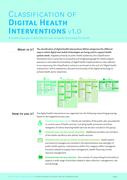
The classification of digital health interventions (DHIs) categorizes the different ways in which digital and mobile technologies are being used to support health system needs. Historically, the di
...
verse communities working in digital health—including government stakeholders, technologists, clinicians, implementers, network operators, researchers, donors— have lacked a mutually understandable language with which to assess and articulate functionality. A shared and standardized vocabulary was recognized as necessary to identify gaps and duplication, evaluate effectiveness, and facilitate alignment across different digital health implementations. Targeted primarily at public health audiences, this Classification framework aims to promote an accessible and bridging language for health program planners to articulate functionalities of digital health implementations.
more
Supporting the continuity of health and nutrition services in the context of COVID-19 in refugee settings
recommended
The 2014–2015 Ebola outbreak was catastrophic in West Africa but the indirect impact of increasing the mortality rates of other conditions was also substantial. The increased number of deaths caused by malaria, HIV/AIDS, and tuberculosis attributable to
...
health system failures exceeded deaths from Ebola.
With a relatively limited COVID-19 caseload, health systems may have the capacity to maintain routine service delivery in addition to managing COVID-19 cases. When caseloads are high, and/or health workers are directly affected, strategic adaptations are required to ensure that increasingly limited resources provide maximum benefit for the refugees and surrounding host population. The following are key considerations for UNHCR operations on prioritized health care services in the event of a COVID-19 outbreak. These are based on WHO Guidance for Maintaining Essential Health Services and UNHCR guidance for operations and where relevant operation or site level outbreak preparedness and response plans.
more

Effective response to an outbreak of COVID-19 requires detection in the very earliest stages of the outbreak when the number of cases is small, and the geographical extent of spread is limited. In order to achieve this, a sensitive surveillance system capable of detecting small scale, unusual events
...
is necessary.
more
This guide is intended to support national governments developing their national deployment and vaccination plans (NDVPs) for COVID-19 vaccines by outlining the roles, needs and opportunities for community health workers (CHWs) to contribute. This n
...
ote builds on and is structured to align with the Guidance on developing a national deployment and vaccination plan for COVID-19 vaccines. By providing CHW-relevant considerations for the VIRAT Tool, this document aims to support national governments in developing robust NDVPs for introducing COVID-19 vaccine(s) that leverage all the community-based deployment, implementation and monitoring tools at their disposal.
more
The report presents the latest data on more than 50 health-related Sustainable Development Goal and "triple billion" target indicators. The 2021 edition includes preliminary estimates for global excess deaths attributable to COVID-19 for 2020 and th
...
e state of global and regional health trends from 2000-2019. It also focuses on persistent health inequalities and data gaps that have been accentuated by the pandemic, with a call to urgently invest in health information systems to ensure the world is better prepared with better data.
more
The objective of this project was to list the medical devices required to provide the essential reproductive, maternal, newborn and child health interventions defined by existing WHO guidelines and publications, in order to improve access to these d
...
evices in low- and middle-income countries, support quality of care, and strengthen health-care system. The medical devices are allocated across the reproductive, maternal, newborn and child health continuum of care according to the level of health-care delivery.
more

This report makes the case for a major new initiative—to rapidly recruit, train and deploy 2 million community health workers in Africa. Drawing on a vast body of evidence and substantial regional experience, the report shows how community
...
health workers save lives and improve quality of life and how investments in community health workers effectively harness the demographic dividend, reduce gender inequality and accelerate economic growth and development. Indeed, the benefits of community health workers stretch from one end of the Agenda for Sustainable Development to the other.
more
The state of the Guinean health workforce is one of the country’s bottlenecks in advancing health outcomes. The impact of the 2014–2015 Ebola virus disease outbreak and resulting international a
...
ttention has provided a policy window to invest in the workforce and reform the health system. This research constitutes a baseline study on the health workforce situation, professional education, and retention policies in Guinea. The study was conducted to inform capacity development as part of a scientific collaboration between Belgian and Guinean health institutes aiming to strengthen public health systems and health workforce development. It provides initial recommendations to the Guinean government and key actors.
more
BMJ Global Health 2022;7:e008007. doi:10.1136/ bmjgh-2021-00800
22 April 2022, This document provides updated interim recommendations on the use of masks by health workers providing care to patients with suspected or confirmed COVID-19. This update is prompted by new evidence around mask use and COVID-19 transmi
...
ssion, as well as the emergence of variants of concern including Omicron. Masks continue to be a critical tool to prevent the spread of COVID-19. These interim guidelines supersede the recommendations provided in the WHO recommendations on mask use by health workers, in light of the Omicron variant of concern published on 22 December 2022.
WHO continually evaluates the emerging evidence and will review these interim recommendations within two months and issue new guidance as needed.
more
Prevalence of Schistosoma Haematobium Measured by a Mobile Health System in an Unexplored Endemic Region in the Subprefecture of Torrock, Chad
Layaye, D.; E de Bruijn, M.; de Jong, T.;
JMIR Publication Advancing Digital Health and Open Science
(2019)
CC
Schistosoma haematobium is a parasitic digenetic trematode responsible for schistosomiasis (also known as bilharzia). The disease is caused by penetration of the skin by the parasite, spread by intermediate host molluscs in stagnant waters, and can be treated by administration of praziquantel. Schis
...
tosomiasis is considered to be an important but neglected tropical disease.
more
The Community-based Health System Model Series briefs identify and discuss critical health system inputs and processes that have contributed to the implementation and expansion of community-based se
...
rvice delivery in different countries.
Countries were selected for their geographic diversity, type of service delivery model, and programmatic scale-up.
This brief reviews Malawi’s community health model to inform future policy, program design, and implementation in other countries.
more

Background: Community Health Workers (CHWs) have a positive impact on the provision of community-based
primary health care through screening, treatment, referral, psychosocial support, and accompan
...
iment. With a
broad scope of work, CHW programs must balance the breadth and depth of tasks to maintain CHW motivation for
high-quality care delivery. Few studies have described the CHW perspective on intrinsic and extrinsic motivation to
enhance their programmatic activities.
Methods: We utilized an exploratory qualitative study design with CHWs employed in the household model in Neno
District, Malawi, to explore their perspectives on intrinsic and extrinsic motivators and dissatisfiers in their work. Data
was collected in 8 focus group discussions with 90 CHWs in October 2018 and March–April 2019 in seven purposively
selected catchment areas. All interviews were audiotaped, transcribed verbatim, coded, and analyzed using Dedoose.
Results: Themes of complex intrinsic and extrinsic factors were generated from the perspectives of the CHWs in
the focus group discussions. Study results indicate that enabling factors are primarily intrinsic factors such as positive
patient outcomes, community respect, and recognition by the formal health care system but can lead to the chal-
lenge of increased scope and workload. Extrinsic factors can provide challenges, including an increased scope and
workload from original expectations, lack of resources to utilize in their work, and rugged geography. However, a posi-
tive work environment through supportive relationships between CHWs and supervisors enables the CHWs.
Conclusion: This study demonstrated enabling factors and challenges for CHW performance from their perspec-
tive within the dual-factor theory. We can mitigate challenges through focused efforts to limit geographical distance,
manage workload, and strengthen CHW support to reinforce their recognition and trust. Such programmatic empha-
sis can focus on enhancing motivational factors found in this study to improve the CHWs’ experience in their role. The
engagement of CHWs, the communities, and the formal health care system is critical to improving the care provided
to the patients and communities, along with building supportive systems to recognize the work done by CHWs for
the primary health care systems.
more
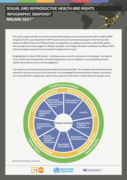
This country snapshot provides an overview of national data relating to sexual and reproductive health and rights (SRHR) throughout the life course. Realization of SRHR requires provision of comprehensive, people-centred services, that address the d
...
ifferent elements of SRHR, and which are supported by an enabling environment, quality health systems, and meaningful community engagement. Multiple, synergistic cross-linkages exist within and between the different SRHR elements, leading to sequential outcome benefits throughout the life course.
more

It is against this background that the Ministry of Health and Sanitation with its partners have
taken the lead to develop Essential Health Services Package (EHSP). The MOHS believes that the
dev
...
elopment of EHSP; defining the services that should be available at each level of care
(community to tertiary level), for each age cohort, and across each public health functions, not
only allows for more effective and equitable health service delivery, but also for the
establishment of a functional referral system and allocation of appropriate investments for high
impact interventions. The package is expected to set precedence in defining ‘essential’ set of
services for the population in Sierra Leone, structurally promoting integration of health services,
and providing succinct guidance to partners and stakeholders on the country priorities.
more
Participant Modules
Core Competencies in Adolescent Health and Development for Primary Care Providers
Pierre André Michaud, Valentina Baltag, Venkatraman Chandra-Mouli et al.
World Health Organization (WHO)
(2015)
Including a Tool to Assess the Adolescent Health and Development Component in Pre-Service Education of Health-Care Providers
