
Filter
414
Text search:
Western
Cape
Government,
South
Africa
Featured
Recommendations
26
New Publications
84
Language
Document type
No document type
211
Studies & Reports
92
Guidelines
37
Infographics
23
Manuals
22
Training Material
10
Situation Updates
8
Fact sheets
7
Strategic & Response Plan
4
Countries / Regions
South Africa
130
Global
18
Ghana
14
Liberia
13
Sierra Leone
11
Africa
10
Kenya
7
Guinea
5
Nigeria
5
Zambia
5
Malawi
5
Namibia
5
Senegal
4
Ethiopia
4
Uganda
4
Nepal
4
Lesotho
4
Tanzania
3
Rwanda
3
Mozambique
3
Eswatini/ Swaziland
3
Congo, Democratic Republic of
2
India
2
Cambodia
2
Myanmar / Burma
2
East and Southern Africa
2
Southern Africa
2
USA
1
Zimbabwe
1
Haiti
1
Philippines
1
South Sudan
1
Thailand
1
China
1
Papua New Guinea
1
Ukraine
1
Botswana
1
Angola
1
West and Central Africa
1
Middle East and North Africa
1
Latin America and the Carribbean
1
Western and Central Europe
1
Russia
1
Qatar
1
Estonia
1
Iran
1
Mauritius
1
Authors & Publishers
Publication Years
Category
Countries
188
Clinical Guidelines
24
Public Health
19
Women & Child Health
15
Key Resources
6
Capacity Building
4
Pharmacy & Technologies
2
Toolboxes
COVID-19
61
HIV
47
Mental Health
44
Disability
31
TB
27
Planetary Health
17
Global Health Education
14
Caregiver
13
AMR
10
NCDs
9
Ebola & Marburg
8
NTDs
8
Social Ethics
5
Pharmacy
4
Refugee
3
Zika
2
Health Financing Toolbox
2
Polio
1
Natural Hazards
1
Rapid Response
1
Specific Hazards
1
In the context of the coronavirus disease (COVID-19) pandemic response, WHO identifies young people as a priority target audience with specific concerns, experiences and behaviours. This policy brief provides relevant insights from behavioural evidence and a set of behavioural considerations for tho
...
The vast majority of people (80%) would welcome refugees with open arms, with many even prepared to take them into their own homes, according to a global survey commissioned by Amnesty International
Recently, a renewed interest in large-scale community health worker (CHW) programs has been seen globally. This renewal provides an opportune moment to take stock of issues and challenges such programs face and what can be done to make them as effective as possible. With this in mind, this manual is
...
Lancet Glob Health 2015; 3: e396–409. Open Access
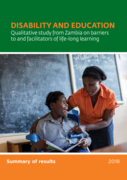
Qualitative study from Zambia on barriers to and facilitators of life-long learning
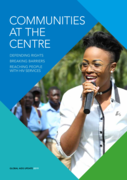
Defending Rights
Breaking Barriers
Reaching People with HIV Services
Global Aids Update 2019
An output of a series of workshops on psychosocial support held in 2004-2005 by the Bernard van Leer Foundation and the Coalition on Children Affected by AIDS. Authors Linda Richter, Geoff Foster and Lorraine Sherr discuss the issues surrounding psychosocial care and support for children made vulner
...
This report outlines the results of a scientific study of the impacts of weather, climate variability, and climate change on health in Mozambique, with a focus on diarrheal disease and malaria.
The WHO Guidelines on physical activity and sedentary behaviour provide evidence-based public health recommendations for children, adolescents, adults and older adults on the amount of physical activity (frequency, intensity and duration) required to offer significant health benefits and mitigate he
...
UNAIDS 2018 / Reference
mnesty International’s annual report on the state of the world’s human rights in 2021, published in March 2022, shows that promises to “build back better” after the Covid-19 pandemic were little more than lip service. Hopes of global cooperation withered in the face of vaccine hoarding and c
...
A Global Perspective
The aim of the WHO QualityRights tool kit is to support countries in assessing and
improving the quality and human rights of their mental health and social care facilities.
The tool kit is based on an extensive international review by people with mental disabilities
and their organizations. It ha
...
The COVID-19 pandemic has raised profound ethical challenges on an unprecedented global scale. These challenges include how to allocate scarce resources (especially vaccines and therapeutics), both within and between countries, whether and when to mandate vaccines and/or masks, whether and how to co
...
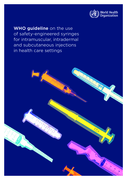
Injection practices worldwide and especially in low- and middle-income countries (LMICs) include multiple, avoidable unsafe practices that ultimately lead to the large-scale transmission of bloodborne viruses among patients, health care providers and the community at large.
Member States have requested WHO policy guidance on how to facilitate the implementation of national AMS activities in an integrated and programmatic approach. This policy guidance responds to that demand from Member States and is anchored in public health guiding principles in the human health sect
...
