
Filter
3610
Text search:
WHO
Europe
Featured
Recommendations
309
New Publications
537
Language
Document type
No document type
1622
Studies & Reports
935
Guidelines
453
Manuals
196
Strategic & Response Plan
106
Fact sheets
98
Training Material
65
Situation Updates
58
Infographics
36
Resource Platforms
22
Brochures
12
Online Courses
6
App
1
Countries / Regions
Western and Central Europe
289
Global
230
Ukraine
138
Eastern Europe
128
Russia
117
Eastern Europe and Central Asia
78
Germany
61
India
54
Latin America and the Carribbean
53
Syria
48
Africa
44
South Africa
36
Sierra Leone
32
Ethiopia
32
Asia
28
Liberia
26
Congo, Democratic Republic of
26
West and Central Africa
22
Middle East and North Africa
21
Myanmar / Burma
20
Nigeria
19
Uganda
19
Nepal
19
Kenya
19
South–East Asia Region
19
Tanzania
18
Brazil
18
Albania
17
Moldova
17
Guinea
16
East and Southern Africa
16
Tajikistan
16
Rwanda
14
Venezuela
14
Philippines
12
Zambia
12
Ghana
11
South Sudan
11
Afghanistan
11
Bangladesh
11
Malawi
11
Greece
11
Armenia
11
Georgia
11
Mozambique
10
Yemen
10
Pakistan
9
North Macedonia
9
Zimbabwe
8
Haiti
8
Iraq
8
Turkey
8
China
8
Namibia
8
Colombia
8
Romania
8
Kyrgyzstan
8
Burkina Faso
7
Senegal
7
USA
7
Somalia
7
Lebanon
7
Cambodia
7
Sudan
7
Poland
7
Cameroon
6
Niger
6
Jordan
6
Thailand
6
Indonesia
6
Botswana
6
Libya
6
Estonia
6
Kazakhstan
6
Belarus
6
Hungary
5
Chile
5
Western Pacific Region
5
Italy
4
Iran
4
Uzbekistan
4
Vietnam
4
France
4
Tunisia
4
Azerbaijan
4
Morocco
3
Central African Republic
3
Peru
3
Eswatini/ Swaziland
3
Serbia
3
Angola
3
Lesotho
3
Sri Lanka
3
Canada
3
United Kingdom
3
Mali
2
Guinea-Bissau
2
Côte d’Ivoire / Ivory Coast
2
Saudi Arabia
2
Croatia
2
Madagascar
2
Mexico
2
Palestine
2
Laos
2
Bulgaria
2
Lithuania
2
Slovakia
2
Turkmenistan
2
Portugal
2
Spain
2
Bosnia and Herzegovina
2
Egypt
1
Chad
1
Ireland
1
Papua New Guinea
1
Benin
1
Argentina
1
Switzerland
1
Burundi
1
El Salvador
1
Bolivia
1
North America
1
Gabon
1
Denmark
1
Belgium
1
Mauritius
1
Algeria
1
Israel
1
Latvia
1
Authors & Publishers
Publication Years
Category
Countries
680
Clinical Guidelines
265
Public Health
195
Key Resources
181
Women & Child Health
179
Capacity Building
54
Pharmacy & Technologies
26
Annual Report MEDBOX
3
Toolboxes
Mental Health
444
COVID-19
429
HIV
404
TB
278
Planetary Health
227
Refugee
168
Conflict
139
AMR
139
Disability
133
Global Health Education
121
Ebola & Marburg
86
Caregiver
86
NTDs
80
NCDs
80
Rapid Response
78
Health Financing Toolbox
61
Pharmacy
55
2.0 Rapid Response
45
Social Ethics
33
Zika
32
Specific Hazards
24
Natural Hazards
22
Polio
21
Cholera
17
Malaria
16
Typhoon
2
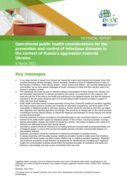
8 March 2022
A very large number of people from Ukraine are fleeing the country and entering the European Union (EU) countries bordering Ukraine (Hungary, Poland, Romania, Slovakia) and the EU-neighbourhood country of the Republic of Moldova. Those fleeing Ukraine - mainly women and children - are
...

It is estimated that prior to the war there were more than 250 000 people (1% of total population) living with HIV in Ukraine, of whom around 130 000 were receiving antiretroviral therapy.
As the displacement of people from Ukraine escalates, it is imperative that countries across
...
A One Health Response. A Briefing Note
WHO/Europe has launched a new guide, providing support to countries on how to apply behavioural and cultural insights (BCI) for health. It presents a simple step-wise approach, complemented by a ric
...
Despite some improvements, current levels of air pollution still pose a considerable risk to the environment and to human health in the WHO European Region. One issue of concern is that monitoring of particulate matter is very limited in the countri
...
This inventory has been compiled by WHO/Europe to help facilitate monitoring and reporting of national policies for the prevention of violence and injuries, in close collaboration with national foca
...
HIV, viral hepatitis and sexually transmitted infections continue to pose a major public health burden in the WHO European Region, affecting millions of people and causing premature mortality. Despite some progress being made in achieving the target
...
24 April 2020
Policy considerations
for the WHO European Region
This document provides key considerations for Member States to help them to decide on the modulation
of large-scale restrictive public health measures
(i.e. movement restrictions
...

Updated guidance. The guidance provides useful information to staff working in prisons, as well as to health and prison authorities, explaining how to prevent and address a potential outbreak of COVID-19. In addition, it aims to protect the health and well-being of all those
...
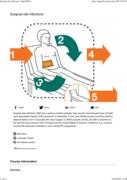
Surgical site infections (SSI) are a serious problem globally; they are the most frequent type of health care-associated infection (HAI) observed on admission in low- and middle-income countries (LMICs). Approximately one in 10 people who have surge
...
A resource for the continued implementation of the Consolidated Action Plan to Prevent and Combat Multidrug- and Extensively
Drug-Resistant Tuberculosis in the WHO European Region 2011-2015
Please download the whole Document (large size 28 MB) dir
...
Your very own buddy for info about COVID-19 in Europe and Central Asia.
Just a text message away!
This paper summarizes the evidence about the health effects of air pollution from particulate matter and their implications for policy-makers, with the aim of stimulating the development of more effective strategies to reduce
air pollution and its health effects in the countries of eastern
...
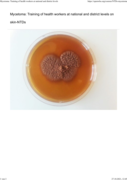
Mycetoma is a chronic, progressively destructive infectious disease of the subcutaneous tissues, affecting skin, muscle and bone. Mycetoma occurs in tropical and subtropical environments characterized by short rainy seasons and prolonged dry seasons that favour the growth of thorny bushes. Global bu
...
Supply of essential medicines and health technologies (6 April 2020)
This paper is one of a set of technical guidance papers developed by the WHO Regional Office for Europe to provide practical i
...

Trustworthy, evidence-based health guidelines form the basis of national policies affecting both patients and health-care workers. Emphasizing the link between robust evidence and people’s trust in their health systems, Dr Hans Henri P. Kluge, WHO
...

The active participation and engagement of health and care workers (HCWs) in health emergency preparedness, readiness and response is crucial to support risk communication, community engagement and infodemic management (RCCE-IM) interventions during emergencies. HCWs hold unique position
...
