
Filter
2753
Text search:
Respiratory
Infections
Featured
390
659
Language
2531
107
85
83
47
45
25
17
10
6
6
6
6
5
5
4
3
3
3
3
3
3
2
2
2
2
2
2
2
1
1
1
1
1
1
1
1
1
1
1
1
1
1
1
1
1
1
1
1
1
1
Document type
1213
629
454
156
94
87
51
28
14
10
8
4
3
2
Countries
164
126
91
81
57
57
53
52
50
50
48
47
45
43
39
39
39
38
38
34
32
32
27
26
24
24
21
20
20
19
19
19
18
18
17
16
15
14
14
12
12
12
12
11
10
10
8
8
8
8
7
7
7
6
6
6
5
5
5
5
5
5
5
4
4
4
4
4
3
3
3
3
3
3
3
3
3
3
3
3
3
3
2
2
2
2
2
2
2
2
2
2
2
2
2
2
1
1
1
1
1
1
1
1
1
1
1
1
1
1
1
1
1
1
1
1
1
1
1
Authors & Publishers
478
137
88
77
72
52
43
35
27
24
22
20
19
17
16
16
16
15
15
14
13
13
13
12
11
11
11
11
10
10
10
9
9
9
9
9
9
8
8
8
8
8
8
7
7
7
7
7
7
7
7
7
7
7
7
6
6
6
6
6
6
6
6
6
6
6
5
5
5
5
5
5
5
5
5
5
5
5
5
5
5
5
5
5
5
5
5
5
5
5
5
4
4
4
4
4
4
4
4
4
4
4
4
4
4
4
4
4
4
4
4
4
4
4
4
4
4
4
3
3
3
3
3
3
3
3
3
3
3
3
3
3
3
3
3
3
3
3
3
3
3
3
3
3
3
3
3
3
3
3
3
3
3
3
3
3
3
3
3
3
3
3
3
3
3
3
3
3
3
3
3
3
3
3
3
3
3
3
3
3
3
3
3
3
2
2
2
2
2
2
2
2
2
2
2
2
2
2
2
2
2
2
2
2
2
2
2
2
2
2
2
2
2
2
2
2
2
2
2
2
2
2
2
2
2
2
2
2
2
2
2
2
2
2
2
2
2
2
2
2
2
2
2
2
2
2
2
2
2
2
2
2
2
2
2
2
2
2
2
2
2
2
2
2
2
2
2
2
2
2
2
2
2
2
2
2
2
2
2
2
2
2
2
2
2
2
2
2
2
2
2
2
2
2
2
2
2
2
2
2
2
2
2
2
2
2
2
2
2
2
2
2
2
2
2
2
2
2
2
2
2
2
2
2
2
2
2
2
2
2
1
1
1
1
1
1
1
1
1
1
1
1
1
1
1
1
1
1
1
1
1
1
1
1
1
1
1
1
1
1
1
1
1
1
1
1
1
1
1
1
1
1
1
1
1
1
1
1
1
1
1
1
1
1
1
1
1
1
1
1
1
1
1
1
1
1
1
1
1
1
1
1
1
1
1
1
1
1
1
1
1
1
1
1
1
1
1
1
1
1
1
1
1
1
1
1
1
1
1
1
1
1
1
1
1
1
1
1
1
1
1
1
1
1
1
1
1
1
1
1
1
1
1
1
1
1
1
1
1
1
1
1
1
1
1
1
1
1
1
1
1
1
1
1
1
1
1
1
1
1
1
1
1
1
1
1
1
1
1
1
1
1
1
1
1
1
1
1
1
1
1
1
1
1
1
1
1
1
1
1
1
1
1
1
1
1
1
1
1
1
1
1
1
1
1
1
1
1
1
1
1
1
1
1
1
1
1
1
1
1
1
1
1
1
1
1
1
1
1
1
1
1
1
1
1
1
1
1
1
1
1
1
1
1
1
1
1
1
1
1
1
1
1
1
1
1
1
1
1
1
1
1
1
1
1
1
1
1
1
1
1
1
1
1
1
1
1
1
1
1
1
1
1
1
1
1
1
1
1
1
1
1
1
1
1
1
1
1
1
1
1
1
1
1
1
1
1
1
1
1
1
1
1
1
1
1
1
1
1
1
1
1
1
1
1
1
1
1
1
1
1
1
1
1
1
1
1
1
1
1
1
1
1
1
1
1
1
1
1
1
1
1
1
1
1
1
1
1
1
1
1
1
1
1
1
1
1
1
1
1
1
1
1
1
1
1
1
1
1
1
1
1
1
1
1
1
1
1
1
1
1
1
1
1
1
1
1
1
1
1
1
1
1
1
1
1
1
1
1
1
1
1
1
1
1
1
1
1
1
1
1
1
1
1
1
1
1
1
1
1
1
1
1
1
1
1
1
1
1
1
1
1
1
1
1
1
1
1
1
1
1
1
1
1
1
1
1
1
1
1
1
1
1
1
1
1
1
1
1
1
1
1
1
1
1
1
1
1
1
1
1
1
1
1
1
1
1
1
1
1
1
1
1
1
1
1
1
1
1
1
1
1
1
1
1
1
1
1
1
1
1
1
1
1
1
1
1
1
1
1
1
1
1
1
1
1
1
1
1
1
1
1
1
1
1
1
1
1
1
1
1
1
1
1
1
1
1
1
1
1
1
1
1
1
1
1
1
1
1
1
1
1
1
1
1
1
1
1
1
1
1
1
1
1
1
1
1
1
1
1
1
1
1
1
1
1
1
1
1
1
1
1
1
1
1
1
1
1
1
1
1
1
1
1
1
1
1
1
1
1
1
1
1
1
1
1
1
1
1
1
1
1
1
1
1
1
1
1
1
1
1
1
1
1
1
1
1
1
1
1
1
1
1
1
1
1
1
1
1
1
1
1
1
1
1
1
1
1
1
1
1
1
1
1
1
1
1
1
1
1
1
1
1
1
1
1
1
1
1
1
1
1
1
1
1
1
1
1
1
1
1
1
1
1
1
1
1
1
1
1
1
1
1
1
1
1
1
1
1
1
1
1
1
1
1
1
1
1
1
1
1
1
1
1
1
1
1
1
1
1
1
1
1
1
1
1
1
1
1
1
1
1
1
1
1
1
1
1
1
1
1
1
1
1
1
1
1
1
1
1
1
1
1
1
1
1
1
1
1
1
1
1
1
1
1
1
1
1
1
1
1
1
1
1
1
1
1
1
1
1
1
1
1
1
1
1
1
1
1
1
1
1
1
1
1
1
1
1
1
1
1
1
1
1
1
1
1
1
1
1
1
1
1
1
1
1
1
1
1
1
1
1
1
1
1
1
1
1
1
1
1
1
1
1
1
1
1
1
1
1
1
1
1
1
1
1
1
1
1
1
1
1
1
1
1
1
1
1
1
1
1
1
1
1
1
1
1
1
1
1
1
1
1
1
1
1
1
1
1
1
1
1
1
1
1
1
1
1
1
1
1
1
1
1
1
1
1
1
1
1
1
1
1
1
1
1
1
1
1
1
1
1
1
1
1
1
1
1
1
1
1
1
1
1
1
1
1
1
1
1
1
1
1
1
1
1
1
1
1
1
1
1
1
1
1
1
1
1
1
1
1
1
1
1
1
1
1
1
1
1
1
1
1
1
1
1
1
1
1
1
1
1
1
1
1
1
1
1
1
1
1
1
1
1
1
1
1
1
1
1
1
1
1
1
1
1
1
1
1
1
1
1
1
1
1
1
1
1
1
1
1
1
1
1
1
1
1
1
1
1
1
1
1
1
1
1
1
1
1
1
1
1
1
1
1
1
1
1
1
1
1
1
1
1
1
1
1
1
1
1
1
1
1
1
1
1
1
1
1
1
1
1
1
1
1
1
1
1
1
1
1
1
1
1
1
1
1
1
1
1
1
1
1
1
1
1
1
1
1
1
1
1
1
1
1
1
1
1
1
1
1
1
1
1
1
1
1
1
1
1
1
1
1
1
1
1
1
1
1
1
1
1
1
1
1
1
1
1
1
1
1
1
1
1
1
1
1
1
1
1
1
1
1
1
1
1
1
1
1
1
1
1
1
1
1
1
1
1
1
1
1
1
1
1
1
1
1
1
1
1
1
1
1
1
1
1
1
1
1
1
1
1
1
1
1
1
1
1
1
1
1
1
1
1
1
1
1
1
1
1
1
1
1
1
1
1
1
1
1
1
1
1
1
1
1
1
1
1
1
1
1
1
1
1
1
1
1
1
1
1
1
1
1
1
1
1
1
1
1
1
1
1
1
1
1
1
1
1
1
1
1
1
1
1
1
1
1
1
1
1
1
1
1
1
1
1
1
1
1
1
1
1
1
1
1
1
1
1
1
1
1
1
1
1
1
1
1
1
1
1
1
1
1
1
1
1
1
1
1
1
1
1
1
1
1
1
1
1
1
1
1
1
1
1
1
1
1
1
1
1
1
1
1
1
1
1
1
1
1
1
1
1
1
1
1
1
1
1
1
1
1
1
1
1
1
1
1
1
1
1
1
1
1
1
1
1
1
1
1
1
1
1
1
1
1
1
1
1
1
1
1
1
1
1
1
1
1
1
1
1
1
1
1
1
1
1
1
1
1
1
1
1
1
1
1
1
1
1
1
1
1
1
1
1
1
1
1
1
1
1
1
1
1
1
1
1
1
1
1
1
1
1
1
1
1
1
1
1
1
1
1
1
1
1
1
1
1
1
1
1
1
1
1
1
1
1
1
1
1
1
1
1
1
1
1
1
1
1
1
1
1
1
1
1
1
1
1
1
1
1
1
1
1
1
1
1
1
1
1
1
1
1
1
1
1
1
1
1
1
1
1
1
1
1
1
1
1
1
1
1
1
1
1
1
1
1
1
1
1
1
1
1
1
1
1
1
1
1
1
1
1
1
1
1
1
1
1
1
1
1
1
1
1
1
1
1
1
1
1
1
1
1
1
1
1
1
1
1
1
1
1
1
1
1
1
1
1
1
1
1
1
1
1
1
1
1
1
1
1
1
1
1
1
1
1
1
1
1
1
1
1
1
1
1
1
1
1
1
1
1
1
1
1
1
1
1
1
1
1
1
1
1
1
1
1
1
1
1
1
1
1
1
1
1
1
1
1
1
1
1
1
1
1
1
1
1
1
1
1
1
1
1
1
1
1
1
1
1
1
1
1
1
Publication Years
1076
1388
269
20
Category
1214
254
171
144
141
50
38
Toolboxes
538
169
141
104
97
71
70
65
60
58
55
48
46
43
40
40
32
18
18
15
14
13
12
12
2

N95 or equivalent respirators are single-use personal protective equipment (PPE) designed for use by health workers that provide direct care to patients with diseases transmitted by aerosols or during aerosol generating procedures (AGP) for patients with acute
...
respiratory disease, as is the case of COVID-19. • Given the current shortage of N95 and equivalent respirators, the World Health Organization (WHO) has suggested the possibility of their extended use by the same individual for up to 6 hours or the reprocessing of respirators when necessary.
more
Interim guidance, 6 October 2021
Direct detection of SARS-CoV-2 viral proteins (antigens) in nasal swabs and other respiratory secretions using lateral flow immunoassays (also known as rapid diagnostic tests, RDTs) offers a faster and less expensiv
...
e method to test for SARS-CoV-2 than the reference method, nucleic acid amplification tests (NAATs). This interim guidance offers recommendations on the priority uses of antigen-detecting rapid diagnostic tests (Ag-RDTs) in specific populations and settings, including (i) for primary case detection in symptomatic individuals suspected to be infected and asymptomatic individuals at high risk of COVID-19, (ii) for contact tracing, (iii) during outbreak investigations and (iv) to monitor trends of disease incidence in communities. Ag-RDTs meeting minimum performance requirements can be used outside of clinical and laboratory settings, including in communities, by trained operators in accordance with instructions. The guidance additionally provides recommendations on implementation, product selection and storage.
more
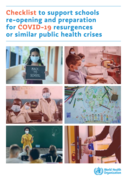
The checklist is aligned with, and builds upon, existing COVID-19-related WHO guidelines and is structured around protective measures related to: 1) hand hygiene and respiratory etiquette; 2) physical distancing; 3) use of masks in schools; 4) envir
...
onmental cleaning and ventilation; and 5) respecting procedures for isolation of all people with symptoms. The checklist is designed to support policy-makers, staff and officials from the education and health sectors, local authorities, school principals/leaders and administrators, teachers’ unions, community leaders, school staff, teachers, parents and caregivers.
more
Infectious Diseases in Ukraine
recommended
Data on Infectious Diseases in Ukraine Now Available as a Free eBook to Help Medics and Relief Efforts During the War.
• Data on the 215+ infectious diseases endemic to Ukraine
• All published data on infections imported into Ukraine
To downl
...
oad the book, please click the button below and use the coupon code EBOOKUKRAINE at checkout: The code will expire in 30 days.
March 2nd, 2022
more
Hendra virus (HeV) continues to pose a serious public health concern as spillover events occur sporadically. Terminally ill horses can exhibit a range of clinical signs including frothy nasal discharge, ataxia or forebrain signs. Early signs, if detected, can include depression, inappetence, colic o
...
r mild respiratory signs. All unvaccinated ill horses in areas where flying foxes exist, may potentially be infected with HeV, posing a significant risk to the veterinary community. Equivac® HeV vaccine has been fully registered in Australia since 2015 (and under an Australian Pesticides and Veterinary Medicines Authority special permit since 2012) for immunization of horses against HeV and is the most effective and direct solution to prevent disease transmission to horses and protect humans. No HeV vaccinated horse has tested positive for HeV infection. There is no registered vaccine to prevent, or therapeutics to treat, HeV infection in humans. Previous equine HeV outbreaks tended to cluster in winter overlapping with the foaling season (August to December), when veterinarians and horse owners have frequent close contact with horses and their bodily fluids, increasing the chance of zoonotic disease transmission. The most southerly case was detected in 2019 in the Upper Hunter region in New South Wales, which is Australia's Thoroughbred horse breeding capital. Future spillover events are predicted to move further south and inland in Queensland and New South Wales, aligning with the moving distribution of the main reservoir hosts. Here we (1) review HeV epidemiology and climate change predicted infection dynamics, (2) present a biosecurity protocol for veterinary clinics and hospitals to adopt, and (3) describe diagnostic tests currently available and those under development. Major knowledge and research gaps have been identified, including evaluation of vaccine efficacy in foals to assess current vaccination protocol recommendations.
more
Tuberculosis (TB) is the deadliest infectious disease in most low- and middle-income countries, claiming more than 4,000 lives each day. The unprecedented COVID-19 pandemic has seriously impacted people with pre-existing health conditions. People with TB are usually more vulnerable to other
...
infections, including the novel coronavirus, due to pre-existing lung damage. They are also at higher risk of developing complications from COVID-19.
more
Policy Brief November 2021 Available in English, Spanish and Portuguese
The COVID-19 pandemic has fueled the ongoing antimicrobial resistance (AMR) global crisis due to the increase in the use of antibiotics to treat COVID-19 patients, disruptions to infection prevention and control practices in o
...
verwhelmed health systems, and diversion of human and financial resources away from monitoring and responding to AMR threats. Moreover, AMR is likely to have caused more COVID-19 deaths, as secondary bacterial infections can worsen the outcome of severe and critical COVID-19 illness. Therefore, it is more urgent than ever to prioritize efforts towards AMR containment and support countries to improve the detection, characterization and rapid response to emerging AMR.
more
Liberia: Demographic and Health Survey 2019-2020
Liberia Institute of Statistics and Geo-Information Services (LISGIS) Monrovia, Liberia
The DHS Program ICF
(2021)
C2
The LDHS provides an opportunity to inform policy and provide data for planning, implementation, and monitoring and evaluation of national health programs. It is designed to provide up-to-date information on health indicators including fertility levels, sexual activity, fertility preferences, awaren
...
ess and use of family
planning methods, breastfeeding practices, nutritional status of children, early childhood and maternal mortality, maternal and child health, and awareness and behaviors regarding HIV/AIDS and other sexually transmitted infections. The study also incorporated measurements of HIV, hepatitis B, and hepatitis Cprevalence along with seroprevalence of Ebola virus disease antibodies, the results of which will be included in future addendums. In addition to presenting national estimates, the report provides estimates of key indicators for both rural and urban areas, the country’s 15 counties, and the capital, Monrovia.
more
Antimicrobial resistance (AMR) is a threat to global health and development and it contributes to millions of deaths worldwide each year. Inappropriate use and overuse of antibiotics are driving an increase in AMR and have a detrimental impact on the effectiveness of these critical medicines. Throug
...
h the Global Action Plan on AMR, WHO is working to improve the surveillance of antimicrobial resistance and reduce inappropriate antibiotic consumption.
There is a recognized need for high-quality resources to improve antibiotic prescribing globally. To address this need, a pragmatic approach was taken by WHO to develop actionable guidance for empiric antibiotic use.
The WHO AWaRe (Access, Watch, Reserve) antibiotic book provides concise, evidence-based guidance on the choice of antibiotic, dose, route of administration, and duration of treatment for more than 30 of the most common clinical infections in children and adults in both primary health care and hospital settings. The information included in the book supports the recommendations for antibiotics listed on the WHO Model Lists of Essential Medicines and Essential Medicines Children and the WHO AWaRe classification of antibiotics.
The WHO AWaRe antibiotic book is accompanied by summary infographics for each infection for both adults and children that provide a quick-reference guide for health care workers at the point of care.
more

The Pharmaceutical Forum of the Americas (PFA) has previously published guidelines and organised campaigns for community pharmacists on the prevention, detection and control of arbovirus infections in 2018 with a grant from the FIP Foundation for Ph
...
armacy Education and Research. Building on that expertise, FIP joined efforts with the PFA and is now publishing its first-ever handbook to support pharmacists in the
area of vector-borne diseases. As the integration of the regional forums in FIP advances, such collaborative projects are tangible results of an increasingly regionally informed and regionally targeted work by FIP.
more

Ebola disease and Marburg disease outbreaks continue to occur in Africa, with increased frequency. In addition to resulting in high mortality and morbidity, the outbreaks generate fear and mistrust about the response activities within the communities affected.
Infection prevention and control (IP
...
C) is a key pillar in the outbreak response; adherence to IPC practices can prevent and control transmission of infections to health and care workers, patients and their family members.
During the 2014-2016 West African Ebola disease outbreak, there was an urgent need for rapid IPC guidance to help support ministries of health, health-care providers and non-governmental organizations (NGOs). In response, WHO produced several documents related to the outbreak based on expert opinion, including IPC-specific documents and documents on clinical management that also referenced key IPC principles and practices. Since that time, many practices in the field have become institutionalized.
more
Infection prevention and control (IPC) in a CTC/ CTU IPC are all practical measures taken in the healthcare facility to prevent harm caused by infections to patients, health workers and communities.
The main goal of IPC in the cholera response is
...
to
• To reduce transmission of health care-associated infections of cholera and any other infectious disease
• To enhance the safety of staff, patients and visitors
• To enhance the ability of the organization/health care facility to respond to an outbreak
• To reduce the risk of the hospital (health care facility) itself amplifying the outbreak
Water, Sanitation and Hygiene (WASH)
WASH are all measures taken to guarantee environmental hygiene, safe water of all used within the health facility. It encompasses water, sanitation, waste management, cleaning within the health facility which in this case is CTU/C. A complete WASH package in the CTU/CTC reduces the risk of spread of Vibrio cholerae inside and outside the CTC/CTU.
The probability of spreading or acquiring cholera through a CTC/CTU can be highly reduced when proper IPC and WASH measures are respected, followed and monitored. These measures are, in principle, valid in CTC/CTUs and ORPs, although they need to be adapted to the specific characteristics of the facility concerned.
more

The "WHO Package of Essential Noncommunicable (PEN) Disease Interventions for Primary Health Care" provides a set of cost-effective, evidence-based interventions to address noncommunicable diseases (NCDs) such as cardiovascular diseases, diabetes, chronic
...
respiratory diseases, and cancers. Designed for implementation in primary healthcare settings, especially in low-resource environments, the package includes protocols for screening, diagnosis, treatment, and management of these diseases. The document emphasizes an integrated approach, supporting universal health coverage by empowering healthcare workers with practical tools to improve NCD care. It aims to reduce premature mortality from NCDs and enhance global health equity.
more

The "Primary Healthcare Standard Treatment Guidelines and Essential Medicines List" by the South African National Department of Health provides evidence-based guidelines for diagnosing and managing common medical conditions at the primary healthcare level. This document includes treatment protocols
...
for various health issues, such as infections, chronic diseases, maternal and child health, mental health, and emergency care. It aims to standardize care, promote rational medicine use, and ensure equitable access to essential medications across South Africa. The guidelines emphasize prevention, accurate diagnosis, and efficient treatment strategies to improve patient outcomes.
more
i. A person who is a contact of a probable or confirmed mpox case in the 21 days before the onset of signs or symptoms, and who presents with any of the following: acute onset of fever (>38.5°C), headache, myalgia (muscle pain/body aches), back pain, profound weakness or fatigue.
OR
ii. A per
...
son presenting since 01 January 2022 with an unexplained acute skin rash, mucosal lesions or lymphadenopathy (swollen lymph nodes). The skin rash may include single or multiple lesions in the ano-genital region or elsewhere on the body. Mucosal lesions may include single or multiple oral, conjunctival, urethral, penile, vaginal, or ano-rectal lesions. Ano-rectal lesions can also manifest as ano-rectal inflammation (proctitis), pain and/or bleeding.
AND
for which the following common causes of acute rash or skin lesions do not fully explain the clinical picture: varicella zoster, herpes zoster, measles, herpes simplex, bacterial skin infections, disseminated gonococcus infection, primary or secondary syphilis, chancroid, lymphogranuloma venereum, granuloma inguinale, molluscum contagiosum, allergic reaction (e.g., to plants); and any other locally relevant common causes of papular or vesicular rash.
more

Antimicrobials are medicines, including antibiotics, antivirals, antifungals, and antiparasitics, that are used to prevent and treat infections in humans, animals, and plants. Antimicrobial Resistance (AMR) arises when bacteria, viruses, fungi, and
...
parasites no longer respond to these medicines, rendering them ineffective and making infections more difficult to treat. This resistance increases the risk of disease spread, severe illness, disability, and death. Although AMR is a natural phenomenon driven by genetic
changes in pathogens, it is significantly accelerated by human activities such as the misuse and overuse of antimicrobials in healthcare, agriculture, and animal husbandry.
more

The ongoing global pandemic of SARS-CoV-2 (Covid-19) poses unique diagnostic and clinical management challenges in regions where seasonal epidemic-prone diseases are endemic. Diseases such as dengue, malaria, seasonal influenza, leptospirosis, chikungunya, scrub typhus and bacterial
...
infections often present with febrile syndromes that mimic or co-exist with SARS-CoV-2 infection, complicating diagnosis and treatment. This document provides guidelines for preventing, diagnosing and managing such co-infections. A high level of suspicion is essential during the monsoon and post-monsoon seasons, taking into account region-specific disease prevalence. While the WHO's case definition for SARS-CoV-2 is broad and sensitive, the need for parallel testing for co-infections, in accordance with the protocols of the MoHFW, ICMR, NVBDCP and NCDC, is necessitated by overlapping clinical features. Ensuring the availability of reliable rapid diagnostic kits and applying integrated clinical and laboratory approaches are crucial to improving patient outcomes in the context of concurrent infections.
Accessed on 26/08/2025.
more
Essential triple EMTCT services include testing for HIV, syphilis and HBV in ante-
natal care (ANC) settings; prompt and efficacious interventions to treat women
who test positive; prevent transmission of any of the infections to their children;
...
counseling for women and their partners to reduce transmission risk and ensure
appropriate treatment; encourage clean and safe delivery; appropriate follow
up of exposed infants including provision of HBV vaccine birth dose; promoting
optimal infant-feeding; and lifelong treatment and care for mothers living with
HIV or those eligible for treatment for hepatitis B infections and treatment for
syphilis.
more
Infectious diseases are constantly in transition. New diseases develop, known dis-eases become widespread or reemerge, and occasionally a disease is eradicated.Infectious diseases such as HIV, tuberculosis, and cholera are significant causes ofillness and death in many parts of the world. Health car
...
e personnel are on thefront lines, helping to protect their clients from infectious diseases and treatingthem when infections occur. During the course of their work, health care person-nel perform clinical procedures or other activities that can expose both them andtheir clients to potentially infectious microorganisms. Many of their clients aresick and thus may be more susceptible to infections or may have infections thatcan be transmitted to others. Fortunately, all staff working at health care facilities can perform simple proce-dures to minimize risk—to themselves and clients—and reduce the spread ofinfections. These practices can be integrated at minimal cost into the routineworkday at clinics and hospitals around the world. This reference booklet isspecifically designed for use at all levels of the health care system, from thelargest hospitals to the smallest dispensaries or health posts, in settings whereresources are scarce. This booklet, which was first published in 1999, has now been updated. Whilemost practices remain the same, there have been a few important changes—forexample, in recommendations related to hand hygiene and standard precautions.Nonetheless, this booklet continues to present practical recommendations forsimple and relatively low-cost procedures that can be implemented anywhere,with basic supplies and little to no high-technology equipment.
more
Interim Guidance, 12 July 2021; This tool was developed to assess present and surge capacities for the treatment of COVID-19 in health facilities. It allows health facilities to assess the availability and status of stockout of critical COVID-19 medicines, equipment and supplies on site and to ident
...
ify areas that need further attention to enable the facility to respond effectively to the pandemic. The tool encompasses key components that are essential to managing COVID-19 in a hospital setting, including:
health workforce (numbers, absences, COVID-19 infections, staff vaccinated for COVID-19 health workforce management, training and support);
medicines and medical supplies for management of COVID-19;
IPC capacities (protocols, safety measures, guidelines) and the availability of personal protective equipment (PPE) for staff;
diagnostic testing, imaging and patient monitoring devices and supplies
medical equipment for management of COVID-19, including O2 administration;
COVID-19 vaccine readiness ;
beds and space capacity.
more
