Filter
213
Text search:
Long
Lasting
Insecticidal
Nets
Featured
Recommendations
16
New Publications
84
Language
Document type
No document type
125
Guidelines
23
Studies & Reports
22
Manuals
19
Strategic & Response Plan
15
Training Material
5
Fact sheets
2
Situation Updates
1
Infographics
1
Countries / Regions
Latin America and the Carribbean
11
Nigeria
10
Liberia
9
Ghana
9
Uganda
9
India
9
Kenya
9
Global
9
Rwanda
8
Sierra Leone
7
Ethiopia
6
Myanmar / Burma
6
Tanzania
5
Zimbabwe
4
Zambia
4
Malawi
4
North America
4
Senegal
3
Philippines
3
Bangladesh
3
South–East Asia Region
3
Nepal
2
South Sudan
2
Cambodia
2
Papua New Guinea
2
Sri Lanka
2
Africa
2
Iran
2
Guinea
1
Burkina Faso
1
Mali
1
Morocco
1
Saudi Arabia
1
Cameroon
1
Haiti
1
Somalia
1
Pakistan
1
Iraq
1
Jordan
1
Lebanon
1
Syria
1
Thailand
1
China
1
Mozambique
1
Sudan
1
Benin
1
Dominican Republic
1
Namibia
1
North Macedonia
1
Honduras
1
Botswana
1
El Salvador
1
Greece
1
Guatemala
1
Madagascar
1
Nicaragua
1
Middle East and North Africa
1
Western and Central Europe
1
Asia
1
Venezuela
1
Albania
1
Laos
1
Georgia
1
Vietnam
1
Tunisia
1
Belize
1
Costa Rica
1
Panama
1
Authors & Publishers
Publication Years
Category
Countries
121
Public Health
39
Clinical Guidelines
8
Key Resources
8
Capacity Building
4
Women & Child Health
1
Pharmacy & Technologies
1
Toolboxes
Malaria
50
NTDs
14
Zika
4
Ebola & Marburg
3
COVID-19
3
Natural Hazards
2
Rapid Response
2
Refugee
2
Global Health Education
2
Pharmacy
2
Conflict
1
HIV
1
Caregiver
1
Health Financing Toolbox
1
The Malaria Ministerial Conference, co-hosted by WHO and the Government of Cameroon on 6 March 2024, brought together more than 400 stakeholders, including Ministers of Health and senior representatives from the African countries hardest hit by malaria, global health leaders, scientists, civil socie
...
Pillar 3 of the Global technical strategy for malaria 2016–2030 calls for the transformation of malaria surveillance into a core intervention in all malaria-endemic countries, as well as in countries which have eliminated malaria but remain susceptible to re-establishment of transmission. This ref
...
Anopheles stephensi is an invasive mosquito species which has been found spreading across Africa. While this species presents a new challenge for malaria control on the continent, its surveillance and management have been ongoing in Asia for many years. This document aims to summarize key lessons fr
...
Operational Guideline
An interregional meeting on leishmaniasis among neighbouring endemic
countries in the Eastern Mediterranean, African and European regions was organized by the World Health Organization (WHO) Regional Office for the Eastern
Mediterranean in Amman, Jordan, from 23 to 25 September 2018. The meeting w
...
Revised and expanded version of the Guidelines
The purpose of this handbook is to provide guidance to Member States on the practical aspects of maintaining sanitary standards at international borders at ports, airports, and ground crossings (points of entry) as set out in the International Health Regulations (2005). It provides technical advice
...
Final report 2016
There is a broad consensus nowadays that the Earth is warming up as a result of greenhouse gas emissions caused by anthropogenic activities. It is also clear that current trends in the fields of energy, development and population growth will lead to continuous and ever more dramatic climate change.
...
This document outlines the evaluation process that WHO undertakes to assess novel tools and strategies targeted at VBDs. Its aim is to articulate the linkage between the generation of evidence that demonstrates public health impact of novel interventions, and the development of policy recommendation
...
This report provides a review and analysis of the research landscape for three diseases – Chagas disease, human African trypanosomiasis and leishmaniasis – that disproportionately afflict poor and remote populations with limited access to health services. It represents the work of the disease re
...
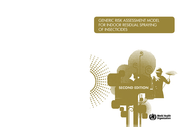
This document provides a generic model that can be used for risk assessment of exposure to insecticide products applied as indoor residual sprays. It aims to harmonize the risk assessment of such insecticides for public health use in order to generate comparable data for their registering and labell
...