Filter
291
Text search:
Countdown
Featured
Recommendations
9
New Publications
69
Language
Document type
No document type
138
Studies & Reports
104
Fact sheets
10
Manuals
9
Guidelines
9
Strategic & Response Plan
9
Infographics
7
Training Material
3
Situation Updates
1
Videos
1
Countries / Regions
Global
39
Kenya
14
Ethiopia
12
Sierra Leone
8
Tanzania
8
Nigeria
7
Nepal
7
Senegal
6
Uganda
6
Rwanda
6
Burkina Faso
5
Liberia
5
Zambia
5
Malawi
5
Latin America and the Carribbean
5
Africa
5
Congo, Democratic Republic of
4
Philippines
4
India
4
Myanmar / Burma
4
Ghana
3
Haiti
3
Cambodia
3
South Africa
3
Namibia
3
Guinea
2
Cameroon
2
Zimbabwe
2
Indonesia
2
Bangladesh
2
Benin
2
Eswatini/ Swaziland
2
Lesotho
2
Côte d’Ivoire / Ivory Coast
1
Niger
1
Togo
1
Somalia
1
Pakistan
1
Afghanistan
1
Germany
1
Mozambique
1
Central African Republic
1
Brazil
1
Ukraine
1
Botswana
1
Madagascar
1
Western and Central Europe
1
Paraguay
1
Asia
1
Eastern Europe
1
Kyrgyzstan
1
North America
1
Japan
1
Authors & Publishers
Publication Years
Category
Countries
128
Women & Child Health
28
Public Health
17
Clinical Guidelines
7
Key Resources
6
Capacity Building
1
Toolboxes
Planetary Health
50
Health Financing Toolbox
27
NCDs
16
Global Health Education
13
HIV
11
COVID-19
9
NTDs
8
Mental Health
4
AMR
4
Ebola & Marburg
3
Caregiver
2
Cholera
1
Polio
1
Natural Hazards
1
TB
1
Pharmacy
1
Malaria
1

Noncommunicable diseases (NCDs) – chief among them, cardiovascular diseases (heart disease and stroke), cancer, diabetes and chronic respiratory diseases – along with mental health, cause nearly three quarters of deaths in the world. Their drivers are social, environmental, commercial and geneti
...
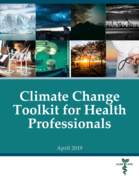
Climate Change Toolkit for Health Professionals
recommended
This toolkit consists of eight modules which have been prepared as stand-alone documents that can be read by themselves, but they have also been prepared to complement one another. It has been designed as a tool for health professionals and students in the health care and public health sectors who
...
Conflict, climate crisis and COVID-19 pose great threats to the health of women and children.
Since 2002 the distribution of external funding to reproductive, maternal, newborn, and child health (RMNCH) has become more equitable and better targeted at the poorest countries and those experiencing the highest mortality. The aid envelope is not large enough or well enough concentrated to close
...
This guide presents a basis for understanding how diarrhoeal diseases are currently influenced by climate and weather, and may be further exacerbated by climate change. It is a technical guide on how to conduct a Vulnerability & Adaptation assessment for diarrhoeal diseases and climate change, and p
...
Submitted to the US Agency for International Development by the
Systems for Improved Access to Pharmaceuticals and Services (SIAPS) Program.
This manual provides a framework to identify problems and design interventions to improve access to and use of medicines for children. It is a resource for
...
Development assistance for health (DAH) has grown substantially, totaling more than $31.3 billion in 2013. However, the degree that countries with high concentrations of armed conflict, ethnic violence, inequality, debt, and corruption have received this health aid and how that assistance might be d
...

Nepal has made substantial progress in reducing under-five mortality and is on track to achieve Millennium Development Goal 4, but advances in neonatal health are less encouraging. The objectives of this study were to assess relative and absolute inequalities in neonatal mortality over time, and to
...
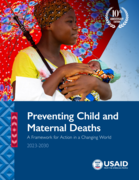
Improving the survival chances and quality of life of women, newborns, and children remains an urgent global challenge. Since 2012, substantial progress has been made in reducing maternal and under-5 deaths, and a only handful of countries are on target to meet the SDG targets in 2030. Yet, 5 millio
...
DHS Further Analysis Reports No. 108 - This report examines levels, trends, and inequalities in maternal health in Rwanda from 2010 to 2014-15 among women age 15-49 with a recent birth. The analysis uses Demographic and Health Survey (DHS) data for 15 key indicators of maternal health: 6 for antenat
...
Further Analysis of the 2000, 2005, and 2011 Demographic and Health Surveys. DHS Further Analysis Reports No. 79
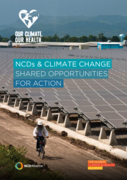
The policy brief focuses on four key areas for intervention - air pollution, energy, transport and food systems. Air pollution causes 7 million deaths annually, and is a leading cause of both NCDs and climate change, thus all interventions to reduce air pollution have a positive impact on both human
...
Development assistance for health (DAH) is an important part of financing healthcare in low- and middle-income countries. We estimated the gross disbursement of DAH of the 29 Development Assistance Committee (DAC) member countries of the Organisation for Economic Co-operation and Development (OECD)
...

The 10 recommendations in the COP26 Special Report on Climate Change and Health propose a set of priority actions from the global health community to governments and policy makers, calling on them to act with urgency on the current climate and health crises.
The recommendations were developed in
...
South Africa has faced many challenges over the past two decades, accomplishing profound positive changes in the social structure and government of the nation. This has not yet fully translated into better health for the population, however, particularly the poorest segment. In fact, the p
...

The Creditor Reporting System was analysed for official development assistance funding disbursements towards TB control in 11 conflict-affectedstates, 17 non-conflict-affected fragile states and 38 comparable non-fragile states. The amounts of funding, funding relative to burden, funding relative to
...