
Filter
327
Text search:
Cooper,
C.
M.
Featured
Recommendations
18
New Publications
48
Language
Document type
No document type
184
Studies & Reports
83
Guidelines
31
Manuals
15
Strategic & Response Plan
6
Training Material
4
Fact sheets
3
Situation Updates
1
Countries / Regions
India
10
Liberia
9
Latin America and the Carribbean
9
Malawi
8
Russia
8
Global
8
Kenya
6
Western and Central Europe
6
Zambia
5
Tanzania
5
South Africa
5
Ukraine
5
Eastern Europe
5
Sierra Leone
4
Ethiopia
4
Uganda
4
Rwanda
4
Lesotho
4
Burkina Faso
3
Zimbabwe
3
Argentina
3
Paraguay
3
Africa
3
Guinea
2
Mali
2
USA
2
Cameroon
2
Philippines
2
Indonesia
2
Eswatini/ Swaziland
2
South–East Asia Region
2
Asia
2
Canada
2
North America
2
Senegal
1
Congo, Democratic Republic of
1
Côte d’Ivoire / Ivory Coast
1
Ghana
1
Niger
1
Haiti
1
South Sudan
1
Iraq
1
Afghanistan
1
Germany
1
Egypt
1
Syria
1
Thailand
1
Bangladesh
1
Mozambique
1
Benin
1
Brazil
1
Burundi
1
Colombia
1
Angola
1
Madagascar
1
Myanmar / Burma
1
Chile
1
East and Southern Africa
1
Middle East and North Africa
1
Southern Africa
1
Estonia
1
United Kingdom
1
Portugal
1
Authors & Publishers
Publication Years
Category
Countries
71
Public Health
22
Clinical Guidelines
20
Women & Child Health
20
Key Resources
12
Capacity Building
2
Toolboxes
Mental Health
86
HIV
31
COVID-19
23
Planetary Health
20
NCDs
15
Caregiver
13
NTDs
12
Disability
11
AMR
10
TB
9
Ebola & Marburg
7
Social Ethics
4
Conflict
3
Natural Hazards
3
Rapid Response
3
Specific Hazards
3
Global Health Education
3
2.0 Rapid Response
3
Refugee
2
Pharmacy
2
Health Financing Toolbox
2
Prepared as an outcome of ICMR Subcommittee on Tongue Cancer | This Consensus Document on Management of Tongue Cancers summarizes the modalities of treatment including the site-specific anti-cancer therapies, supportive and palliative care and molecular markers and research questions. It also interw
...
ECDC Technical Report
In line with ECDC’s recommendations provided in the ’Risk Assessment of HTLV-1/2 transmission by tissue/cell transplantation’ dated 14 March 2012, this Directive replaces the term ‘incidence’ with ‘prevalence’ in the description of endemic areas of HTLV-1/2 i ...
In line with ECDC’s recommendations provided in the ’Risk Assessment of HTLV-1/2 transmission by tissue/cell transplantation’ dated 14 March 2012, this Directive replaces the term ‘incidence’ with ‘prevalence’ in the description of endemic areas of HTLV-1/2 i ...
Dengue is a mosquito-borne viral disease that occurs mainly in the tropics and subtropics but has a high potential to spread to new areas. Dengue infections are climate sensitive, so it is important to better understand how changing climate factors affect the potential for geographic spread and futu
...
Psoriasis, which can involve the skin, nails and joints, is a chronic, painful, disfiguring and disabling noncommunicable disease (NCD) for which there is no cure. It negatively impacts on quality of life. Some of those who suffer from the disease develop chronic, inflammatory arthritis (psoriatic a
...
Harm reduction: evidence, impacts and challenges
-10-
Global Health Science and Practice February 2022, https://doi.org/10.9745/GHSP-D-21-00237
Key Findings: Exposure to vaccination information from faith leaders and health facilities was associated with increased likelihood of vaccination uptake. The significant association between exposure to a
...
Prepared as an outcome of ICMR Subcommittee on Larynx & Hypopharynx Cancers | This consensus document on management of larynx and hypopharynx cancers summarizes the modalities of treatment including the site-specific anti-cancer therapies, supportive and palliative care and molecular markers and re
...
Many features of the environment have been found to exert an important influence on cardiovascular disease (CVD) risk, progression, and severity. Changes in the environment due to migration to different geographic locations, modifications in lifestyle choices, and shifts in social policies and cultu
...
The new guidelines provide public health guidance on pharmacological agents for managing hyperglycaemia in type 1 and type 2 diabetes for use in primary health-care in low-resource settings. These guidelines update the recommendations for managing hyperglycaemia in the WHO Package of Essential NCD I
...

Mental disorders impose an enormous burden on society, accounting for almost one in three years lived with disability globally. •In addition to their health impact, mental disorders cause a significant economic burden due to lost economic output and the link between mental disorders and costly, po
...
EU Compass for Action on Mental Health and Well-being
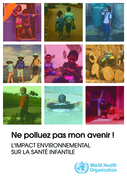
En 2015, 5,9 millions d'enfants de moins de cinq ans sont décédés (1). Les principales causes de mortalité infantile dans le monde sont la pneumonie, la prématurité, les complications durant l'accouchement, la septicémie néonatale, les anomalies congénitales, la diarrhée, les tra
...
The publication is designed to provide Ipas staff, trainers, partners and other health-care providers with access to up-to-date, evidence-based recommendations. In general, the recommendations are the same as those in the World Health Organization’s 2012 Safe Abortion: Technical and Policy Guidanc
...
In 2015, 5.9 million children under age five died (1). The major causes of child deaths globally are pneumonia, prematurity, intrapartum-related complications, neonatal sepsis, congenital anomalies, diarrhoea, injuries and malaria (2). Most of these diseases and conditions are at least partially cau
...
Las Infecciones Asociadas a la Atención en Salud (IAAS) son reconocidas en la
actualidad como un problema de salud pública y existen lineamientos guber-
namentales en la mayoría de los países para constituir sistemas de vigilancia y
Programas de Prevención y Control de Infecciones para con
...
BackgroundClimate change is one of the great challenges of our time. The consequences of climate change on exposed biological subjects, as well as on vulnerable societies, are a concern for the entire scientific community. Rising temperatures, heat waves, floods, tornadoes, hurricanes, droughts, fir
...
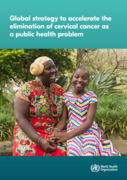
WHO‘s Global Strategy to Accelerate the Elimination of Cervical Cancer, launched today, outlines three key steps: vaccination, screening and treatment. Successful implementation of all three could reduce more than 40% of new cases of the disease and 5 million related deaths by 2050.
