
Filter
524
Text search:
African
Union,
Africa
CDC
Featured
Recommendations
87
New Publications
87
Language
Document type
No document type
184
Studies & Reports
104
Guidelines
75
Fact sheets
57
Manuals
33
Strategic & Response Plan
28
Infographics
16
Brochures
9
Training Material
8
Situation Updates
5
Resource Platforms
5
Countries / Regions
Africa
86
West and Central Africa
71
East and Southern Africa
59
Middle East and North Africa
57
Mozambique
24
South Sudan
21
Angola
21
Sierra Leone
19
Liberia
19
Yemen
18
Kenya
17
Guinea-Bissau
16
Syria
15
Nigeria
14
Senegal
13
Global
13
Guinea
9
Uganda
9
Zambia
9
South Africa
9
Malawi
9
Rwanda
8
Ethiopia
7
Zimbabwe
7
Ghana
6
Namibia
6
Tanzania
4
Eswatini/ Swaziland
4
Botswana
4
Congo, Democratic Republic of
3
Côte d’Ivoire / Ivory Coast
3
Germany
3
Western and Central Europe
3
Burkina Faso
2
Saudi Arabia
2
Cameroon
2
Niger
2
India
2
Somalia
2
Iraq
2
Chad
2
Bangladesh
2
Sudan
2
Central African Republic
2
Brazil
2
Tunisia
2
Mali
1
Morocco
1
Nepal
1
Pakistan
1
Jordan
1
Afghanistan
1
Lebanon
1
Egypt
1
Cambodia
1
Benin
1
Latin America and the Carribbean
1
Asia
1
Eastern Europe
1
Djibouti
1
Russia
1
Gabon
1
Mauritius
1
Portugal
1
Authors & Publishers
Publication Years
Category
Countries
271
Key Resources
28
Clinical Guidelines
24
Public Health
22
Pharmacy & Technologies
11
Women & Child Health
9
Capacity Building
5
Toolboxes
COVID-19
203
TB
35
Ebola & Marburg
34
Rapid Response
28
HIV
28
AMR
23
2.0 Rapid Response
20
Mental Health
10
Health Financing Toolbox
10
Global Health Education
9
Caregiver
8
Planetary Health
8
Refugee
6
Polio
5
Specific Hazards
5
Zika
4
NCDs
4
Disability
3
Pharmacy
3
Cholera
2
NTDs
2
Natural Hazards
1

2nd edition. The Event-based Surveillance Framework is intended to be used by authorities and agencies responsible for surveillance and response. This framework serves as an outline to guide stakeholders interested in implementing event-based surveillance (EBS) using a multisectoral, One Health appr
...
Event-based surveillance (EBS) is defined as the organized collection, monitoring, assessment and interpretation of mainly unstructured ad hoc information regarding health events or risks, which may represent an acute risk to health. Both indicator-based and event-based surveillance components serve
...

The article "Non-communicable diseases, injuries, and mental ill-health in Africa: the role of the Africa Centres for Disease Control and Prevention" examines the role of the
...
Bull World Health Organ 2022;100:50–59 | doi: http://dx.doi.org/10.2471/BLT.21.286689

This document outlines the plan for a continental cholera prevention and control with the implementation framework for the Cholera IMST, detailing its governance structure, strategic priorities, and operational modalities

Antimicrobials are medicines, including antibiotics, antivirals, antifungals, and antiparasitics, that are used to prevent and treat infections in humans, animals, and plants. Antimicrobial Resistance (AMR) arises when bacteria, viruses, fungi, and parasites no longer respond to these medicines, ren
...
The 2021 COVID-19 Strategic Preparedness and Response Plan (SPRP) for AFR serves as a regional guide for a holistic public health response to COVID‑19 at regional, national and sub-national levels. The 2021
SPRP:
1. Builds upon the lessons learnt from the implementation of the 2020 SPRP and outl
...

A study conducted by the World Health Organisation Regional Office for Africa. The COVID-19 pandemic has had a significant impact on older persons both globally and in the African region. Although o
...
Intra-African migration remains a dominant trend in contemporary African migration. The Strategy frames the Organization’s new orientation with Africa
...

A Situational Assessment and Five-YearAction Plan for the Africa CDC Strengthening Regional Public Health Institutions and Capacity for Surveillance and Response Program
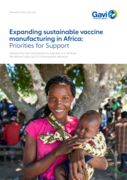
Despite high regional demand for vaccines valued at over US$ 1 billion annually, Africa’s vaccine industry provides only 0.1% of global supply. Vaccine inequity and hoarding at the start of the pandemic, which resulted in delays in obtaining COVID
...
The COVID-19 pandemic has exacerbated and added yet another layer of vulnerability to an already dire web of vulnerabilities of girls in the African continent, which constitute about 49% of the total child population. Critically, gender equality and
...

The Transformation Agenda (TA) ushered in an ambitious reform process intended to transform the World Health Organization (WHO) into an organization that is proactive, results-driven, accountable and which meets stakeholder expectations, towards transforming and improving public health services in t
...

Contact tracing may help limit COVID-19 transmission when the first cases are identified within a country but can be very resource intensive.
It is likely not to be feasible when community transmission is occurring and cases outside known transmission chains increase greatly.

Public health challenges over the past decade have highlighted the importance of approaching health through a holistic lens of human, animal, and environmental sectors, recognizing the need for a collaborative response against shared threats. Zoonotic diseases, transmitted between humans and animals
...
PERC produces regional and member state situation analyses, updated regularly.
