Filter
2444
Text search:
Child
Health
Division
Featured
Recommendations
171
New Publications
755
Language
Document type
No document type
1567
Studies & Reports
398
Guidelines
201
Manuals
109
Strategic & Response Plan
60
Fact sheets
55
Training Material
34
Situation Updates
12
Resource Platforms
5
Brochures
2
Infographics
1
Countries / Regions
India
161
Kenya
135
Nepal
114
Global
86
Bangladesh
78
Uganda
64
Myanmar / Burma
59
Liberia
54
Nigeria
54
Rwanda
51
Ghana
44
Ethiopia
42
Namibia
42
South Africa
41
Malawi
41
Western and Central Europe
36
Senegal
35
Zambia
35
Sierra Leone
33
Africa
33
Congo, Democratic Republic of
32
Latin America and the Carribbean
30
Tanzania
29
Philippines
23
Lesotho
22
Syria
20
Indonesia
19
Zimbabwe
18
Ukraine
17
South Sudan
15
Asia
15
Botswana
14
Benin
13
Pakistan
12
South–East Asia Region
12
Eastern Europe
12
Cameroon
10
Mozambique
10
Yemen
10
East and Southern Africa
10
Guinea
9
Burkina Faso
9
Haiti
9
Cambodia
9
Central African Republic
9
Middle East and North Africa
9
Mali
8
Vietnam
8
Afghanistan
7
Thailand
7
Colombia
7
West and Central Africa
7
Jordan
6
Western Pacific Region
6
Eastern Europe and Central Asia
6
Brazil
5
Laos
5
Côte d’Ivoire / Ivory Coast
4
Togo
4
Germany
4
China
4
Peru
4
Sri Lanka
4
Venezuela
4
Russia
4
Somalia
3
Lebanon
3
Papua New Guinea
3
Sudan
3
Argentina
3
Burundi
3
Madagascar
3
Bhutan
3
Moldova
3
Spain
3
USA
2
Niger
2
Egypt
2
Chad
2
Gambia
2
Malaysia
2
Eswatini/ Swaziland
2
Croatia
2
Mexico
2
Chile
2
Paraguay
2
Poland
2
Timor Leste/ East Timor
2
Tajikistan
2
Romania
2
Kyrgyzstan
2
Jamaica
2
Japan
2
Portugal
2
Guinea-Bissau
1
Iraq
1
Turkey
1
Mauritania
1
Singapore
1
Dominican Republic
1
North Macedonia
1
Switzerland
1
Serbia
1
Hungary
1
Ecuador
1
Bolivia
1
Libya
1
Angola
1
Other region
1
Solomon Islands
1
Albania
1
Southern Africa
1
Canada
1
Bulgaria
1
Slovakia
1
Iran
1
Turkmenistan
1
Maldives
1
United Kingdom
1
Azerbaijan
1
Belarus
1
Israel
1
Bosnia and Herzegovina
1
Authors & Publishers
Publication Years
Category
Countries
1250
Women & Child Health
202
Clinical Guidelines
143
Key Resources
114
Public Health
99
Capacity Building
38
Pharmacy & Technologies
10
Toolboxes
Mental Health
165
HIV
138
Disability
132
COVID-19
111
TB
77
Conflict
59
Global Health Education
56
Caregiver
54
Planetary Health
50
Refugee
46
NTDs
36
AMR
33
Rapid Response
29
Ebola & Marburg
28
Health Financing Toolbox
28
NCDs
26
Malaria
25
Pharmacy
23
Zika
16
Natural Hazards
15
2.0 Rapid Response
14
Polio
11
Cholera
8
Specific Hazards
7
Social Ethics
7
Globally, it is estimated that 128.6 million people are currently in need of humanitarian assistance. Of these individuals, approximately one-fourth are women and girls of reproductive age. Although family planning is one of the most life-saving, empowering, and cost-effective interventions for wome
...
This manual aims to provide practical guidance to field workers in order to maximise the nutritional impact of food security & livelihoods (FSL) interventions. This requires the systematic use of a ‘nutrition lens’ at each step of the project cycle and a close collaboration between sectors.

By 2100, new UN figures show that 4 of today’s 10 most populous nations will be replaced by African countries.
Brazil, Bangladesh, Russia and Mexico—where populations are projected to stagnate or decline—will drop out. In their place: Democratic Republic of the Congo, Ethiopia, Tanzania and E
...
WHO published and launched the third part of the Wheelchair Service Training Package (WSTP) series consisting of two sub-packages: the Wheelchair Service Training Package for Managers (WSTPm) and the Wheelchair Service Training Package for Stakeholders (WSTPs). WHO recognises that in order to develo
...
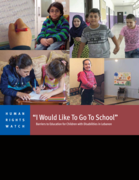
This report finds that although Lebanese law bars schools from discriminating against children with disabilities, public and private schools exclude many children with disabilities. For those allowed to enroll, schools often lack reasonable accommodations, such as modifications to the classroom envi
...
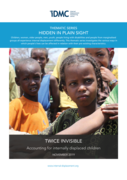
Internally displaced children are twice invisible in global and national data. First, because internally displaced people (IDPs) of all ages are often unaccounted for. Second, because age-disaggregation of any kind of data is limited, and even more so for IDPs.
Planning adequate responses to meet
...
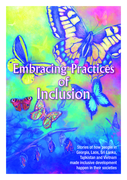
Stories of how people in Georgia, Laos, Sri Lanka, Tajikistan and Vietnam made inclusive development happen in their societies. It contains significant experiences andlessons learnt about the practice of inclusive development for a wide range of excluded or marginalised groups, useful for policy-mak
...
This study examines over 20 years of CBR implementation in Nepal. It includes an overview of CBR interventions, provides analysis of approaches and activities in terms of impact and sustainability and makes recommendations for future developments in CBR. This resource is useful for people interested
...

In view of the ongoing political, peace and reconciliation, administrative and economic reforms as well as plans to establish the United Nations Development Assistance Framework (UNDAF) in 2018, WFP extended the current Protracted Relief and Recovery Operation (PRRO 200299), launched in January 2
...
. To echo this extension and provide a more appropriate response to the country's rapid and multi-pronged transition, WFP adopted a transition strategy with gradually reduced emphasis on humanitarian assistance and greater focus on early recovery and development interventions. WFP's strategic engagement in-country was driven by the overarching goal to assist Myanmar to achieve the national Zero Hunger Challenge by 2025, and was guided by three priorities: emergency preparedness and response; nutrition; and provision of social safety nets.
22.9% of surveyed Syrian refugees aged 2 years and above had disabilities (1,374 persons out of 6,003 persons): 13.8% in Azraq camp, 23.5% in Irbid and 30.5% in Zaatari camp. Understanding disability as the level of difficulties a person is facing when performing basic activities that could put him/
...
Increasing the Odds: A Series to Understanding Gambling Disorders. Vol.7
All editions of Increasing the Odd sare available as a free download at https://www.icrg.org/resources/monographs
The report provides lessons and recommendations for other organizations and the wider humanitarian community on engaging persons with disabilities at all levels of humanitarian work. It draws on consultations with over 700 displaced persons—including persons with disabilities, their families, and
...