
Filter
2711
Text search:
fight
Featured
242
710
Language
2549
88
59
50
38
28
27
20
7
4
4
4
4
4
4
4
3
3
3
2
2
2
2
2
2
2
2
2
2
2
2
2
2
1
1
1
1
1
1
1
1
1
1
1
1
1
1
1
Document type
1412
565
226
135
122
88
71
27
20
16
13
7
4
2
Countries
165
105
88
82
64
62
59
58
55
48
47
46
42
42
42
39
34
34
33
32
32
31
29
28
28
27
26
26
24
24
24
23
22
22
21
21
19
18
17
17
14
13
13
12
11
10
10
10
10
9
9
9
9
8
8
8
7
6
6
6
6
6
5
5
5
5
5
4
4
4
4
4
4
4
4
3
3
3
3
3
3
3
3
3
3
3
3
2
2
2
2
2
2
2
2
2
2
2
2
2
2
1
1
1
1
1
1
1
1
1
1
1
1
1
1
1
1
1
1
1
1
1
1
1
1
1
1
1
1
1
1
1
1
Authors & Publishers
287
84
78
69
67
65
58
43
43
30
28
27
23
23
22
22
20
19
14
13
13
13
13
11
11
11
11
10
10
10
10
9
9
9
9
9
9
9
8
8
8
8
8
8
8
8
8
8
8
8
7
7
7
7
7
7
7
7
7
7
7
7
6
6
6
6
6
6
6
6
6
6
6
6
6
5
5
5
5
5
5
5
5
5
5
5
5
5
5
5
5
5
5
5
5
5
5
5
5
4
4
4
4
4
4
4
4
4
4
4
4
4
4
4
4
4
4
4
4
4
4
4
4
4
4
4
4
4
4
4
4
3
3
3
3
3
3
3
3
3
3
3
3
3
3
3
3
3
3
3
3
3
3
3
3
3
3
3
3
3
3
3
3
3
3
3
3
3
3
3
3
3
3
3
3
3
3
3
3
3
3
3
3
3
3
3
3
3
3
3
3
3
3
3
3
2
2
2
2
2
2
2
2
2
2
2
2
2
2
2
2
2
2
2
2
2
2
2
2
2
2
2
2
2
2
2
2
2
2
2
2
2
2
2
2
2
2
2
2
2
2
2
2
2
2
2
2
2
2
2
2
2
2
2
2
2
2
2
2
2
2
2
2
2
2
2
2
2
2
2
2
2
2
2
2
2
2
2
2
2
2
2
2
2
2
2
2
2
2
2
2
2
2
2
2
2
2
2
2
2
2
2
2
2
2
2
2
2
2
2
2
2
2
2
2
2
2
2
2
2
2
2
2
2
2
2
2
2
2
2
2
2
2
2
2
2
2
2
2
2
2
2
2
2
2
2
2
2
1
1
1
1
1
1
1
1
1
1
1
1
1
1
1
1
1
1
1
1
1
1
1
1
1
1
1
1
1
1
1
1
1
1
1
1
1
1
1
1
1
1
1
1
1
1
1
1
1
1
1
1
1
1
1
1
1
1
1
1
1
1
1
1
1
1
1
1
1
1
1
1
1
1
1
1
1
1
1
1
1
1
1
1
1
1
1
1
1
1
1
1
1
1
1
1
1
1
1
1
1
1
1
1
1
1
1
1
1
1
1
1
1
1
1
1
1
1
1
1
1
1
1
1
1
1
1
1
1
1
1
1
1
1
1
1
1
1
1
1
1
1
1
1
1
1
1
1
1
1
1
1
1
1
1
1
1
1
1
1
1
1
1
1
1
1
1
1
1
1
1
1
1
1
1
1
1
1
1
1
1
1
1
1
1
1
1
1
1
1
1
1
1
1
1
1
1
1
1
1
1
1
1
1
1
1
1
1
1
1
1
1
1
1
1
1
1
1
1
1
1
1
1
1
1
1
1
1
1
1
1
1
1
1
1
1
1
1
1
1
1
1
1
1
1
1
1
1
1
1
1
1
1
1
1
1
1
1
1
1
1
1
1
1
1
1
1
1
1
1
1
1
1
1
1
1
1
1
1
1
1
1
1
1
1
1
1
1
1
1
1
1
1
1
1
1
1
1
1
1
1
1
1
1
1
1
1
1
1
1
1
1
1
1
1
1
1
1
1
1
1
1
1
1
1
1
1
1
1
1
1
1
1
1
1
1
1
1
1
1
1
1
1
1
1
1
1
1
1
1
1
1
1
1
1
1
1
1
1
1
1
1
1
1
1
1
1
1
1
1
1
1
1
1
1
1
1
1
1
1
1
1
1
1
1
1
1
1
1
1
1
1
1
1
1
1
1
1
1
1
1
1
1
1
1
1
1
1
1
1
1
1
1
1
1
1
1
1
1
1
1
1
1
1
1
1
1
1
1
1
1
1
1
1
1
1
1
1
1
1
1
1
1
1
1
1
1
1
1
1
1
1
1
1
1
1
1
1
1
1
1
1
1
1
1
1
1
1
1
1
1
1
1
1
1
1
1
1
1
1
1
1
1
1
1
1
1
1
1
1
1
1
1
1
1
1
1
1
1
1
1
1
1
1
1
1
1
1
1
1
1
1
1
1
1
1
1
1
1
1
1
1
1
1
1
1
1
1
1
1
1
1
1
1
1
1
1
1
1
1
1
1
1
1
1
1
1
1
1
1
1
1
1
1
1
1
1
1
1
1
1
1
1
1
1
1
1
1
1
1
1
1
1
1
1
1
1
1
1
1
1
1
1
1
1
1
1
1
1
1
1
1
1
1
1
1
1
1
1
1
1
1
1
1
1
1
1
1
1
1
1
1
1
1
1
1
1
1
1
1
1
1
1
1
1
1
1
1
1
1
1
1
1
1
1
1
1
1
1
1
1
1
1
1
1
1
1
1
1
1
1
1
1
1
1
1
1
1
1
1
1
1
1
1
1
1
1
1
1
1
1
1
1
1
1
1
1
1
1
1
1
1
1
1
1
1
1
1
1
1
1
1
1
1
1
1
1
1
1
1
1
1
1
1
1
1
1
1
1
1
1
1
1
1
1
1
1
1
1
1
1
1
1
1
1
1
1
1
1
1
1
1
1
1
1
1
1
1
1
1
1
1
1
1
1
1
1
1
1
1
1
1
1
1
1
1
1
1
1
1
1
1
1
1
1
1
1
1
1
1
1
1
1
1
1
1
1
1
1
1
1
1
1
1
1
1
1
1
1
1
1
1
1
1
1
1
1
1
1
1
1
1
1
1
1
1
1
1
1
1
1
1
1
1
1
1
1
1
1
1
1
1
1
1
1
1
1
1
1
1
1
1
1
1
1
1
1
1
1
1
1
1
1
1
1
1
1
1
1
1
1
1
1
1
1
1
1
1
1
1
1
1
1
1
1
1
1
1
1
1
1
1
1
1
1
1
1
1
1
1
1
1
1
1
1
1
1
1
1
1
1
1
1
1
1
1
1
1
1
1
1
1
1
1
1
1
1
1
1
1
1
1
1
1
1
1
1
1
1
1
1
1
1
1
1
1
1
1
1
1
1
1
1
1
1
1
1
1
1
1
1
1
1
1
1
1
1
1
1
1
1
1
1
1
1
1
1
1
1
1
1
1
1
1
1
1
1
1
1
1
1
1
1
1
1
1
1
1
1
1
1
1
1
1
1
1
1
1
1
1
1
1
1
1
1
1
1
1
1
1
1
1
1
1
1
1
1
1
1
1
1
1
1
1
1
1
1
1
1
1
1
1
1
1
1
1
1
1
1
1
1
1
1
1
1
1
1
1
1
1
1
1
1
1
1
1
1
1
1
1
1
1
1
1
1
1
1
1
1
1
1
1
1
1
1
1
1
1
1
1
1
1
1
1
1
1
1
1
1
1
1
1
1
1
1
1
1
1
1
1
1
1
1
1
1
1
1
1
1
1
1
1
1
1
1
1
1
1
1
1
1
1
1
1
1
1
1
1
1
1
1
1
1
1
1
1
1
1
1
1
1
1
1
1
1
1
1
1
1
1
1
1
1
1
1
1
1
1
1
1
1
1
1
1
1
1
1
1
1
1
1
1
1
1
1
1
1
1
1
1
1
1
1
1
1
1
1
1
1
1
1
1
1
1
1
1
1
1
1
1
1
1
1
1
1
1
1
1
1
1
1
1
1
1
1
1
1
1
1
1
1
1
1
1
1
1
1
1
1
1
1
1
1
1
1
1
1
1
1
1
1
1
1
1
1
1
1
1
1
1
1
1
1
1
1
1
1
1
1
1
1
1
1
1
1
1
1
1
1
1
1
1
1
1
1
1
1
1
1
1
1
1
1
1
1
1
1
1
1
1
1
1
1
1
1
1
1
1
1
1
1
1
1
1
1
1
1
1
1
1
1
1
1
1
1
1
1
1
1
1
1
1
1
1
1
1
1
1
1
1
1
1
1
1
1
1
1
1
1
1
1
1
1
1
1
1
1
1
1
1
1
1
1
1
1
1
1
1
1
1
1
1
1
1
1
1
1
1
1
1
1
1
1
1
1
1
1
1
1
1
1
1
1
1
1
1
1
1
1
1
1
1
1
1
1
1
1
1
1
1
1
1
1
1
1
1
1
1
1
1
1
1
1
1
1
1
1
1
1
1
1
1
1
1
1
1
1
1
1
1
1
1
1
1
1
1
1
1
1
1
1
1
1
1
1
1
1
1
1
1
1
1
1
1
1
1
1
1
1
1
1
1
1
1
1
1
1
1
1
1
1
1
1
1
1
1
1
1
1
1
1
1
1
1
1
1
1
1
1
1
1
1
1
1
1
1
1
1
1
1
1
1
1
1
1
1
1
1
1
1
1
1
1
1
1
1
1
1
1
1
1
1
1
1
1
1
1
1
1
1
1
1
1
1
1
1
1
1
1
1
1
1
1
1
1
1
1
1
1
1
1
1
1
1
1
1
1
1
1
1
1
1
1
1
1
1
1
1
1
1
1
1
1
1
1
1
1
1
1
1
1
1
1
1
1
1
1
1
1
1
1
1
1
1
1
1
1
1
1
1
1
1
1
1
1
1
1
1
1
1
1
1
1
1
1
1
1
1
1
1
1
1
1
1
1
1
1
1
1
1
1
1
1
1
1
1
1
1
1
1
1
1
1
1
1
1
1
1
1
1
1
1
1
1
1
1
1
1
1
1
1
1
1
1
1
1
1
1
1
1
1
1
1
1
1
1
1
1
1
1
1
1
1
1
1
1
1
1
1
1
1
1
1
1
1
1
1
1
1
1
1
1
1
1
1
1
1
1
1
1
1
1
1
1
1
1
1
1
1
1
1
1
1
1
1
1
1
1
1
1
1
1
1
1
1
1
1
1
1
1
1
1
1
1
1
1
1
1
1
1
1
1
1
1
1
1
1
1
1
1
1
1
1
1
1
1
1
1
1
1
1
1
1
1
1
1
1
1
1
1
1
1
1
1
1
1
1
1
1
1
1
1
1
1
1
1
1
1
1
1
1
1
1
1
1
1
1
1
1
1
1
1
1
1
1
1
1
1
1
1
1
1
1
1
1
1
1
1
1
1
1
1
1
1
1
1
1
1
1
1
1
1
1
1
1
1
1
1
1
1
1
1
1
1
1
1
1
1
1
1
1
1
1
1
1
1
1
1
1
1
1
1
1
1
1
1
1
1
1
1
1
1
1
1
1
1
1
1
1
1
1
1
1
1
1
1
1
1
1
1
1
1
1
1
1
1
1
1
1
1
1
1
1
1
1
1
1
1
1
1
1
1
1
1
1
1
1
1
1
1
1
1
1
1
1
1
1
1
1
1
1
1
1
1
1
1
1
1
1
1
1
1
1
1
1
1
1
1
1
1
1
1
1
1
1
1
1
1
1
1
1
1
1
1
1
1
1
1
1
1
1
1
1
1
1
1
1
1
1
1
1
1
1
1
1
1
1
1
1
1
1
1
Publication Years
924
1611
167
8
1
Category
1061
116
109
109
103
53
17
3
Toolboxes
278
267
163
135
119
105
92
90
77
75
70
66
58
56
54
33
26
21
19
18
13
13
13
13
8
1

COVID-19 pandemic has taken the entire world by surprise, creating the greatest global catastrophe since WWII, impacting all spheres of our societies, including health, economy, social protection, as well as security, and human rights. The virus affects people and communities indiscriminately in all
...
parts of the world, with particularly strong impact on poorer communities, especially those already suffering from the humanitarian consequences caused by conflicts, social-economic problems or disasters.
more

Updated version – September 2020
The COVID-19 pandemic is affecting everyone. Globally, millions of people have been infected with the virus, while hundreds of thousands have lost their lives. In Moldova, the pandemic is placing an ever-increasing pressure on the health care and social protectio
...
n systems, causing major disruptions to economic processes and limitations to social life, deepening inequalities and proving how vulnerable we are.
more
his practical Guide serves as a companion to the “WHO guideline: recommendations on digital interventions for health system strengthening” and provides a systematic process for countries to develop a costed implementation plan for digital health within one or more health programme areas, drawing
...
guidance from the WHO guideline–recommended digital health interventions, providing direction to ensure investments are needs-based and contribute effective and interoperable systems aligned with national digital architecture, country readiness, health system and policy goals.
more
Conflict, in its active or latent forms, is everywhere. The COVID-19 pandemic has demonstrated that public health emergencies can strike any country at any time. Given the universality of and interconnections between conflict, humanitarian crises, and public health emergencies, practitioners trained
...
in one sector or the other are being called upon to understand how to navigate all of these emergencies at once.
more
Intra-African migration remains a dominant trend in contemporary African migration. The Strategy frames the Organization’s new orientation with Africa at policy and strategic levels. It is consistent with the goals and objectives of the Global Compact for Safe, Orderly and Regular Migration (GCM)
...
to which almost all African countries adhere, as well as the 2030 Agenda for sustainable development, the IOM strategic vision, and IOM Migration Governance Framework (MIGoF).
more
The Bolivarian Republic of Venezuela has been facing a sociopolitical and economic situation that has negatively impacted social and health indicators. There have been intensified population movements both within the country and to other countries, particularly to Argentina, Brazil, Chile, Colombia,
...
Costa Rica, Curaçao, Dominican Republic, Ecuador, Guyana, Mexico, Panama, Paraguay, Peru, Trinidad and Tobago, and Uruguay. Since 2017, an estimated 5.2 million Venezuelans have migrated to other countries, including an estimated 4.3 million who have gone to countries in Latin America and the Caribbean.
more
COVID-19 - Home-based Care
recommended
How to do it best for the patient and the family
Временные методические рекомендации профилактика, диагностика и лечение новой коронавирусной инфекции (Версия 9: 26.10.2020)
recommended
Камкин Евгений Геннадьевич, Костенко Наталья Алексеевна et. al.
Министерство здравоохранения Российской Федерации
(2020)
C2
Рекомендации, представленные в документе, в значительной степени
базируются на материалах по диагностике, профилактике и лечению COVID19, опубликованных специалистÐ
...
°ми ВОЗ, китайского, американского
и европейского центров по контролю за заболеваемостью, анализе
отечественных и зарубежных научных публикаций, нормативно-правовых
документах Минздрава России и Роспотребнадзора.
Методические рекомендации предназначены для руководителей
медицинских организаций и их структурных подразделений, врачейтерапевтов, врачей общей практики, врачей-инфекционистов, врачейпедиатров, врачей-акушеров-гинекологов, врачей-реаниматологов отделений
интенсивной терапии инфекционных стационаров, врачей
скорой медицинской помощи, а также иных специалистов, работающих
в сфере организации оказания медицинской помощи пациентам с COVID-19.
more
The document "Priority medical devices list for the COVID-19 response and associated technical specifications" complements this guideline.
This document provides interim guidance on the quality, performance characteristics and related standards of personal protective equipment (PPE) to be used i
...
n the context of COVID-19. This includes WHO Priority Medical Devices, specifically: surgical masks, non-surgical masks, gloves, googles, face shields, gowns and N95 masks. It is intended for procurement agencies, occupational health departments, infection prevention and control departments or focal points, health facility administrators, biomedical and materials engineering, PPE manufacturers and public health authorities at both national and facility levels.
more

The WHO country office for Ghana, began the year 2019 with a 4-day staff retreat at the Busua Beach Resort in the Western Region from 04 to 08 March 2019. The theme for the retreat was ‘Impacting the Health and Lives of the people of Ghana through the Triple Billion Goal”. The staff outlined pri
...
orities and strategies to strengthen WHO’s contribution to the national health agenda during the year. Working in collaboration with the Ministry of Health/Ghana Health Service and other allied health institutions and stakeholders, the WHO country office, provided support aimed at achieving its
mission which is attaining the highest level of health by the people in the country though its six operational areas which are (i) Communicable Diseases (ii) Non-Communicable Diseases, (iii) Promoting Health through the Life Course (iv), Health Systems, (v) Preparedness, Surveillance and Response (vi) Corporate services and enabling functions.
more
This report presents an assessment of the institutional readiness to detect, prevent and address health issues associated with ASGM and aims to provide an input to the Ministry of Health (MISAU) to define key priorities in the Public Health Strategy on ASGM. Based on the consultation of representati
...
ves of MISAU as well as various other ministries and stakeholder groups concerned with ASGM, the report assesses institutional capacity strengths and challenges in the public health sector and identifies key stakeholders relevant for the development and implementation of a public health strategy for the ASGM sector.
more
Key Messages and Recommendations.
The Report, Todos y todas sin excepción, produced by the Global Education Monitoring (GEM) Report and the Regional Bureau for Education in Latin America and the Caribbean (OREALC /UNESCO Santiago), along with the Laboratory of Education, Research and Innovation in
...
Latin America and the Caribbean (SUMMA) shows that, prior to the pandemic, in 21 countries, children from the richest households were five times as likely as the poorest to complete upper secondary school.
Learning outcomes were low before COVID-19. Only half of 15-year-olds achieved minimum proficiency in reading. In Guatemala and Panama, barely 10 disadvantaged 15-year-old students master basic mathematics skills for every 100 of their better-off peers. Indigenous people and Afro-descendants also have lower attainment and literacy rates.
The report includes a set of key recommendations for the next decade, which will help countries achieve the objectives of the 2030 Agenda and calls for schools to be more inclusive, which many still are not.
more
The COVID-19 pandemic’s immediate costs, measured in lives lost and damaged, have been appalling and continue to rise. In addition, its effects on individuals’ livelihoods and economies around the world have been deep and are likely to be long lasting. While saving lives was the near-exclusive f
...
ocus during the first phase of the crisis, governments are now trying to strike a delicate balance between preventing further economic damage by reopening parts of their economies, while managing the obvious health risks of doing so.
In the international mobility and migration arenas—policy areas enormously affected by the health and economic effects of the pandemic—this reflection considers both how these fields have fared thus far and the challenges that lay ahead
more
WHO‘s Global Strategy to Accelerate the Elimination of Cervical Cancer, launched today, outlines three key steps: vaccination, screening and treatment. Successful implementation of all three could reduce more than 40% of new cases of the disease and 5 million related deaths by 2050.
Despite being a curable and preventable disease, tuberculosis (TB) remains as one of the major challenges for health systems, globally. Every year, TB affects more than 10 million people and kills more than 1.4 million people. WHO’s Digital Health for the End TB Strategy – an Agenda for Action o
...
utlines a conceptual framework in which advantageously positioned digital health solutions are matched to the most urgent needs of TB programmes. Video-supported treatment is a component of one of the four core functions of this framework, the Patient Care domain, and primarily supports the first pillar of the End TB Strategy. This quick guide provides information on the solutions available for asynchronous modes of video communication and how these can be of use to TB programmes.
more

The World Health Organization organized a Consultation of National Leprosy Programme managers, partners and affected persons to discuss the draft Global Leprosy Strategy, 2021--2030. This virtual event took place from 26 to 30 October 2020. It was attended by more than 450 stakeholders. Contribution
...
s were shared through 70 presentations made by stake holders from all Regions. The presentations covered the key strategic approaches: global context, challenges in countries, contact tracing and post exposure prophylaxis, disability care, interruption of transmission and elimination of disease, stigma and d iscrimination, research. In addition to numerous comments received through the chat box and by email, the conclusions and recommendations of this Consultation will guide finalizing the post 2020 Global Leprosy Strategy.
more
Brazilian media and science communicators must understand the main characteristics of misinformation in social media about COVID-19, so that they can develop attractive, up-to-date and evidence-based content that helps to increase health literacy and counteract the spread of false information.
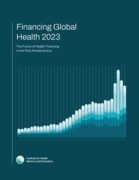
Financing Global Health 2023: The Future of Health Financing in the Post-Pandemic Era
Apeagyei A.E., Dieleman J.L., Leach-Kemon K., et al.
Institute for Health Metrics and Evaluation (IHME)
(2024)
CC
IHME’s Financing Global Health report provides an overview of health spending around the world, with a special focus on investments in health in low- and middle-income countries. The report examines how this funding for health is changing each year and forecasts how it may change in the future. Fi
...
nancing Global Health examines where money for health originates and what health issues it funds.
This year, Financing Global Health 2023 looks at how interest payments on loans that many countries took out during the COVID-19 pandemic to keep their economies afloat and their people protected are now straining health budgets. It also details how development partners’ investments in health in low- and middle-income countries – development assistance for health – have changed since reaching historic levels during the COVID-19 pandemic, dropping by $19.4 billion between 2021 and 2023, from $84.0 billion to $64.6 billion.
more
