
Filter
7916
Text search:
WHO
et
al.
Featured
Recommendations
635
New Publications
1528
Language
Document type
No document type
3893
Studies & Reports
1779
Guidelines
1134
Manuals
399
Fact sheets
219
Strategic & Response Plan
213
Training Material
142
Infographics
57
Situation Updates
33
Resource Platforms
25
Brochures
17
Online Courses
3
App
1
Countries / Regions
Global
361
India
205
Latin America and the Carribbean
184
Kenya
174
South Africa
172
Western and Central Europe
161
Africa
134
Ethiopia
131
Russia
122
Sierra Leone
109
Malawi
108
Nigeria
106
Nepal
101
Zambia
100
Uganda
97
Tanzania
91
Syria
90
Liberia
88
Bangladesh
88
Ukraine
87
Germany
82
Brazil
82
Myanmar / Burma
76
Ghana
70
Eastern Europe
69
Rwanda
63
Congo, Democratic Republic of
61
Senegal
55
Mozambique
53
Middle East and North Africa
53
Indonesia
51
Namibia
50
Eastern Europe and Central Asia
47
Colombia
46
South–East Asia Region
46
Asia
46
Philippines
45
West and Central Africa
43
Burkina Faso
42
Zimbabwe
42
Yemen
40
Guinea
39
Haiti
39
East and Southern Africa
37
Venezuela
37
South Sudan
30
Lesotho
29
Cambodia
28
Cameroon
26
Peru
26
Benin
24
Paraguay
24
Argentina
22
Pakistan
21
Angola
21
Botswana
20
Sudan
19
Chile
19
Mali
18
Spain
18
China
17
Lebanon
16
Somalia
15
Jordan
15
Thailand
15
Ecuador
15
Tajikistan
15
USA
14
Afghanistan
14
Western Pacific Region
14
Vietnam
14
Central African Republic
12
Madagascar
12
Guinea-Bissau
11
Eswatini/ Swaziland
11
Bolivia
11
Sri Lanka
11
Niger
10
Iraq
10
Chad
10
El Salvador
10
Albania
10
Côte d’Ivoire / Ivory Coast
9
Egypt
9
Mexico
9
Palestine
9
Honduras
8
Guatemala
8
Southern Africa
8
Saudi Arabia
7
Libya
7
Laos
7
Kyrgyzstan
7
Georgia
7
North America
7
Turkey
6
Iran
6
France
6
United Kingdom
6
Portugal
6
Belarus
6
Nicaragua
5
Italy
5
Moldova
5
Kazakhstan
5
Morocco
4
Papua New Guinea
4
Dominican Republic
4
North Macedonia
4
Burundi
4
Greece
4
Armenia
4
Canada
4
Timor Leste/ East Timor
4
Tunisia
4
Togo
3
Switzerland
3
Congo-Brazzaville
3
Qatar
3
Estonia
3
Uruguay
3
Jamaica
3
Israel
3
Malaysia
2
Singapore
2
Austria
2
Hungary
2
Fiji
2
Djibouti
2
Romania
2
Gabon
2
Turkmenistan
2
Japan
2
Denmark
2
Bosnia and Herzegovina
2
Mauritania
1
Ireland
1
Croatia
1
Cuba
1
Other region
1
Solomon Islands
1
Bhutan
1
Poland
1
North Korea
1
Mongolia
1
Bulgaria
1
Lithuania
1
Slovakia
1
Uzbekistan
1
Belgium
1
Mauritius
1
Morocco
1
French Guyana
1
Latvia
1
Belize
1
Costa Rica
1
Panama
1
Authors & Publishers
Publication Years
Category
Countries
2531
Clinical Guidelines
622
Public Health
421
Women & Child Health
412
Key Resources
395
Capacity Building
152
Pharmacy & Technologies
71
Toolboxes
COVID-19
876
Mental Health
760
HIV
727
TB
498
Planetary Health
376
NTDs
301
Disability
274
Caregiver
239
AMR
212
NCDs
197
Ebola & Marburg
171
Conflict
156
Refugee
146
Global Health Education
142
Health Financing Toolbox
123
Rapid Response
108
Pharmacy
100
Malaria
91
Zika
67
Natural Hazards
63
2.0 Rapid Response
54
Cholera
42
Specific Hazards
39
Social Ethics
38
Polio
32
South Sudan
1
Typhoon
1
This technical brief describes the re-affirmed WHO recommendation on ultrasound examination in the context of routine antenatal care and outlines policy and programme implications for translating this recommendation into action at the country level.
...
It is estimated that more than 311 000 women die of cervical
cancer each year. Of these deaths, 91% occur in low- and
middle-income countries. Demographic changes and a lack of
action mean that the number of deaths per year is projected
to reach 460 000 by 2040.
WHO recommendations on newborn health: Guidelines approved by the WHO Guidelines Review Committee
recommended
Updated May 2017
This document is meant to respond to the questions:
■ What health interventions should be the newborn and young infants < 2 months of age receive and when should s/he receive it?
■ What health behaviours should a mother/caregiver practise (or not practise)? ...
This document is meant to respond to the questions:
■ What health interventions should be the newborn and young infants < 2 months of age receive and when should s/he receive it?
■ What health behaviours should a mother/caregiver practise (or not practise)? ...
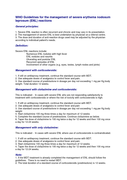

This publication is based on the list of clinical interventions selected from clinical guidelines on prevention, screening, diagnosis, treatment, palliative care, monitoring and end of life care. This publication addresses medical devices for six types of cancer: breast, cervical, colorectal, leukem
...
The framework is to be used as a reference guide, applied according to local priorities and needs, and targeted at academic institutions, educators, accreditation bodies, regulatory agencies and other users. The ultimate aim is to ensure that all health workers are equipped with the requisite compet
...
The availability of controlled medicines is crucial for patients requiring palliative care, pain relief and symptom management. Many individuals worldwide, especially in low- and middle-income countries, continue to experience limited access to these essential medicines. Enhancing access to controll
...
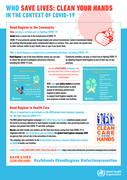
Hand Hygiene is one of the most effective actions to reduce the spread of pathogens and prevent infections, including the COVID-19 virus. This document promotes the WHO global hand hygiene campaign SAVE LIVES: Clean Your Hands in the context of othe
...

WHO’s Country Cooperation Strategy (CCS) defines the Organization’s medium-term vision for working in and with a particular country. The CCS, developed in the context of global and national health priorities, examines the overall health situatio
...

Weekly epidemiological record 18 July 2025
This report summarizes application of the SAFE strategy against trachoma during 2024. It includes estimates of the global population at risk of trachoma blindness based on district-by-district data submitted to W
...

Weekly Epidemiological Record. This report summarizes application of the SAFE strategy against trachoma during 2023. It includes estimates of the global population at risk of trachoma blindness based on district-by-district data submitted to WHO by
...
These guidelines present evidence-based recommendations and best practice statements on use of medically important antimicrobials in food-producing animals, based on the WHO list of critically important antimicrobials for human medicine (
...
Hand hygiene is vital for safe health care delivery, yet practices at the point of care remain suboptimal worldwide. A comprehensive research agenda is therefore necessary to improve our understanding of factors influencing hand hygiene behaviour and to strengthen appropriate interventions. This age
...
This fourth annual report monitors global progress towards the 2023 target for global elimination of industrially produced trans-fatty acids (TFA), highlighting achievements during the past year (October 2021 – September 2022). Countries are responding to the World Health Organization (
...
