
Filter
2522
Text search:
health
and
psychosocial
activities
Featured
283
637
Language
2457
56
38
30
29
14
11
7
5
4
4
3
3
3
3
3
3
2
2
2
2
2
2
2
2
2
2
1
1
1
1
1
1
1
1
1
1
1
Document type
1400
354
295
173
129
66
44
43
8
6
3
1
Countries
106
86
78
74
66
61
59
54
53
49
49
40
38
38
38
36
35
29
28
27
26
25
24
24
24
21
21
21
21
20
17
17
17
16
14
14
13
12
11
10
10
9
9
9
9
8
8
8
7
7
7
7
6
6
6
6
6
6
5
5
5
5
5
4
4
4
4
4
3
3
3
3
3
3
3
2
2
2
2
2
2
2
2
2
2
2
2
2
2
2
2
2
2
1
1
1
1
1
1
1
1
1
1
1
1
1
1
1
1
1
1
1
1
1
1
1
Authors & Publishers
306
103
76
66
57
56
52
49
42
39
38
36
32
25
22
20
19
19
19
18
18
17
16
16
15
15
14
13
13
12
12
11
11
11
10
9
9
9
9
9
8
8
8
8
7
7
7
7
7
7
6
6
6
6
6
6
6
6
6
6
6
6
6
6
6
6
5
5
5
5
5
5
5
5
5
5
5
5
5
5
5
5
5
5
5
5
4
4
4
4
4
4
4
4
4
4
4
4
4
4
4
4
4
4
4
4
4
4
4
4
4
4
4
4
4
4
4
4
3
3
3
3
3
3
3
3
3
3
3
3
3
3
3
3
3
3
3
3
3
3
3
3
3
3
3
3
3
3
3
3
3
3
3
3
3
3
3
3
3
3
3
3
3
3
3
3
3
2
2
2
2
2
2
2
2
2
2
2
2
2
2
2
2
2
2
2
2
2
2
2
2
2
2
2
2
2
2
2
2
2
2
2
2
2
2
2
2
2
2
2
2
2
2
2
2
2
2
2
2
2
2
2
2
2
2
2
2
2
2
2
2
2
2
2
2
2
2
2
2
2
2
2
2
2
2
2
2
2
2
2
2
2
2
2
2
2
2
2
2
2
2
2
2
2
2
2
2
2
2
2
2
2
2
2
2
2
2
2
2
2
2
2
2
2
2
2
2
2
2
2
2
2
2
2
2
2
2
2
2
2
2
2
1
1
1
1
1
1
1
1
1
1
1
1
1
1
1
1
1
1
1
1
1
1
1
1
1
1
1
1
1
1
1
1
1
1
1
1
1
1
1
1
1
1
1
1
1
1
1
1
1
1
1
1
1
1
1
1
1
1
1
1
1
1
1
1
1
1
1
1
1
1
1
1
1
1
1
1
1
1
1
1
1
1
1
1
1
1
1
1
1
1
1
1
1
1
1
1
1
1
1
1
1
1
1
1
1
1
1
1
1
1
1
1
1
1
1
1
1
1
1
1
1
1
1
1
1
1
1
1
1
1
1
1
1
1
1
1
1
1
1
1
1
1
1
1
1
1
1
1
1
1
1
1
1
1
1
1
1
1
1
1
1
1
1
1
1
1
1
1
1
1
1
1
1
1
1
1
1
1
1
1
1
1
1
1
1
1
1
1
1
1
1
1
1
1
1
1
1
1
1
1
1
1
1
1
1
1
1
1
1
1
1
1
1
1
1
1
1
1
1
1
1
1
1
1
1
1
1
1
1
1
1
1
1
1
1
1
1
1
1
1
1
1
1
1
1
1
1
1
1
1
1
1
1
1
1
1
1
1
1
1
1
1
1
1
1
1
1
1
1
1
1
1
1
1
1
1
1
1
1
1
1
1
1
1
1
1
1
1
1
1
1
1
1
1
1
1
1
1
1
1
1
1
1
1
1
1
1
1
1
1
1
1
1
1
1
1
1
1
1
1
1
1
1
1
1
1
1
1
1
1
1
1
1
1
1
1
1
1
1
1
1
1
1
1
1
1
1
1
1
1
1
1
1
1
1
1
1
1
1
1
1
1
1
1
1
1
1
1
1
1
1
1
1
1
1
1
1
1
1
1
1
1
1
1
1
1
1
1
1
1
1
1
1
1
1
1
1
1
1
1
1
1
1
1
1
1
1
1
1
1
1
1
1
1
1
1
1
1
1
1
1
1
1
1
1
1
1
1
1
1
1
1
1
1
1
1
1
1
1
1
1
1
1
1
1
1
1
1
1
1
1
1
1
1
1
1
1
1
1
1
1
1
1
1
1
1
1
1
1
1
1
1
1
1
1
1
1
1
1
1
1
1
1
1
1
1
1
1
1
1
1
1
1
1
1
1
1
1
1
1
1
1
1
1
1
1
1
1
1
1
1
1
1
1
1
1
1
1
1
1
1
1
1
1
1
1
1
1
1
1
1
1
1
1
1
1
1
1
1
1
1
1
1
1
1
1
1
1
1
1
1
1
1
1
1
1
1
1
1
1
1
1
1
1
1
1
1
1
1
1
1
1
1
1
1
1
1
1
1
1
1
1
1
1
1
1
1
1
1
1
1
1
1
1
1
1
1
1
1
1
1
1
1
1
1
1
1
1
1
1
1
1
1
1
1
1
1
1
1
1
1
1
1
1
1
1
1
1
1
1
1
1
1
1
1
1
1
1
1
1
1
1
1
1
1
1
1
1
1
1
1
1
1
1
1
1
1
1
1
1
1
1
1
1
1
1
1
1
1
1
1
1
1
1
1
1
1
1
1
1
1
1
1
1
1
1
1
1
1
1
1
1
1
1
1
1
1
1
1
1
1
1
1
1
1
1
1
1
1
1
1
1
1
1
1
1
1
1
1
1
1
1
1
1
1
1
1
1
1
1
1
1
1
1
1
1
1
1
1
1
1
1
1
1
1
1
1
1
1
1
1
1
1
1
1
1
1
1
1
1
1
1
1
1
1
1
1
1
1
1
1
1
1
1
1
1
1
1
1
1
1
1
1
1
1
1
1
1
1
1
1
1
1
1
1
1
1
1
1
1
1
1
1
1
1
1
1
1
1
1
1
1
1
1
1
1
1
1
1
1
1
1
1
1
1
1
1
1
1
1
1
1
1
1
1
1
1
1
1
1
1
1
1
1
1
1
1
1
1
1
1
1
1
1
1
1
1
1
1
1
1
1
1
1
1
1
1
1
1
1
1
1
1
1
1
1
1
1
1
1
1
1
1
1
1
1
1
1
1
1
1
1
1
1
1
1
1
1
1
1
1
1
1
1
1
1
1
1
1
1
1
1
1
1
1
1
1
1
1
1
1
1
1
1
1
1
1
1
1
1
1
1
1
1
1
1
1
1
1
1
1
1
1
1
1
1
1
1
1
1
1
1
1
1
1
1
1
1
1
1
1
1
1
1
1
1
1
1
1
1
1
1
1
1
1
1
1
1
1
1
1
1
1
1
1
1
1
1
1
1
1
1
1
1
1
1
1
1
1
1
1
1
1
1
1
1
1
1
1
1
1
1
1
1
1
1
1
1
1
1
1
1
1
1
1
1
1
1
1
1
1
1
1
1
1
1
1
1
1
1
1
1
1
1
1
1
1
1
1
1
1
1
1
1
1
1
1
1
1
1
1
1
1
1
1
1
1
1
1
1
1
1
1
1
1
1
1
1
1
1
1
1
1
1
1
1
1
1
1
1
1
1
1
1
1
1
1
1
1
1
1
1
1
1
1
1
1
1
1
1
1
1
1
1
1
1
1
1
1
1
1
1
1
1
1
1
1
1
1
1
1
1
1
1
1
1
1
1
1
1
1
1
1
1
1
1
1
1
1
1
1
1
1
1
1
1
1
1
1
1
1
1
1
1
1
1
1
1
1
1
1
1
1
1
1
1
1
1
1
1
1
1
1
1
1
1
1
1
1
1
1
1
1
1
1
1
1
1
1
1
1
1
1
1
1
1
1
1
1
1
1
1
1
1
1
1
1
1
1
1
1
1
1
1
1
1
1
1
1
1
1
1
1
1
1
1
1
1
1
1
1
1
1
1
1
1
1
1
1
1
1
1
1
1
1
1
1
1
1
1
1
1
1
1
1
1
1
1
1
1
1
1
1
1
1
1
1
1
1
1
1
1
1
1
1
1
1
1
1
1
1
1
1
1
1
1
1
1
1
1
1
1
1
1
1
1
1
1
1
1
1
1
1
1
1
1
1
1
1
1
1
1
1
1
1
1
1
1
1
1
1
1
1
1
1
1
1
1
1
1
1
1
1
1
1
1
1
1
1
1
1
1
1
1
1
1
1
1
1
1
1
1
1
1
1
1
1
1
1
1
1
1
1
1
1
1
1
1
1
1
1
1
1
1
1
1
1
1
1
1
1
1
1
1
1
1
1
1
1
1
1
1
1
1
1
1
1
1
1
1
1
1
1
1
1
1
1
1
1
1
1
1
1
1
1
1
1
1
1
1
1
1
1
1
1
1
1
1
1
1
1
1
1
1
1
1
1
1
1
1
1
1
1
1
1
1
1
1
1
1
1
1
1
1
1
1
1
1
1
1
1
1
1
1
1
1
1
1
1
1
1
1
1
1
1
1
1
1
1
1
1
1
1
1
1
1
1
1
1
1
1
1
1
1
1
1
1
1
1
1
1
1
1
1
1
1
1
1
1
1
1
1
1
1
1
1
1
1
1
1
1
1
1
1
1
1
1
1
1
1
1
1
1
1
1
1
1
1
1
1
1
1
1
1
1
1
1
1
1
1
1
1
1
1
1
1
1
1
1
1
1
1
1
1
1
1
1
1
1
1
1
1
1
1
1
1
1
1
1
1
1
1
1
1
1
1
1
1
1
1
1
1
1
1
1
1
1
1
1
1
1
1
1
1
1
1
1
1
1
1
1
1
1
1
1
1
1
1
1
1
1
1
1
1
1
1
1
1
1
1
1
1
1
1
1
1
1
1
1
1
1
1
1
1
1
1
1
1
1
1
1
1
1
1
Publication Years
779
1533
204
5
1
Category
873
186
142
121
108
84
5
2
Toolboxes
491
249
173
156
120
99
97
76
71
66
37
34
32
32
31
22
15
10
8
5
5
5
3
3
3
1
NFPA continues to work with partners to respond to the Ukraine emergency. Highlights from the month of January include:
- The #TrainOfHope launched between Kyiv and Chisinau is a lifeline, providing refugees, including many women with children, bot
...
h a route to safety and a way back home.
- When the Government of Ukraine lost control of Kherson city, social workers at a shelter for survivors of domestic violence continued to work so that women and girls could receive essential assistance.
more
Previous Ebola virus disease (EVD) outbreaks offer
lessons for public health experts responding to the 11th
outbreak. This review highlights that responders need
to build more trust with the communities they serve. It
suggests that language is f
...
undamental to that.
more

In April and May 2015, Nepal was hit by two major earthquakes killing around 9,000 people and leaving many thousands more injured and homeless.
... To optimize the speed and volume of critical humanitarian assistance, the HCT has developed this Plan to:
1. Reach a common understanding of earthquake risk to ensure early action is taken when required.
2. Establish a minimum level of earthquake preparedness across clusters.
3. Build the basis for a joint HCT response strategy to meet the needs of affected people in the first 6 weeks to 3 months of a response.
4. Define considerations for detailed contingency planning on the basis of the worst-case scenario, especially around access and logistics. more
... To optimize the speed and volume of critical humanitarian assistance, the HCT has developed this Plan to:
1. Reach a common understanding of earthquake risk to ensure early action is taken when required.
2. Establish a minimum level of earthquake preparedness across clusters.
3. Build the basis for a joint HCT response strategy to meet the needs of affected people in the first 6 weeks to 3 months of a response.
4. Define considerations for detailed contingency planning on the basis of the worst-case scenario, especially around access and logistics. more
The main objective of this document is to inform and inspire community activists in the EECA region to actively engage in domestic budget advocacy, in order to ensure the sustainability of services and
...
programs for KAPs and to secure funding from national sources for those programs and services.
more

Professional Standards for Protection Work
recommended
Carried out by humanitarian and human rights actors in armed conflict and other situations of violence
This guideline (third edition) constitutes a set of minimum but essential standards aimed at e
...
nsuring that protection work is safe and effective. The standards reflect shared thinking and common agreement among humanitarian and human rights practitioners
more
While the ratification of the Convention and its Optional Protocol has proceeded rapidly, knowledge on how to implement and monitor them has not kept pace. Conscious of this challenge, my Office has
...
developed this Training Guide on the Convention and its Optional Protocol. It is complemented by eight training modules, designed to inform and empower those who are involved in ratifying, implementing and monitoring the two instruments. While the Training Guide is mainly targeted at facilitators of training courses on the Convention and its Optional Protocol, it acknowledges that each and every one of us has a role to play. I recommend wide dissemination of the training package, and its use by all those who want to embark upon the essential journey towards greater awareness and effective implementation of the rights of persons with disabilities and, ultimately, the building of an inclusive society for all.
more
SRHR, HIV AND AIDS Governance Manual
Recognizing the extent to which the COVID-19 outbreaks affects women and men differently is hugely important. Some preliminary data suggested that more men than women are dying, potentially due to sex-based immunological differences, higher rates of
...
cardiovascular disease for men and lifestyle choices, such as smoking. However, the experiences and lessons learned from the Zika and Ebola outbreaks and the HIV pandemic demonstrate that robust gender analysis and informed, gender-integrated response are vital to strengthen the access and acceptability of the humanitarian services needed to meet the distinct needs of women and girls, as well as men and boy and LGBTI people.
more
This s a systematic review of English language literature from 2000 to 2010 covering spiritual care in end of life care settings which includes spiritual assessment tools and ongoing intervention models.

Effect of Music Intervention on the Behaviour Disorders of Children with Intellectual Disability using Strategies from Applied Behaviour Analysis
Ritu Kalgotra, Jaspal Singh Warwal
Disability, CBR & Inclusive Development Journal (DCIDJ)
(2017)
CC
The effect of music intervention on mild and moderate Intellectually
disabled children was studied in non-randomized pre-test post-test control
group design at an Indian state (Jammu) J&K
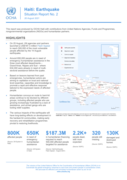
On 25 August, UN agencies and partners launched a US$187.3 million Flash Appeal to reach 500,000 of the most vulnerable people affected by the 14 August earthquake.
Around 650,000 people are in need of emergency humanitarian assistance in the thr
...
ee most affected departments – Grand’Anse, Nippes and Sud – where 634,000 were already in need of multisectoral assistance before the quake.
Based on lessons learned from past emergencies, humanitarian actors are aiming to capitalize on local and national level expertise, capacities and knowledge to promote a rapid and effective response tailored to the expressed needs of affected people.
more
Guidance Note: Protection of Children during Infectious Disease Outbreaks
Arii M., F. Baele, J. Bedford et al.
The Alliance for children protection in humanitarian action
(2020)
C2
Accessed on 31.03.2020
This Guidance Note aims to provide humanitarian child protection practitioners, particularly child protection advisors and program managers, with guidance on how to engage in responses to infectious disease outbreaks to ens
...
ure children’s protection needs are taken into account in preparedness for, and during responses to, the outbreaks. The Guidance Note draws upon lessons learned during infectious disease outbreaks globally in a variety of contexts.
more

The Camp Managment Toolkit
recommended
Applicable to both IDP and refugee scenarios, the Toolkit incorporates a wide range of relevant information on managing displaced populations living in communal settings (collective centres, spontaneous sites, established camps, etc.). Large scale d
...
isplacements caused by recent conflict and natural disaster events have created a high demand for the Toolkit, which has proven an invaluable resource for field practitioners, government actors and displaced populations since its original release in 2004.
Available in other languages
more
The 2019 Humanitarian Response Plan (HRP) sets out the framework within which the humanitarian community will respond to the large-scale humanitarian and protection needs in Syria throughout 2019, on the basis of the prioritization undertaken across
...
and within sectors. The HRP, based on United Nations’ assessments and analysis, also presents urgent funding requirements to address these needs. It is anchored by three strategic objectives: saving lives and alleviating suffering, enhancing protection, and increasing resilience. These objectives are interlinked and achieving positive outcomes for affected people requires concerted action across all three.
more
Managing stress in humanitarian workers
recommended
Guidelines for good practice. 3rd edition
The Guidelines for Good Practice are intended to help organizations define their own needs in relation to stress management and develop their own staff care system. The process will be different for each or
...
ganization. National and international agencies, big and small organizations, will have to find the process and policies that work for them.
more
As the Burundi refugee crisis enters its fourth year, some 430,000 Burundian refugees are being hosted across the region by the governments and people of Tanzania, Rwanda, the Democratic Republic of the Congo,
...
and Uganda. Although the spectre of mass violence in Burundi has receded, with the political situation still unresolved and the persistence of significant human rights concerns, refugee arrivals are expected to continue in 2018, albeit at lower levels than in previous years.
more
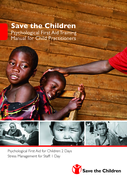
The training manual consists of: (i) Tools for communication, reassurance and comfort for staff working directly with distressed children; (ii) Advice and guidance for staff working with parents
...
and primary care-givers; (iii) Suggestions for ways to support a distressed child. It provides a non-intrusive skills set of communication and actions that can be used by staff working with survivors of distressing events. The training programme develops skills for providing physical and emotional comfort by modeling calmness and enables a constructive format through active listening that allows survivors to voice their concerns and needs. It also helps to connect survivors to practical assistance through referral networks and information on positive coping strategies.
The manuals are available in Englisch, French, Spanish, Arabic and German
Additional training aids download directly from the website. https://resourcecentre.savethechildren.net/library/save-children-psychological-first-aid-training-manual-child-practitioners
more

This brief draws out some recommendations for Ebola response actors in North Kivu. It includes lessons learned primarily from (i) historical outbreaks in Congo; (ii) outbreaks in Uganda in 2000-01 and 2012; (iii) the 2014-2016 West African epidemic;
...
(iv) the outbreak in Equateur Province in DRC (May- July 2018), and (v) the ongoing outbreak in North Kivu and Ituri Provinces in DRC (August 2018 - ongoing). The full report can be accessed here: https://opendocs.ids.ac.uk/opendocs/handle/123456789/14160.
more
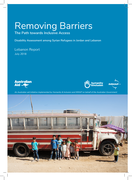
Disability. Assessment among Syrian Refugees in Jordan and Lebanon

The purpose of this document is to provide guidance on how quarantine and isolation can be achieved if there is a suspected or confirmed case in an overcrowded setting. It will focus on informal settlements
...
and collective shelters, but the guidance can be applied in non-refugee settings as well, such as detention centres and crowded neighborhoods. This guidance aims to support a coordinated and efficient response. It supports detailed planning at the regional level and is meant to be adapted to the local context. Households residing outside of these shelter types will be expected to follow the self-isolation circular provided by the MoPH. It is preferable, whenever feasible, that people are supported to remain in their homes. This guidance note will be continuously adapted as needed from the National level.
more
