
Filter
4758
Filtered Results: 4758
Text search:
Department
of
Health
and
Environmental
Control
Featured
Recommendations
445
New Publications
1344
Language
Document type
No document type
2667
Studies & Reports
816
Guidelines
606
Manuals
300
Strategic & Response Plan
205
Training Material
73
Fact sheets
41
Situation Updates
25
Infographics
10
Brochures
8
Resource Platforms
6
App
1
Countries / Regions
India
222
Global
202
Kenya
162
South Africa
131
Nigeria
101
Uganda
98
Nepal
97
Myanmar / Burma
96
Liberia
87
Sierra Leone
84
Ethiopia
78
Tanzania
77
Malawi
75
Western and Central Europe
74
Latin America and the Carribbean
72
Zambia
67
Ghana
66
Africa
62
Bangladesh
58
Philippines
56
Rwanda
47
Namibia
44
Syria
39
South–East Asia Region
35
Zimbabwe
33
Asia
33
Ukraine
31
Cambodia
30
Lesotho
28
Eastern Europe
27
Congo, Democratic Republic of
26
Indonesia
26
Haiti
24
Botswana
24
Mozambique
23
Senegal
22
Guinea
22
South Sudan
22
West and Central Africa
17
Middle East and North Africa
17
Brazil
16
Cameroon
14
USA
14
Yemen
14
Eswatini/ Swaziland
14
East and Southern Africa
13
Vietnam
13
Russia
13
Pakistan
13
Thailand
12
Afghanistan
12
Western Pacific Region
12
Colombia
11
Germany
11
Eastern Europe and Central Asia
11
China
10
Jordan
10
Sudan
10
Laos
9
Burkina Faso
9
Albania
8
Venezuela
8
Benin
7
North America
7
Central African Republic
7
Tajikistan
6
Sri Lanka
6
Georgia
6
Peru
5
Chad
5
Iraq
5
Timor Leste/ East Timor
4
Turkey
4
Chile
4
Paraguay
4
United Kingdom
4
Spain
4
Southern Africa
4
Lebanon
4
Palestine
4
Mali
4
Somalia
4
Gambia
3
Togo
3
Iran
3
Fiji
3
Ireland
3
Saudi Arabia
3
Japan
3
Côte d’Ivoire / Ivory Coast
3
Papua New Guinea
3
Moldova
3
Poland
3
Honduras
3
Angola
3
Ecuador
3
Madagascar
3
North Macedonia
2
Australia
2
Canada
2
Singapore
2
Burundi
2
Malaysia
2
Italy
2
Hungary
2
Turkmenistan
2
Portugal
2
Belarus
2
Israel
2
Bolivia
2
Romania
2
Libya
2
Bhutan
2
Guatemala
2
Mexico
1
El Salvador
1
Kyrgyzstan
1
Niger
1
Morocco
1
Qatar
1
Bulgaria
1
Mauritania
1
Armenia
1
Dominican Republic
1
Croatia
1
Lithuania
1
Gabon
1
Denmark
1
France
1
Maldives
1
Mauritius
1
Tunisia
1
Latvia
1
Argentina
1
Djibouti
1
Egypt
1
Greece
1
Authors & Publishers
Publication Years
Category
Countries
1846
Key Resources
376
Clinical Guidelines
320
Public Health
295
Women & Child Health
214
Capacity Building
90
Pharmacy & Technologies
51
Annual Report MEDBOX
2
Toolboxes
Mental Health
380
HIV
288
COVID-19
271
Planetary Health
231
TB
208
NTDs
187
AMR
176
Disability
149
Caregiver
146
Ebola & Marburg
114
Rapid Response
108
NCDs
102
Conflict
101
Global Health Education
91
Refugee
81
Pharmacy
80
Natural Hazards
70
2.0 Rapid Response
67
Specific Hazards
50
Malaria
47
Zika
40
Health Financing Toolbox
36
Cholera
29
Polio
26
Social Ethics
9
Typhoon
4
South Sudan
1
Water, sanitation and hygiene education in schools – WASH in Schools – provides safe drinking water, improves sanitation facilities and promotes lifelong health. WASH in Schools enhances the well-being of children and their families, and paves the way for new generations of healthy children.
f...
Measuring progress towards universal health coverage.
This sixth edition of Health at a Glance Asia/Pacific presents a set of key indicators of health status, the determinants of health, health care resources and utilisation, health care expenditure and financing and quality of care across 27 Asia-...
This document aims to assist policy‑makers, health care providers and researchers to understand key concepts in health ethics and to identify basic ethical questions surrounding health and health care. It illustrates the challenges of applying ethical principles to global public health and outline...

The Strategic Tool for Assessing Risks (STAR) offers a comprehensive, easy-to-use toolkit and approach to enable national and subnational governments to rapidly conduct a strategic and evidence-based assessment of public health risks for planning and prioritization of health emergency preparedness a...
PLoS ONE 13(9): e0204088. .https://doi.org/10.1371/journal.pone.0204088.
Behaviour-change interventions have been consistently considered an essential part of comprehensive HIV, STI and unintended pregnancy prevention. In 2015, the World Health Organization reviewed and assessed existing evidence ...
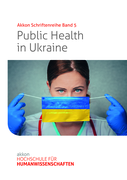
Despite its rich culture, great economic potential, high level of education and last but not least its sheer size – it is the largest state whose borders lie entirely within Europe and is 1.7 times the size of the Federal Republic of Germany – Ukraine seems far away in perception and awareness. ...
Chapter · January 2009 DOI: 10.1007/978-0-387-72711-0_25
D.D. Celentano and C. Beyrer (eds.), Public Health Aspects of HIV/AIDS in Low and Middle Income Countries, DOI: 10.1007/978-0-387-72711-0 25, c Springer Science+Business Media, LLC 2008

The reader acknowledges that this report is intended as an evidence-based asthma management strategy, for the use of health professionals and policy-makers. It is based, to the best of our knowledge, on current best evidence and medical knowledge and practice at the date of publication. When assessi...

- Build community resilience to coastal hazards by improving capacity of inclusive disaster management systems.
- Reduce the mortality rate of persons with disabilities in situations of risk.
- Raise awareness about inclusive policies, practices and disaster risk reduction strategies that address ...
These guidelines – an update to the World Health Organization’s 2015 publication Consolidated strategic information guidelines – present a set of essential aggregate indicators and guidance on choosing, collecting and systematically analysing strategic information to manage and monitor the nat...

A practical handbook. This Health Cluster Guide (2nd edition, 2020) provides practical advice on how WHO, Health Cluster Coordinators and partners can work together during a humanitarian crisis to achieve the aims of reducing avoidable mortality, morbidity and disability, and restoring the delivery ...
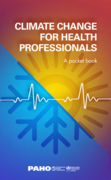
With this quick reference guide, providers can easily recognize diseases and side effects related to climate change, implement appropriate management and provide guidance to exposed populations, provide up-to-date information on the relationship between the adverse effects of certain drugs and the w...
Heart failure with a reduced ejection fraction (HFrEF) is a condition frequently encountered by healthcare professionals and, in order to achieve the best outcomes for patients, needs to be managed optimally. This guideline document is based on the European Society of Cardiology Guidelines for the t...

The transformation of the humanitarian landscape has already made a significant impact on the operational security of INGOs and other humanitarian actors. This report serves to inform strategic policy priorities and approaches to security planning and coordination, and addresses three main questions...
Accessed on 31.03.2023
COUNTDOWN Nigeria has applied a Participatory Action Research (PAR) approach to improve equity of Mass Administration of Medicines (MAM) and inform Neglected Tropical Disease (NTD) policy through an enhanced community engagement strategy. A situational analysis conducted i...

Today, patient harm due to unsafe care is a large and growing global public health challenge and is one of the
leading causes of death and disability worldwide. Most of this patient harm is avoidable. As countries strive to
achieve universal health coverage and the Sustainable Development Goals, t...

The Asia-Pacific Community Mental Health Development (APCMHD) project has been established in 2005 to explore diverse leading models or approaches to community mental health service delivery in the Asia-Pacific region. The objective is to illustrate and promote best practice in mental health care in...
Earthquake Haiti: Guidelines and Resources
recommended
25 August 2021. The earthquake on August 14, 2021 was almost as strong as the severe quake in 2010, which killed about 300,000 people. The current number of victims is more than 2,200 people, and more than 12,000 people have been injured. More than 52,000 houses were destroyed and more than 77,000 ...

The pharmacological management of asthma has changed considerably in recent decades, as it has come to be understood that it is a complex, heterogeneous disease with different phenotypes and endotypes. It is now clear that the goal of asthma treatment should be to achieve and maintain control of the...
