
Filter
3666
Text search:
2022
Featured
402
174
Language
2998
490
467
211
187
175
122
112
89
17
13
12
11
9
8
5
5
5
5
5
4
4
4
4
4
3
3
3
3
3
2
2
2
2
2
2
1
1
1
1
1
1
1
1
1
1
1
1
1
1
1
1
Document type
1173
597
345
293
287
287
190
115
113
109
57
43
31
14
4
Countries
372
195
104
98
96
54
53
51
49
45
45
41
33
32
32
30
29
29
27
25
24
23
23
23
22
21
21
21
20
18
17
17
16
15
15
15
13
13
13
13
13
13
13
12
12
11
11
11
11
11
10
10
9
8
7
7
7
7
7
7
7
7
6
6
6
6
6
5
5
5
5
5
5
5
5
5
4
4
4
4
4
4
4
4
4
4
4
3
3
3
3
3
3
3
3
3
3
2
2
2
2
2
2
2
2
2
2
1
1
1
1
1
1
1
1
1
1
1
1
1
1
1
1
1
1
1
1
1
1
1
1
1
1
1
1
Authors & Publishers
712
253
89
84
82
74
57
55
51
40
37
33
27
27
26
25
25
22
22
20
20
17
17
16
16
16
16
15
14
14
13
13
13
12
12
12
11
11
10
10
10
10
10
10
9
9
9
8
8
8
8
8
8
8
8
8
8
8
8
8
8
7
7
7
7
7
7
7
7
7
7
6
6
6
6
6
6
6
6
6
6
6
6
5
5
5
5
5
5
5
5
5
5
5
5
5
5
5
5
5
5
5
5
5
5
5
5
5
4
4
4
4
4
4
4
4
4
4
4
4
4
4
4
4
4
4
4
4
4
4
4
4
4
4
4
4
4
4
4
4
4
4
3
3
3
3
3
3
3
3
3
3
3
3
3
3
3
3
3
3
3
3
3
3
3
3
3
3
3
3
3
3
3
3
3
3
3
3
3
3
3
3
3
3
3
3
3
3
3
3
3
3
3
3
3
2
2
2
2
2
2
2
2
2
2
2
2
2
2
2
2
2
2
2
2
2
2
2
2
2
2
2
2
2
2
2
2
2
2
2
2
2
2
2
2
2
2
2
2
2
2
2
2
2
2
2
2
2
2
2
2
2
2
2
2
2
2
2
2
2
2
2
2
2
2
2
2
2
2
2
2
2
2
2
2
2
2
2
2
2
2
2
2
2
2
2
2
2
2
2
2
2
2
2
2
2
2
2
2
2
2
2
2
2
2
2
2
2
2
2
2
2
2
2
2
2
2
2
2
2
2
2
2
2
2
2
2
2
2
2
2
2
2
2
2
2
2
2
2
2
2
2
2
2
2
2
2
2
2
2
2
2
2
2
2
2
2
2
2
2
2
2
2
2
2
2
2
2
2
2
2
2
2
2
2
2
2
2
2
2
2
2
2
1
1
1
1
1
1
1
1
1
1
1
1
1
1
1
1
1
1
1
1
1
1
1
1
1
1
1
1
1
1
1
1
1
1
1
1
1
1
1
1
1
1
1
1
1
1
1
1
1
1
1
1
1
1
1
1
1
1
1
1
1
1
1
1
1
1
1
1
1
1
1
1
1
1
1
1
1
1
1
1
1
1
1
1
1
1
1
1
1
1
1
1
1
1
1
1
1
1
1
1
1
1
1
1
1
1
1
1
1
1
1
1
1
1
1
1
1
1
1
1
1
1
1
1
1
1
1
1
1
1
1
1
1
1
1
1
1
1
1
1
1
1
1
1
1
1
1
1
1
1
1
1
1
1
1
1
1
1
1
1
1
1
1
1
1
1
1
1
1
1
1
1
1
1
1
1
1
1
1
1
1
1
1
1
1
1
1
1
1
1
1
1
1
1
1
1
1
1
1
1
1
1
1
1
1
1
1
1
1
1
1
1
1
1
1
1
1
1
1
1
1
1
1
1
1
1
1
1
1
1
1
1
1
1
1
1
1
1
1
1
1
1
1
1
1
1
1
1
1
1
1
1
1
1
1
1
1
1
1
1
1
1
1
1
1
1
1
1
1
1
1
1
1
1
1
1
1
1
1
1
1
1
1
1
1
1
1
1
1
1
1
1
1
1
1
1
1
1
1
1
1
1
1
1
1
1
1
1
1
1
1
1
1
1
1
1
1
1
1
1
1
1
1
1
1
1
1
1
1
1
1
1
1
1
1
1
1
1
1
1
1
1
1
1
1
1
1
1
1
1
1
1
1
1
1
1
1
1
1
1
1
1
1
1
1
1
1
1
1
1
1
1
1
1
1
1
1
1
1
1
1
1
1
1
1
1
1
1
1
1
1
1
1
1
1
1
1
1
1
1
1
1
1
1
1
1
1
1
1
1
1
1
1
1
1
1
1
1
1
1
1
1
1
1
1
1
1
1
1
1
1
1
1
1
1
1
1
1
1
1
1
1
1
1
1
1
1
1
1
1
1
1
1
1
1
1
1
1
1
1
1
1
1
1
1
1
1
1
1
1
1
1
1
1
1
1
1
1
1
1
1
1
1
1
1
1
1
1
1
1
1
1
1
1
1
1
1
1
1
1
1
1
1
1
1
1
1
1
1
1
1
1
1
1
1
1
1
1
1
1
1
1
1
1
1
1
1
1
1
1
1
1
1
1
1
1
1
1
1
1
1
1
1
1
1
1
1
1
1
1
1
1
1
1
1
1
1
1
1
1
1
1
1
1
1
1
1
1
1
1
1
1
1
1
1
1
1
1
1
1
1
1
1
1
1
1
1
1
1
1
1
1
1
1
1
1
1
1
1
1
1
1
1
1
1
1
1
1
1
1
1
1
1
1
1
1
1
1
1
1
1
1
1
1
1
1
1
1
1
1
1
1
1
1
1
1
1
1
1
1
1
1
1
1
1
1
1
1
1
1
1
1
1
1
1
1
1
1
1
1
1
1
1
1
1
1
1
1
1
1
1
1
1
1
1
1
1
1
1
1
1
1
1
1
1
1
1
1
1
1
1
1
1
1
1
1
1
1
1
1
1
1
1
1
1
1
1
1
1
1
1
1
1
1
1
1
1
1
1
1
1
1
1
1
1
1
1
1
1
1
1
1
1
1
1
1
1
1
1
1
1
1
1
1
1
1
1
1
1
1
1
1
1
1
1
1
1
1
1
1
1
1
1
1
1
1
1
1
1
1
1
1
1
1
1
1
1
1
1
1
1
1
1
1
1
1
1
1
1
1
1
1
1
1
1
1
1
1
1
1
1
1
1
1
1
1
1
1
1
1
1
1
1
1
1
1
1
1
1
1
1
1
1
1
1
1
1
1
1
1
1
1
1
1
1
1
1
1
1
1
1
1
1
1
1
1
1
1
1
1
1
1
1
1
1
1
1
1
1
1
1
1
1
1
1
1
1
1
1
1
1
1
1
1
1
1
1
1
1
1
1
1
1
1
1
1
1
1
1
1
1
1
1
1
1
1
1
1
1
1
1
1
1
1
1
1
1
1
1
1
1
1
1
1
1
1
1
1
1
1
1
1
1
1
1
1
1
1
1
1
1
1
1
1
1
1
1
1
1
1
1
1
1
1
1
1
1
1
1
1
1
1
1
1
1
1
1
1
1
1
1
1
1
1
1
1
1
1
1
1
1
1
1
1
1
1
1
1
1
1
1
1
1
1
1
1
1
1
1
1
1
1
1
1
1
1
1
1
1
1
1
1
1
1
1
1
1
1
1
1
1
1
1
1
1
1
1
1
1
1
1
1
1
1
1
1
1
1
1
1
1
1
1
1
1
1
1
1
1
1
1
1
1
1
1
1
1
1
1
1
1
1
1
1
1
1
1
1
1
1
1
1
1
1
1
1
1
1
1
1
1
1
1
1
1
1
1
1
1
1
1
1
1
1
1
1
1
1
1
1
1
1
1
1
1
1
1
1
1
1
1
1
1
1
1
1
1
1
1
1
1
1
1
1
1
1
1
1
1
1
1
1
1
1
1
1
1
1
1
1
1
1
1
1
1
1
1
1
1
1
1
1
1
1
1
1
1
1
1
1
1
1
1
1
1
1
1
1
1
1
1
1
1
1
1
1
1
1
1
1
1
1
1
1
1
1
1
1
1
1
1
1
1
1
1
1
1
1
1
1
1
1
1
1
1
1
1
1
1
1
1
1
1
1
1
1
1
1
1
1
1
1
1
1
1
1
1
1
1
1
1
1
1
1
1
1
1
1
1
1
1
1
1
1
1
1
1
1
1
1
1
1
1
1
1
1
1
1
1
1
1
1
1
1
1
1
1
1
1
1
1
1
1
1
1
1
1
1
1
1
1
1
1
1
1
1
1
1
1
1
1
1
1
1
1
1
1
1
1
1
1
1
1
1
1
1
1
1
1
1
1
1
1
1
1
1
1
1
1
1
1
1
1
1
1
1
1
1
1
1
1
1
1
1
1
1
1
1
1
1
1
1
1
1
1
1
1
1
1
1
1
1
1
1
1
1
1
1
1
1
1
1
1
1
1
1
1
1
1
1
1
1
1
1
1
1
1
1
1
1
1
1
1
1
1
1
1
1
1
1
1
1
1
1
1
1
1
1
1
1
1
1
1
1
1
1
1
1
1
1
1
1
1
1
1
1
1
1
1
1
1
1
1
1
1
1
1
1
1
1
1
1
1
1
1
1
1
1
1
1
1
1
1
1
1
1
1
1
1
1
1
1
1
1
1
1
1
1
1
1
1
1
1
1
1
1
1
1
1
1
1
1
1
1
1
1
1
1
1
1
1
1
1
1
1
1
1
1
1
1
1
1
1
1
1
1
1
1
1
1
1
1
1
1
1
1
1
1
1
1
1
1
1
1
1
1
1
1
1
1
1
1
1
1
1
1
1
1
1
1
1
1
1
1
1
1
1
1
1
1
1
1
1
1
1
1
1
1
1
1
1
1
1
1
1
1
1
1
1
1
1
1
1
1
1
1
1
1
1
1
1
1
1
1
1
1
1
1
1
1
1
1
1
1
1
1
1
1
1
1
1
1
1
1
1
1
1
1
1
1
1
1
1
1
1
1
1
1
1
1
1
1
1
1
1
1
1
1
1
1
1
1
1
1
1
1
1
1
1
1
1
1
1
1
1
1
1
1
1
1
1
1
1
1
1
1
1
1
1
1
1
1
1
1
1
1
1
1
1
1
1
1
1
1
1
1
1
1
1
1
1
1
1
1
1
1
1
1
1
1
1
1
1
1
1
1
1
1
1
1
1
1
1
1
1
1
1
1
1
1
1
1
1
1
1
1
1
1
1
1
1
1
1
1
1
1
1
1
1
1
1
1
1
1
1
1
1
1
1
1
1
1
1
1
1
1
1
1
1
1
1
1
1
1
1
1
1
1
1
1
1
1
1
1
1
1
1
1
1
1
1
1
1
1
1
1
1
1
1
1
1
1
1
1
1
1
1
1
1
1
1
1
1
1
1
1
1
1
1
1
1
1
1
1
1
1
1
1
1
1
1
1
1
1
1
1
1
1
1
1
1
1
1
1
1
1
1
1
1
1
Publication Years
3338
314
12
1
1
Category
1106
279
275
180
170
84
35
2
Toolboxes
410
334
276
234
220
219
192
180
141
140
138
119
119
112
90
65
60
53
50
36
30
16
10
5
2
La dracunculose est rarement mortelle, mais les personnes touchées peuvent souffrir d’invalidité pendant plusieurs semaines, voire plusieurs mois. La maladie sévit dans des communautés rurales défavorisées et isolées qui sont essentiellement tributaires de points d’eau stagnante superfici
...
els non aménagés, comme des étangs, pour s’approvisionner en eau de boisson.
more
Дракункулез редко приводит к смертельному исходу, но на много недель и месяцев нарушает нормальное функционирование пораженных инвазией лиц. Проблема затрагиваеÑ
...
‚ население сельских, неблагополучных и отдаленных районов, в которых основным источником питьевой воды являются открытые водоемы со стоячей водой, в частности пруды.
more
ونادراً ما يسبب داء التنينات الوفاة، بيد أن المصابين به يعجزون عن القيام بأعمالهم على مدى أسابيع وأشهر من الزمن. ويصيب الداء الناس الذين يعيشون في مجتمعات ريفية ومحØ
...
±ومة ومعزولة ويعتمدون بشكل رئيسي على مصادر المياه المفتوحة الراكدة كالبرك للحصول على مياه الشرب
more
Datos y cifras
Se calcula que en el mundo hay entre 6 y 7 millones de personas infectadas por el Trypanosoma cruzi, el parásito causante de la enfermedad de Chagas, la mayoría de ellas en América Latina.
La infección por Trypanosoma cruzi se puede curar si el tratamiento se administra al poco
...
tiempo de producirse la infección.
Hasta un 30% de los enfermos crónicos presentan alteraciones cardíacas y hasta un 10% padecen alteraciones digestivas, neurológicas o combinadas que pueden requerir un tratamiento específico.
El control de vectores y otras estrategias destinadas a reducir la transmisión que estos producen son los métodos más útiles para prevenir la enfermedad de Chagas en América Latina.
Los análisis de sangre son fundamentales para prevenir la infección por transfusiones o trasplantes de órganos en todo el mundo.
La detección y el tratamiento de niñas infectadas y mujeres infectadas en edad fértil es clave, además del cribado de los recién nacidos y otros hijos de madres infectadas que no hayan recibido antes tratamiento antiparasitario.
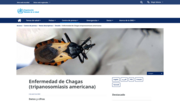
La enfermedad de Chagas, también llamada tripanosomiasis americana, es una enfermedad potencialmente mortal causada por el parásito protozoo Trypanosoma cruzi (T. cruzi).
more
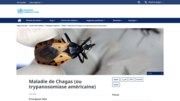
Principaux faits
D’après les estimations, 6 à 7 millions de personnes dans le monde sont infectées par Trypanosoma cruzi (T. Cruzi), le parasite responsable de la maladie de Chagas. La plupart de ces personnes vivent en Amérique latine.
La transmission à l’être humain se fait principalem
...
ent, en Amérique latine, par l’intermédiaire d’un insecte appelé triatome, qui peut être porteur de T. cruzi.
Parmi les autres modes de transmission de la maladie de Chagas, figurent : la transmission orale (par voie alimentaire), la transfusion de sang ou de produits sanguins, la transmission mère-enfant (congénitale), la transplantation d’organes et les accidents de laboratoire.
La maladie de Chagas ne touchait auparavant que des zones rurales de la Région des Amériques, et surtout de l’Amérique latine. Ces dernières décennies, toutefois, les mouvements de population ont fait que la plupart des personnes infectées sont des habitants de zones urbaines (urbanisation) et que la maladie s’est propagée à d’autres continents (où T. cruzi se transmet par des voies non vectorielles).
L’infection à T. cruzi est curable si un traitement est instauré rapidement après l’infection.
Chez les personnes infectées de façon chronique, un traitement antiparasitaire peut éventuellement prévenir ou enrayer la progression de la maladie, et éviter sa transmission, notamment de la mère à l’enfant.
Jusqu’à 30 % des personnes infectées de façon chronique présentent des troubles cardiaques, et jusqu’à 10 % d’entre elles souffrent de troubles digestifs et/ou neurologiques, ce qui peut imposer un traitement particulier.
Les principales méthodes de prévention de la maladie de Chagas en Amérique latine sont la lutte antivectorielle ainsi que d’autres stratégies visant à réduire la transmission vectorielle.
Dans le monde entier, le dépistage sanguin joue un rôle crucial dans la prévention de l’infection par transfusion ou transplantation d’organes.
Il est essentiel de détecter et de traiter l’infection chez les femmes et les filles en âge de procréer, ainsi que de soumettre tout nouveau-né et ses frères et sœurs à un dépistage dans le cas où la mère est infectée et n’a jamais reçu de traitement antiparasitaire.
Certains facteurs socio-économiques et environnementaux influent fortement sur la maladie de Chagas, dont la propagation et les différentes dimensions interdépendantes justifient la nécessité de mettre en œuvre des stratégies de lutte multisectorielles.
Quelques pays ont mis en place la notification et la surveillance des cas aigus et chroniques et des voies de transmission actives, qui sont essentielles à la lutte contre la maladie de Chagas.
more
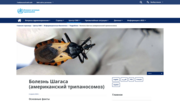
Болезнь Шагаса, известная также как американский трипаносомоз, — потенциально опасное для жизни заболевание, вызываемое простейшим паразитом Trypanosoma cruzi.
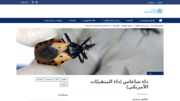
إن داء شاغاس المعروف أيضا باسم داء المثقبيات الأمريكي، مرض قد يكون مهدداً للحياة يسببه الطفيلي الأوّالي المعروف باسم المِثْقَبِيَّة الكروزيَّة.
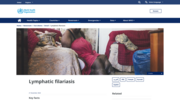
Lymphatic filariasis, commonly known as elephantiasis, is a neglected tropical disease. Infection occurs when filarial parasites are transmitted to humans through mosquitoes. Infection is usually acquired in childhood causing hidden damage to the lymphatic system.

La filariasis linfática, conocida generalmente como elefantiasis, es una enfermedad tropical desatendida. La infección humana se produce por la transmisión de unos parásitos denominados filarias a través de los mosquitos. La infección se contrae generalmente en la infancia y provoca daños no
...
manifiestos en el sistema linfático.
more
Лимфатический филяриоз, известный как слоновость, относится к числу забытых тропических болезней. Инвазия происходит в результате передачи паразитов человеку прÐ
...
¸ укусе комара. Инфекция, обычно приобретаемая в детстве, наносит скрытый вред лимфатической системе.
more
يُعد داء الفيلاريات اللمفي المعروف بداء الفيل أحد أمراض المناطق المدارية المُهمَلة. وتحدث العدوى بهذا المرض عندما تنتقل الطفيليات الفيلارية إلى الإنسان عن طريق الØ
...
¨عوض، وعادة ما تُكتَسب في مرحلة الطفولة، وتُسبِّب ضرراً خفياً للجهاز اللمفي.
more

Skin-related neglected tropical diseases, or “skin NTDs”, are historically neglected because active case detection, individual case management, significant resources and intensive effort are required to control, eliminate and eradicate them. Integrated control and management of skin NTDs offers
...
a pathway to overcome some of these past challenges.
more
Soil transmitted helminth (STH) infections are among the most common human infections worldwide with over 1 billion people affected. Many estimates of STH infection are often based on school-aged children (SAC). This study produced predictive risk-maps of STH on a more finite scale, estimated the nu
...
mber of people infected, and the amount of drug required for preventive chemotherapy (PC) in Ogun state, Nigeria. Georeferenced STH infection data obtained from a cross-sectional survey at 33 locations between July 2016 and November 2018, together with remotely-sensed environmental and socio-economic data were analyzed using Bayesian geostatistical modelling. Stepwise variable selection procedure was employed to select a parsimonious set of predictors to predict risk and spatial distribution of STH infections. The number of persons (pre-school ages children, SAC and adults) infected with STH were estimated, with the amount of tablets needed for preventive chemotherapy. An overall prevalence of 17.2% (95% CI 14.9, 19.5) was recorded for any STH infection. Ascaris lumbricoides infections was the most predominant, with an overall prevalence of 13.6% (95% CI 11.5, 15.7), while Hookworm and Trichuris trichiura had overall prevalence of 4.6% (95% CI 3.3, 5.9) and 1.7% (95% CI 0.9, 2.4), respectively. The model-based prevalence predictions ranged from 5.0 to 23.8% for Ascaris lumbricoides, from 2.0 to 14.5% for hookworms, and from 0.1 to 5.7% for Trichuris trichiura across the implementation units. The predictive maps revealed a spatial pattern of high risk in the central, western and on the border of Republic of Benin. The model identified soil pH, soil moisture and elevation as the main predictors of infection for A. lumbricoides, Hookworms and T. trichiura respectively. About 50% (10/20) of the implementation units require biannual rounds of mass drug administration. Approximately, a total of 1.1 million persons were infected and require 7.8 million doses. However, a sub-total of 375,374 SAC were estimated to be infected, requiring 2.7 million doses. Our predictive risk maps and estimated PC needs provide useful information for the elimination of STH, either for resource acquisition or identifying priority areas for delivery of interventions in Ogun State, Nigeria.
more
Soil-transmitted helminth (STH) infections are among the most common infections worldwide and affect the poorest and most deprived communities. They are transmitted by eggs present in human faeces which in turn contaminate soil in areas where sanitation is poor.
Stunting as a Risk Factor of Soil-Transmitted Helminthiasis in Children: A Literature Review
Fauziah, N.; Ar-Rizqi, M.A.; Hana, S.
Interdisciplinary Perspectives on Infectious Diseases
(2022)
CC
As a high-burden neglected tropical disease, soil-transmitted helminth (STH) infections remain a major problem in the world, especially among children under five years of age. Since young children are at high risk of being infected, STH infection can have a long-term negative impact on their life, i
...
ncluding impaired growth and development. Stunting, a form of malnutrition in young children, has been long assumed as one of the risk factors in acquiring the STH infections. However, the studies on STH infection in children under five with stunting have been lacking, resulting in poor identification of the risk. Accordingly, we collected and reviewed existing related research articles to provide an overview of STH infection in a susceptible population of stunted children under five years of age in terms of prevalence and risk factors. There were 17 studies included in this review related to infection with Ascaris lumbricoides, Trichuris trichiura, hookworm, and Strongyloides stercoralis from various countries. The prevalence of STH infection in stunted children ranged from 12.5% to 56.5%. Increased inflammatory markers and intestinal microbiota dysbiosis might have increased the intensity of STH infection in stunted children that caused impairment in the immune system. While the age from 2 to 5 years along with poor hygiene and sanitation has shown to be the most common risk factors of STH infections in stunted children; currently there are no studies that show direct results of stunting as a risk factor for STH infection. While stunting itself may affect the pathogenesis of STH infection, further research on stunting as a risk factor for STH infection is encouraged.
more
The World Health Organization Regional Office for Africa (WHO AFRO), in accordance with recommendations from various WHO committees, has developed three flagship initiatives to support Member States in the African region to prepare for, detect and respond to public health emergencies. They are the r
...
esult of extensive consultations with more than 30 African government ministers, technical actors, and partners across the continent as well as regional institutions such as the Africa Centres for Disease Control and Prevention (Africa CDC), whose contributions have shaped the priority activities. This report provides the fourth quarterly summary of progress in implementing the flagship initiatives.
more
The Africa Centres for Disease Control and Prevention (Africa CDC) was established in 2017, after the west Africa Ebola virus disease outbreak. Upon creation, the
role of Africa CDC was to mandate strengthening of the capacity of public health institutions in Africa to prevent, detect, and respond
...
to disease threats, based on science, policy, and data-driven interventions and programmes, as envisaged by the Abuja Declaration. The inaugural strategic plan was focused on building health systems for emergency preparedness and response. However, from its inception, the organisation recognised the concomitant need to comprehensively strengthen systems to prevent and manage noncommunicable diseases (NCDs) and injuries, and to face the neglected issue of mental health disorders. The division dedicated to these issues was conceptualised, but operationalisation was deferred to a future date.
more
This bulletin focuses on the situation in Ukraine and several key refugee-receiving countries (Bulgaria, Czechia, Hungary, Poland, Republic of Moldova, Romania, and Slovakia), with the understanding that other countries in the European Region are also receiving Ukrainian refugees and WHO is pr
...
oviding technical support to them.
more
El Marco de Competencias para la Rehabilitación (MCR) es un modelo que
comunica el desempeño que se espera o al que se aspira del personal de
rehabilitación en todas las profesiones, especializaciones y entornos para hacer
posible una atención y una prestación de servicios de calidad. Incluy
...
e una serie
de componentes complementarios e interconectados, específicamente:
• Valores y creencias fundamentales;
• Competencias y los comportamientos a través de los cuales ellas se expresan;
• Actividades y las tareas que ellas abarcan; y
• Conocimientos y habilidades.
Con la excepción de los valores y creencias fundamentales, estos componentes
se organizan en cinco dominios: Práctica (P), Profesionalidad (PF), Aprendizaje
y desarrollo (AD), Gestión y liderazgo (GL) e Investigación (I), y abarcan el trabajo
de rehabilitación en toda su extensión
more
Le Cadre de compétences en réadaptation (CCR) est un modèle qui présente les
performances attendues ou souhaitées pour les effectifs de réadaptation dans les
différentes professions, spécialisations et les différents contextes afin d’offrir des soins
et une prestation de services de qu
...
alité. Il inclut un certain nombre de composantes
complémentaires et interconnectées, en particulier :
• les valeurs et les croyances essentielles ;
• les compétences et les comportements à travers lesquels elles s’expriment ;
• les activités et les tâches qu’elles comprennent ; et
• les connaissances et les habilités.
À l’exception des valeurs et des croyances essentielles, ces composantes sont organisées
en cinq domaines : pratique (P), professionnalisme (PM), apprentissage et développement
(AD), management et leadership (ML) et recherche (R), et couvrent la vaste portée du travail
de réadaptation
more
