
Filter
258
Text search:
timor-leste
Featured
26
70
Language
Document type
133
68
20
12
10
4
3
3
3
1
1
Countries
30
27
15
13
9
7
6
5
4
4
3
3
3
3
3
3
2
2
2
2
2
2
2
2
2
2
2
2
1
1
1
1
1
1
1
1
1
1
1
1
1
1
1
1
1
1
1
1
1
1
1
1
1
1
1
1
1
1
1
Authors & Publishers
Publication Years
Category
53
29
27
25
21
5
1
Toolboxes
24
23
22
13
12
11
10
10
10
8
7
5
4
3
3
3
3
2
2
1
1
Guidance for Asia Pacific National Societies.
This document provides guidance for Asia Pacific National Societies on how to include migrants and displaced people in COVID-19 preparedness and response activities.
This report reviews the latest evidence on what works to reduce HIV-related stigma and discrimination through key programmes to reduce stigma and discrimination and increase access to justice in the six settings of focus for the Global Partnership. It includes guidance for national governments and k
...
It highlights how proven digital innovation can be replicated to curb the spread of COVID-19 in Africa. It also estimates investment required to implement such high impact solutions.

Just about everyone has experienced the joy that a healthy newborn child brings to parents, families and communities. But the arrival of a newborn who is small or sick often results in immediate worry and sadness. When the infant is at high risk of death or disability, these concerns can be a tremen
...
The pandemic presents tough choices for governments, local communities, health and school systems, as well as families and businesses: How to re-open safely? How to safeguard people’s lives and protect their livelihoods? Where to allocate scarce resources? How to protect those unable to protect th
...
English Analysis on World and 19 other countries about Agriculture, Food and Nutrition and Drought; published on 13 Jan 2021 by FAO
Indonesia, Malaysia, Myanmar, and Pakistan
Spetember 2020
BMJ Global Health2020;5:e002014. doi:10.1136/bmjgh-2019-002014
31 Janaury 2021
SCORE for health data technical package. The first global assessment on the status and capacity of health information systems in 133 countries, covering 87% of the global population.
It identifies gaps and provides guidance for investment in areas that can have the greatest impact
...
These guidelines group all recommendations on TB care and support in one document and are complemented by an operational handbook. The guidelines are to be used primarily by national TB programmes, or their equivalents in Ministries of Health, stakeholders and technical organizations working on
...

A wide range of potential enablers and barriers were identified for influencing progress for the scale-up of severe wasting services within national health systems. Findings were categorised according to the six pillars of WHO’s health system strengthening framework.
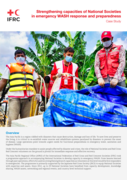
This case study takes a closer look at experiences in three countries and one sub-region, each with a unique profile, a specific set of challenges and opportunities, and differing levels of WASH competencies. Through the lens of the participating National Societies and the communities they serve, th
...
9 June 2021
Since its launch, GLASS has expanded in scope and coverage and as of May 2021, 109 countries and territories worldwide have enrolled in GLASS. A key new component in GLASS is the inclusion of antimicrobial consumption (AMC) surveillance at the national level highlighted in this fourth G
...
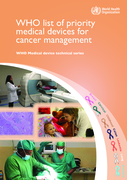
This publication is based on the list of clinical interventions selected from clinical guidelines on prevention, screening, diagnosis, treatment, palliative care, monitoring and end of life care. This publication addresses medical devices for six types of cancer: breast, cervical, colorectal, leukem
...
The manual has been designed in a comprehensive manner, the aim being to provide a holistic approach to the short-term development of human resources, with a focus on primary care physicians. This is a reference manual meant for primary care physicians who will provide care to older people in primar
...
This document presents an evidence-informed Checklist for implementing rural pathways to train and support the rural
health workforce in low and middle income countries (LMIC). Rural areas are the most underserviced around the world.
Since the start of the pandemic, the region has been hit by multiple natural and biological disasters. At the same time, climate change has continued to warm the world, exacerbating the impacts of many of these disasters. The *Asia-Pacific Disaster Report 2021, *also launched today, shows that the p
...
