
Filter
666
Text search:
World
Health
Organization.
Country
Office
for
Nepal
Featured
Recommendations
70
New Publications
197
Language
Document type
No document type
379
Studies & Reports
128
Guidelines
68
Manuals
49
Strategic & Response Plan
16
Situation Updates
8
Fact sheets
8
Training Material
7
Infographics
3
Countries / Regions
Nepal
98
Global
47
South–East Asia Region
37
Asia
29
India
23
Bangladesh
14
Myanmar / Burma
8
Haiti
6
Pakistan
6
Liberia
5
Uganda
5
Tanzania
5
Thailand
5
Indonesia
5
South Africa
5
Ethiopia
4
Ghana
4
Philippines
4
Zambia
4
Sri Lanka
4
Africa
4
Sierra Leone
3
Afghanistan
3
Syria
3
Kenya
3
Cambodia
3
Mozambique
3
North Macedonia
3
Latin America and the Carribbean
3
Western and Central Europe
3
Russia
3
Vietnam
3
Nigeria
2
Zimbabwe
2
Jordan
2
Lebanon
2
Malawi
2
East and Southern Africa
2
Western Pacific Region
2
Bhutan
2
Laos
2
Georgia
2
Guinea
1
Senegal
1
Congo, Democratic Republic of
1
Morocco
1
Rwanda
1
Central African Republic
1
Argentina
1
Namibia
1
Brazil
1
Hungary
1
Ukraine
1
Colombia
1
Ecuador
1
Mexico
1
Yemen
1
West and Central Africa
1
Middle East and North Africa
1
Eastern Europe and Central Asia
1
Other region
1
Venezuela
1
North Korea
1
Armenia
1
Timor Leste/ East Timor
1
Romania
1
Kyrgyzstan
1
Jamaica
1
Belgium
1
Norway
1
Portugal
1
Belarus
1
Authors & Publishers
Publication Years
Category
Countries
176
Key Resources
76
Clinical Guidelines
56
Women & Child Health
54
Public Health
43
Capacity Building
12
Pharmacy & Technologies
2
Toolboxes
HIV
72
Disability
52
Mental Health
46
COVID-19
32
Planetary Health
31
TB
28
NTDs
28
Global Health Education
20
Natural Hazards
18
Conflict
17
AMR
15
Caregiver
14
2.0 Rapid Response
13
Refugee
11
Pharmacy
10
NCDs
10
Rapid Response
8
Health Financing Toolbox
7
Malaria
5
Polio
4
Specific Hazards
4
Ebola & Marburg
3
Cholera
2
Typhoon
2
Zika
1
This guideline provides global, evidence-informed recommendations on daily iron supplementation in infants and children, as a public-health intervention for the prevention of anaemia and iron defici
...

The mhGAP community toolkit: field test version is an integral part of WHO's Mental Health Gap Action Programme (mhGAP), and aims at scaling up services for people with mental
...
mhGAP is based on evidence-based technical guidelines (4) and provides a set of tools and
training packages to extend service provision. The mhGAP Intervention Guide (mhGAP-IG)
for MNS disorders in non-specialized
...
WHO has published the first-ever guidance on the clinical management of diphtheria. The only previously available guidance was an operational protocol. The new guidance followed the rigorous process for developing guidance at WHO.
It addresses th
...
This report on global leishmaniasis surveillance follows those published in 2016–2023.2–6 Six indicators of leishmaniasis are publicly available from the Global Health Observatory (GHO).7 In addition to the GHO,
...

Health care-associated infections (HAIs) affect patients and health systems every day, causing immense suffering, driving higher health-care costs
...
Chapter 1 provides new data on the latest developments in the global treatment effort, highlighting positive trends as well as aspects that require improvement. Chapter 2 summarizes the impact of the scale-up in reducing AIDS-related mortality and new HIV infections. Chapter 3 examines the sequence
...

National tuberculosis (TB) prevalence surveys provide a nationally representative measurement of the burden of TB disease in the population, at a given point in time. Repeat surveys allow assessment of trends and tracking of progress towards national and global targets
...

Strengthening global health security to protect the world against future epidemics and pandemics requires well-tested and decentralized capacities for
...
Suicides take a high toll. Over 800 000 people die by suicide every year and it is the second leading cause of
death in 15-29-year-olds. Most suicides occur in low- and middle-income countries where resources
and services, if they do exist, are often scarce and limited
...

The coronavirus disease (COVID-19) pandemic exacerbated pre-existing inequalities in the treatment and care of noncommunicable diseases (NCDs). This report examines the effect of the COVID-19 pandemic on access to NCD medicines, and the policies and strategies implemented by countries and
...
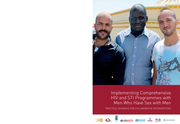
Practical Guidance for collaborative interventions

Improving the survival chances and quality of life of women, newborns, and children remains an urgent global challenge. Since 2012, substantial progress has been made in reducing maternal and under-5 deaths, and a only handful of countries are on target to meet the SDG targets in 2030. Yet, 5 millio
...
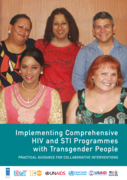
Practical Guideline for collaborative interventions

On Global Handwashing Day, WHO and UNICEF have released the first-ever global Guidelines on Hand Hygiene in Community Settings to support governments and practitioners in promoting effective hand hygiene outside health care – across households, pu
...

The 2023 Country Presence Report provides an overview of what WHO does in countries to advance towards the SDGs and implement GPW13, how we do it, with whom we work, and what is needed to overcome challenges
...
The WHO Global Antimicrobial Resistance and Use Surveillance System (GLASS) was launched in 2015 to foster AMR surveillance and inform strategies to contain AMR. The system started with surveillance of AMR in bacteria causing common human infections and has expanded its scope to include surveillance
...
During the first year of the Covid-19 pandemic, the world’s economy slowed. Yet, the global annual average particulate pollution (PM2.5) was largely unchanged from 2019 levels. At the same time, growing evidence shows air pollution—even when exp
...
Water, sanitation and hygiene education in schools – WASH in Schools – provides safe drinking water, improves sanitation facilities and promotes lifelong health. WASH in Schools enhances the well-being of children and their families, and paves t
...
Global cardiovascular disease (CVD) burden is high and rising, especially in low-income and middle-income countries (LMICs). Focussing on 45 LMICs, we aimed to determine (1) the adult population’s median 10-year predicted CVD risk, including its variation within countries by socio-demographic char
...
