
Filter
315
Text search:
Milestones
Featured
Recommendations
28
New Publications
73
Language
Document type
No document type
176
Studies & Reports
51
Guidelines
35
Strategic & Response Plan
25
Manuals
17
Training Material
5
Situation Updates
2
Fact sheets
2
Resource Platforms
1
Videos
1
Countries / Regions
Global
23
India
14
Kenya
11
Uganda
8
Nepal
8
Rwanda
7
Ghana
6
South Africa
6
Zambia
5
Tanzania
5
Malawi
5
Myanmar / Burma
5
South–East Asia Region
5
Latin America and the Carribbean
5
Western and Central Europe
5
Africa
5
Sierra Leone
4
Liberia
4
Nigeria
4
Bangladesh
4
Namibia
4
West and Central Africa
4
Asia
4
Philippines
3
South Sudan
3
Lebanon
3
Ukraine
3
Lesotho
3
East and Southern Africa
3
Middle East and North Africa
3
Guinea
2
Ethiopia
2
Germany
2
Cambodia
2
Eswatini/ Swaziland
2
Eastern Europe and Central Asia
2
Eastern Europe
2
Congo, Democratic Republic of
1
Zimbabwe
1
Haiti
1
Somalia
1
Pakistan
1
Indonesia
1
Mozambique
1
Papua New Guinea
1
Sudan
1
Peru
1
Brazil
1
Libya
1
Western Pacific Region
1
Palestine
1
Russia
1
Authors & Publishers
Publication Years
Category
Countries
116
Women & Child Health
23
Clinical Guidelines
19
Key Resources
17
Public Health
15
Capacity Building
5
Pharmacy & Technologies
3
Toolboxes
HIV
28
TB
26
Mental Health
24
Disability
19
Planetary Health
16
COVID-19
14
NTDs
11
AMR
8
Polio
6
Conflict
6
Ebola & Marburg
5
Global Health Education
5
Caregiver
5
NCDs
5
Cholera
4
Rapid Response
4
Specific Hazards
4
Natural Hazards
3
Refugee
3
Zika
3
Malaria
3
Social Ethics
1
Pharmacy
1
2.0 Rapid Response
1

Cholera is an acute gastrointestinal infection caused by the bacterium Vibrio Cholerae serogroup O1 or O139, and is often linked to unsafe drinking water, lack of proper sanitation and personal hygiene. It adversely affects mostly the poor and vulnerable populations in countries, which are already d
...

The key to a lasting world free of all forms of poliovirus lies in rapidly interrupting all remaining endemic transmission of WPV in the endemic areas of Pakistan and Afghanistan. This is the only way to ensure that such strains do not re-emerge globally through international spread. It lays the cor
...

Countries, partners, and donors are committed to the global elimination of blinding trachoma by 2020.
Achieving this public health milestone requires more than funding; it requires health personnel with the
right mix of skills, and well supported and managed health systems. Mass drug administratio
...

Improving the survival chances and quality of life of women, newborns, and children remains an urgent global challenge. Since 2012, substantial progress has been made in reducing maternal and under-5 deaths, and a only handful of countries are on target to meet the SDG targets in 2030. Yet, 5 millio
...
This report on global leishmaniasis surveillance follows those published in 2016–2023.2–6 Six indicators of leishmaniasis are publicly available from the Global Health Observatory (GHO).7 In addition to the GHO, country profiles with up to 30 indicators are published, with detailed data received
...
The humanitarian crisis in Northeast Nigeria, driven by conflict, climate-related shocks, and food insecurity, has created immense challenges for the health sector in Borno, Adamawa, and Yobe (BAY) States. About 1.8 million people remain displaced(1), with inadequate access to healthcare services an
...
WSTP-I is the second part of the WHO wheelchair service training package series and focusses more on addressing the needs of people who have severe difficulties in walking and moving around and also having poor postural control .
Notable progress has also been made on other key health indicators such as reducing maternal, infant and child deaths and malnutrition, increasing immunization coverage, eliminating infectious diseases such as polio and reducing the incidence of malaria, tuberculosis and diarrhoeal diseases.
But
...
Accessed November 2, 2017
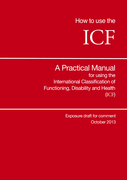
The ICF Practical Manual provides information on how to use ICF. Anyone interested in learning more about use of the International Classification of Functioning, Disability and Health (ICF, WHO 2001) may benefit from reading this Practical Manual. The ICF is presently used in many different contexts
...
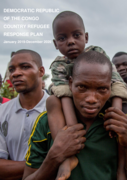
This Training Manual is developed based on the Child Protection Working Group Interagency Guidelines for Case Management. The Facilitator’s Guide provides guidance on the key steps to take before, during and after training, including customizing the training to different contexts and audiences.
"National Disaster Management Guidelines: Management
of Chemical (Terrorism) Disasters (are intended to
focus on all aspects of the disaster management
cycle, including prevention measures such as
surveillance and intelligence, mitigation of direct
and indirect risks, preparedness in terms of
...
