
Filter
437
Text search:
Federal
Ministry
of
Health
of
Ethiopia
Featured
Recommendations
30
New Publications
148
Language
Document type
No document type
254
Studies & Reports
104
Guidelines
31
Manuals
16
Strategic & Response Plan
13
Training Material
11
Situation Updates
5
Fact sheets
2
Resource Platforms
1
Countries / Regions
Ethiopia
189
Global
23
Nigeria
21
Malawi
12
Kenya
10
Africa
9
Uganda
7
Rwanda
7
Sierra Leone
6
Ghana
6
South Sudan
6
Zambia
6
Sudan
6
Liberia
5
Tanzania
4
Western and Central Europe
4
Guinea
3
Senegal
3
Zimbabwe
3
Bangladesh
3
East and Southern Africa
3
Haiti
2
India
2
Somalia
2
Nepal
2
Thailand
2
China
2
Indonesia
2
South Africa
2
Mozambique
2
Mexico
2
South–East Asia Region
2
Burkina Faso
1
Congo, Democratic Republic of
1
Mali
1
Côte d’Ivoire / Ivory Coast
1
Cameroon
1
Togo
1
Philippines
1
Pakistan
1
Jordan
1
Afghanistan
1
Germany
1
Lebanon
1
Chad
1
Cambodia
1
Namibia
1
North Macedonia
1
Botswana
1
Myanmar / Burma
1
Yemen
1
West and Central Africa
1
Middle East and North Africa
1
Latin America and the Carribbean
1
Palestine
1
Laos
1
Canada
1
Vietnam
1
Authors & Publishers
Publication Years
Category
Countries
241
Public Health
23
Women & Child Health
22
Clinical Guidelines
21
Key Resources
19
Capacity Building
6
Pharmacy & Technologies
2
Toolboxes
HIV
26
TB
24
COVID-19
21
Planetary Health
19
Mental Health
18
NTDs
14
Disability
13
Caregiver
12
AMR
10
Health Financing Toolbox
10
Refugee
9
Global Health Education
9
Conflict
7
Pharmacy
6
Rapid Response
5
Cholera
4
Malaria
4
Polio
3
Ebola & Marburg
2
NCDs
2
2.0 Rapid Response
2
Natural Hazards
1
Specific Hazards
1
This report aims to raise awareness about the role that the reform of public health laws can play in advancing the right to health and in creating
...
Africa is off track to reach the Sustainable Development Goals by 2030 and lags behind in building resilient health systems
and health security, against a backdrop
...

For this report, the Task Force commissioned
additional background papers on health taxes to
update the evidence, assess short-term revenue
potential, and understand the role of
...
DHS Further Analysis Reports No. 107 - This report, based largely on the 2014-15 national survey in Rwanda, focuses on changes and trends in reproductive behavior since 2010. In the 4-5 years after the 2010 survey, fertility continued its decline to 4.2 births per woman as contraceptive prevalence i
...
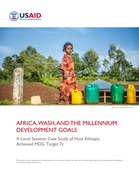
Ethiopia met the MDG target for drinking water access with a unique and high degree of success. The magnitude of the country’s success in providi
...

There is growing understanding and high-level endorsement of the importance of strong collaborative multisectoral approaches to address a broad range of
...

World Psychiatry. 2010 Jun;9(2):67-77.
The main recommendations are presented in relation to: the need for coordinated policies, plans and programmes, the requirement to scale up services for whole populations, the importance of promoting community
...

Lancet 2022; 399: 1155–200 Published Online March 15, 2022 https://doi.org/10.1016/
S0140-6736(21)02488-0
INTRODUCTION: The COVID-19 pandemic has disrupted health systems around the world. The objectives of this study are to estimate the overall effect of
...
Financing Global Health 2016: Development Assistance, Public and Private Health Spending for the Pursuit of Universal
...

The world has been turned on its head by the coronavirus disease 2019 (COVID-19) pandemic. This has provided a stark wakeup call on the severe under-financing of health systems around the world. It
...


The leishmaniases are a group of diseases caused by Leishmania spp., which occur in cutaneous, mucocutaneous and visceral forms. They are neglected tropical diseases (NTDs), which disproportionately affect marginalized populations who have limited a
...

Community-based strategies play a significant role in many health systems in low- and middle-income countries, especially in light of critical shortages in the
...
Bull World Health Organ 2022;100:50–59 | doi: http://dx.doi.org/10.2471/BLT.21.286689

WHO practical guidelines. 2nd edition
Sepsis contributes significantly to preventable mortality and is the final common pathway to death for severe infectious diseases; it can also arise as a complication of injuries and non-communicable diseases.
