
Filter
498
Text search:
pharmacy
hygiene
Featured
76
161
Language
Document type
233
116
72
36
16
11
5
4
2
1
1
1
Countries
26
25
25
25
16
15
14
13
13
11
10
10
9
8
7
7
6
6
6
6
5
5
4
4
4
4
4
4
4
3
3
3
3
3
3
2
2
2
2
2
2
2
2
2
2
1
1
1
1
1
1
1
1
1
1
1
1
1
1
1
1
1
1
1
1
1
1
1
1
1
1
1
1
1
1
1
1
1
1
1
Authors & Publishers
Publication Years
Category
232
39
28
27
24
14
10
Toolboxes
84
40
30
21
21
12
12
11
9
9
8
8
7
7
7
7
5
4
3
2
2
1
1
1
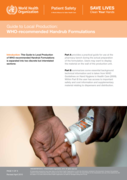
This guide to local production of WHO-recommended handrub formulations is separated into two discrete but interrelated sections:
Part A provides a practical guide for use at the pharmacy bench during the actual preparation of the formulation. Use
...
14.04.2016
Pharm -Ed
--
The alcohol-based solution for hand hygiene is now part of the WHO essential medicines list .Local production of the alcohol-based handrub is an alternative to commercial products. Although adapted to contexts with limited
...

Fact sheet
Good hygiene is critical to ensure that healthcare staff provide quality care, reduce the spread of infections, and protect the health of communities. This fact sheet explores the healthcare-related risks of poor ...
Good hygiene is critical to ensure that healthcare staff provide quality care, reduce the spread of infections, and protect the health of communities. This fact sheet explores the healthcare-related risks of poor ...
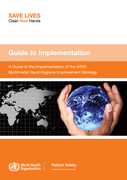
The steps are presented in a user-friendly guidebook, designed to be a working resource for implementers and leads in infection control, safety, and quality.
Health care-associated infection (HCAI) places a serious disease burden and has a significant economic impact on patients and health-care systems throughout the world. Yet good hand hygiene, the simple task of cleaning hands at the right times an
...
An information package for school staff

This tool enables a rapid, systematic review of pharmacy curricula at the national or institutional level to evaluate their robustness in delivering the expected content and competencies. It can also assist institutions in designing strategies to st
...
This paper explores access to water, sanitation, and health in pastoral communities in northern Tanzania. It argues that the concept of gender, used on its own, is not enough to understand the complexities of sanitation, hygiene, water, and health.
...

The rapid assessment tool (RAT) is meant to assess health facilities within mpox-affected areas that have at least one inpatient bed. Depending on time and resources available, certain facilities may be prioritized during an mpox outbreak. The RAT evaluates 16 infection prevention and control (IPC)
...

A two-week mission was conducted by WASH and quality UHC technical experts from WHO headquarters and supported by the WHO Ethiopia Country Office (WASH and health systems teams) in July 2016, to understand how change in WASH services and quality improvements have been implemented in Ethiopia at nati
...
Infection prevention and control (IPC) practices are of critical importance in protecting the function of healthcare services at all levels and mitigating the impact on vulnerable populations. Although the management of possible COVID-19 cases is usually guided by national policies for specific heal
...

The purpose of this document is to provide relevant information and guidelines on
coronavirus outbreaks – and in particular the novel coronavirus SARS-CoV-2 and the
diseases it produces, COVID-19 – for pharmacists and the pharmacy workforce, b
...
High prevalence of target diseases in rural and developing nations, increased prevalence of malnutrition across the globe, lack of hygiene and poor sanitation facilities, Migratory patterns of population, introduction of new chemical entity in the f
...

PMPB/INS-GUIDE/01
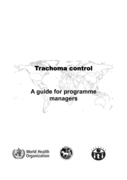
This guide has been written for managers of national and district trachoma control programmes. It sets out, step-by-step, what is needed to assess the magnitude and extent of the trachoma problem in the area and how to plan, implement, monitor and evaluate a programme to control, and ultimately elim
...
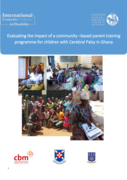
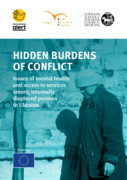
Some 32% of internally displaced persons (IDPs) in Ukraine suffer from post-traumatic stress disorder (PTSD) as a result of the conflict in the east.
Among the 2,203 respondents surveyed across Ukraine, the study also found a high prevalence of mental disorders such as depression (22%) and anxiety
...

The Pharmaceutical Forum of the Americas (PFA) has previously published guidelines and organised campaigns for community pharmacists on the prevention, detection and control of arbovirus infections in 2018 with a grant from the FIP Foundation for Pharmacy
...
