
Filter
1135
Text search:
parasites
Featured
104
233
Language
Document type
373
267
173
74
66
52
40
26
18
16
14
5
5
3
2
Countries
83
35
27
23
22
22
21
19
19
16
16
16
15
14
12
12
12
10
10
10
9
9
9
9
8
8
7
7
7
7
6
6
6
5
5
5
5
5
4
4
4
4
4
3
3
3
3
3
3
2
2
2
2
2
2
2
2
2
2
2
2
2
2
2
2
2
2
2
2
2
1
1
1
1
1
1
1
1
1
1
1
1
1
1
1
1
1
1
1
1
1
1
1
1
1
1
1
1
1
1
1
1
1
1
1
Authors & Publishers
Publication Years
Category
377
98
69
65
40
36
33
Toolboxes
297
153
87
58
19
19
18
14
12
12
11
10
9
9
8
8
7
7
5
4
3
3
2
2
2
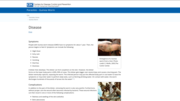
People with Guinea worm disease (GWD) have no symptoms for about 1 year. Then, the person begins to feel ill. Symptoms can include the following:
Slight fever
Itchy rash
Nausea
Vomiting
Diarrhea
Dizziness
A blister then develops. This blister can form anywhere on the skin. However, the blis
...
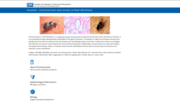
Onchocerciasis, or river blindness, is a neglected tropical disease (NTD) caused by the parasitic worm Onchocerca volvulus. It is transmitted through repeated bites by blackflies of the genus Simulium. The disease is called river blindness because the blackfly that transmits the infection lives and
...
When a person is infested with scabies mites the first time, symptoms typically take 4-8 weeks to develop after being infested. However, an infested person can transmit scabies, even if they do not have symptoms. Scabies usually is passed by direct, prolonged skin-to-skin contact with an infested pe
...

based on the WHO Bench Aids for the diagnosis of intestinal parasites;
Tutor’s Guide: perform specific laboratory techniques; identify intestinal parasites by genus and species; quantify helminth
...
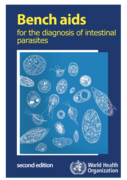
2nd edition
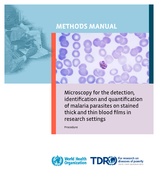
(version 1.0): procedure: methods manual
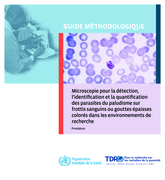
procédures : guide méthodologique
Many countries have made significant progress in the implementation of World Health Organization recommended preventive chemotherapy strategy, to eliminate lymphatic filariasis (LF). However, pertinent challenges such as the existence of areas of residual infections in disease endemic districts pose
...
The major neglected tropical diseases, Taenia solium taeniosis/cysticercosis and schistosomiasis caused by Schistosoma mansoni or S. haematobium are presumed to be widely distributed in Africa. Taenia solium taeniosis/ cysticercosis has been reported as an emerging disease in different regions of Af
...

Taenia saginata is a zoonotic tapeworm that is of economic importance in countries where cattle are kept. The parasite is transmitted from human tapeworm carriers (taeniosis) to bovines (cysticercosis) by excretion of eggs or proglottids containing eggs into the environment via the stool. Bovines ca
...

Dickson and Daniel discuss lymphatic filariasis caused by the helminths Wuchereria bancrofti and Brugia malayai.

Background: The human helminth infections include ascariasis, trichuriasis, hookworm infections, schistosomiasis, lymphatic filariasis (LF) and onchocerciasis. It is estimated that almost 2 billion people worldwide are infected with helminths. Whilst the WHO treatment guidelines for helminth infecti
...
The trematodes Fasciola hepatica (also known as the common liver fluke or the sheep liver fluke) and Fasciola gigantica are large liver flukes (F. hepatica: up to 30 mm by 15 mm; F. gigantica: up to 75 mm by 15 mm), which are primarily found in domestic and wild ruminants (their main definitive host
...

Parasites & Vectors volume 15, Article number: 389 (2022)
Dengue is one of the common arboviral infections and is a public health problem in South East Asia. The aim of this systematic review and meta-analysis was to evaluate the prevalence and
...

Parasites & Vectors volume 11, Article number: 264 (2018)
Dengue creates a staggering epidemiological and economic burden for endemic countries. Without a specific therapy and with a commercial vaccine that presents some problems relative to it
...

Parasites Vectors 14, 50 (2021). https://doi.org/10.1186/s13071-020-04555-8
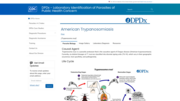
DPDx - Laboratory Identification of Parasites of Public Health Concern
Trypanosoma cruzi, is a parasitic protozoan that is the causative agent of Chagas disease (American trypanosomiasis). Currently, six distinct lineages of T. cruzi are classified
...
DPDx Laboratory Identification of Parasites of Public Health Concerns
Including Life cycle

Relapsing malaria caused by Plasmodium vivax parasites poses a significant challenge to global malaria elimination efforts. About one third of the population remains at risk of contracting P. vivax malaria, and 85% of P. vivax infections stem from r
...
Trop. Med. Infect. Dis. 2019, 4, 40; Schistosomiasis is an infectious disease caused by helminth parasites of the genus Schistosoma. Worldwide, an estimated 250 million people are infected with these paras
...
