
Filter
1608
Text search:
neglected
group
Featured
167
383
Language
Document type
800
406
166
89
81
22
18
9
8
3
2
2
2
Countries
114
49
40
35
34
32
30
30
27
26
26
25
25
25
22
21
20
18
17
15
14
14
12
12
10
10
10
9
9
9
9
8
8
8
8
8
7
6
6
6
6
6
5
5
5
5
5
4
4
4
4
4
4
3
3
3
3
3
3
3
3
2
2
2
2
2
2
2
2
2
2
2
2
2
2
2
2
2
2
1
1
1
1
1
1
1
1
1
1
1
1
1
1
1
1
1
1
1
1
1
1
1
1
1
1
Authors & Publishers
Publication Years
Category
468
145
118
95
92
28
21
1
Toolboxes
274
146
102
66
60
60
50
37
36
35
35
26
26
24
22
20
19
13
12
12
11
10
7
6
3
The Fifty-first World Health Assembly adopted resolution WHA51.11 in 1998, which targets the
global elimination of trachoma as a public health problem by 2020 (1). The strategy recommended
to achieve that goal is encapsulated by the acronym “SAFE”, which represents: Surgery for
individuals wi
...

The sixteenth meeting of the Strategic and Technical Advisory Group for Neglected Tropical Diseases (STAG-NTD) was held as a hybrid meeting, 27–28 September 2022.
Dr Ren Minghui, Assistant Dire
...
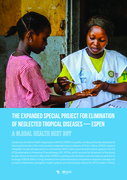
Neglected tropical diseases (NTDs) is an umbrella term for a diverse group of debilitating infections that represent the most common afflictions for 2.7 billion people living on less than US$2 per d
...
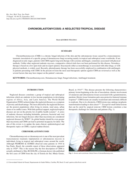
Chromoblastomycosis (CMB) is a chronic fungal infection of the skin and the subcutaneous tissue caused by a transcutaneous traumatic inoculation of a specific group of dematiaceous fungi occurring mainly in tropical and subtropical zones worldwide.
...
While virtually unheard of in developed countries, NTDs are a group of medically diverse parasitic and bacterial infectious diseases common in tropical and subtropical areas. NTDs affect more than 1.5 billion people annually, causing death, blindnes
...
Fascioliasis is caused by two species of parasitic flatworms or trematodes that mainly affect the liver. It belongs to the group of foodborne trematode infections and is a zoonosis, meaning an animal infection that may be transmitted to humans.
The World Health Organization (WHO) endorses the use of population-based prevalence surveys for estimating the prevalence of trachoma. In general, the prevalence of TF in children aged 1–9 years and the prevalence of TT in adults aged ≥ 15 years are measured at the same time in any district bein
...
The leishmaniases are a group of diseases caused by Leishmania spp., which occur in cutaneous, mucocutaneous and visceral forms. They are neglected tropical diseases (NTDs), which disproportionately
...
Chagas Disease (CD) affects 6–7 million people worldwide and isrelated topoverty-promo ting conditions. Chronic asymptomatic cases are mostly invisible tohealth systems. Aiming totranslate CD discoveries into education/information practices toraise alertness and empowerment ofaffected people; and
...
Yaws is targeted for eradication by 2030, using a strategy based on mass drug administration (MDA) with azithromycin. New diagnostics are needed to aid eradication. Serology is currently the mainstay for yaws diagnosis; however, inaccuracies associated with current serological tests makes it difficu
...

Meeting of the Neglected Tropical Diseases Strategic and Technical Advisory
Group’s Monitoring and Evaluation Subgroup on Disease-specific Indicators

The objective of this concept note and the framework it outlines is the elimination of a group of CDs and the negative health effects they generate, which together create a tangible burden on affected individuals, their families and communities, and
...

The development of this target product profile (TPP) was led by the WHO Department of Control of Neglected Tropical Diseases (NTD) following standard WHO guidance for TPP development. In order to identify and prioritize diagnostic needs, a WHO NTD D
...
Schistosomiasis is a tropical disease caused by a group of parasitic worms. It has an interesting life-cycle involving freshwater snails and can cause short term and long term disease. Schistosomiasis is classified as a
...

Website last accessed on 22.05.2023
Leishmaniasis refers to a diverse group of diseases caused by single-celled parasites called Leishmania. About 12 million people are infected at any one time, causing up to 40,000 deaths annually.
The VALID
...

J Glob Health Sci. 2020 Jun;2(1):e3. A group of enzootic and zoonotic protozoan infections, the leishmaniases constitute among the most severely neglected tropical diseases (NTDs) and are found in a
...
International commitment to eliminate trachoma as a public health problem worldwide is supported by resolution WHA51.11 of the World Health Assembly .1 Important progress towards this goal has been made by harnessing the mostly informal relationships that exist between partners including Member Stat
...

Schistosomiasis is a public health problem in tropical and subtropical regions of Africa, Asia, the Caribbean and South America. It is one of the neglected tropical diseases (NTDs) - a group of dise
...

Leprosy/Hansen disease is a chronic infectious disease primarily impacting the skin and peripheral nerves. If left untreated, leprosy can have long-term consequences, including deformities and disabilities, which are associated with stigma. Leprosy is one of the 21
...

Buruli ulcer is a chronic, progressive skin disease caused by infection with Mycobacterium ulcerans. It is currently considered to be one of the neglected tropical diseases; less common than tuberculosis but more common than leprosy. The initial les
...
