Filter
859
Text search:
measuring
disability
Featured
85
230
Language
Document type
514
140
88
67
31
9
7
2
1
Countries
60
32
23
22
17
17
17
16
15
14
13
13
12
12
10
9
9
8
7
6
6
6
6
6
6
5
5
5
4
4
4
4
4
4
3
3
3
3
2
2
2
2
2
2
2
2
2
2
2
2
2
2
1
1
1
1
1
1
1
1
1
1
1
1
1
1
1
1
1
1
1
1
1
1
1
1
Authors & Publishers
Publication Years
Category
285
89
66
65
60
11
6
Toolboxes
131
83
43
43
30
25
24
24
19
18
13
11
10
9
7
5
5
5
4
4
3
3
1
Funded by CBM: www.cbm.org
The World Health Organization Disability Assessment Schedule (WHODAS 2.0) is a generic assessment instrument developed by WHO to provide a standardized method for measuring health and
...
This manual summarizes the methodology used to develop WHODAS 2.0 and the findings obtained when the schedule was applied to certain areas of general health, including mental and neurological disorders.
The manual will be useful to any researcher or clinician wishing to use WHODAS 2.0 in their prac
...
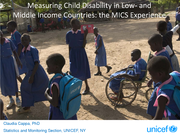
UNICEF’s support for data collection: the Multiple Indicator Cluster Surveys (MICS)
Developed as part of the UN Women–WHO Global Joint Programme on Violence Against Women Data, this briefing note focuses on the measurement of violence against women with disability and is one in a series of methodological briefing notes for streng
...
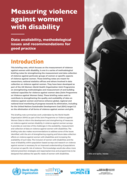
Measuring violence against women with disability
recommended
This briefing note, which focuses on the measurement of violence against women with disability, is one in a series of methodological cbriefing notes for strengthening the measurement and data collection of violence against particular groups of women
...
Let’s make Disability visible in the fight against HIV
BioMed Central DOI 10.1186/s12963-016-0096-y

As the Convention of the Rights of Children recognizes, children are human beings with a distinct set of rights, and not the passive objects of care and charity. They deserve to be full participants in society, and to live lives free of poverty. But for children, living in poverty is particularly im
...

ICF is WHO's framework for health and disability. It is the conceptual basis for the definition, measurement and policy formulations for health and disability. It is a universal classification of
...

Assessment of physical disability at the community level is essential for rehabilitation and supply of services. This study aimed to assess the prevalence of physical disability among adults in an
...