
Filter
923
Text search:
kidney
diseases
Featured
137
228
Language
Document type
385
218
167
55
34
29
23
7
2
2
1
Countries
98
57
27
24
21
21
20
19
16
15
14
14
13
13
11
11
9
8
8
8
8
8
7
7
5
5
5
5
5
4
3
3
3
3
3
3
3
3
3
3
3
3
2
2
2
2
2
2
2
2
2
2
2
2
1
1
1
1
1
1
1
1
1
1
1
1
1
1
1
1
1
1
1
1
1
1
1
1
1
1
Authors & Publishers
Publication Years
Category
364
146
94
35
32
24
8
Toolboxes
106
92
56
45
33
33
32
28
23
21
17
16
15
14
13
10
8
6
5
4
3
3
3
2
1
This document outlines Rwanda's policy on non-communicable diseases. The overall goal of NCDs Policy is to alleviate the burden of NCDs and their risk factors and protect Rwandan population from premature morbidity and mortality related to NCDs. Thi
...
Non-Communicable Diseases (NCDs) are a worldwide epidemic. Particularly, the most common diseases - Cardiovascular diseases,
...

The World Health Organization's Regional Office for Africa webpage on diabetes provides an overview of the disease's impact in the African Region. It highlights that diabetes is a serious, chronic, and costly condition, with projections estimating cases to rise to 23.9 million by 2030. The page outl
...

Chronic kidney disease (CKD) is an important contributor to mortality from noncommunicable diseases. No decrease has been seen for CKD mortality contrary to many other important non-communicable
...
Hypertension, or high blood pressure, is a condition which generally has no symptoms and if left untreated, can lead to heart attacks, heart failure, stroke, kidney failure and blindness. Risk factors include older age, overweight or obesity, lack o
...

Hypertension, also known as high or raised blood pressure, is a condition in which the blood vessels have persistently raised pressure. Blood is carried from the heart to all parts of the body in the vessels. Each time the heart beats, it pumps blood into the vessels. Blood pressure is created by th
...
Patients with diabetes are at increased risk of developing cardiovascular disease (CVD) with its manifestations of coronary artery disease (CAD), heart failure (HF), atrial fibrillation (AF), and stroke, as well as aortic and peripheral artery diseases
...

Almost all populations are consuming too much sodium. The global mean intake of adults is 4310 mg/day sodium (equivalent to 10.78 g/day salt). This is more than double the World Health Organization recommendation for adults of less than 2000 mg/day sodium (equivalent to < 5 g/day salt).
- The primary health effect associated with diets high in sodium is raised blood pressure, increasing the risk of cardiovascular
...

Background
Low- and middle-income countries now experience the highest prevalence and mortality rates of cardiovascular disease.
Main text
While improving the availability and delivery of proven, effective therapies will no doubt mitigate this burden, we posit that studies evaluating cardiovasc
...
The ICMR type 1 diabetes guidelines come at a time when the SARS-CoV-2 pandemic
has disproportionately affected people with diabetes population, exposing them to a
high risk for severe illness and mortality. Globally, diabetes was responsible for over fourmillion deaths in the year 2019. It was th
...
Urogenital schistosomiasis is a common neglected tropical disease in many rural communities in African countries, with patches of infection in the Eastern Mediterranean Region. Globally, an estimated 239 million people are currently infected, with burden estimated at more than 3.5 million disability
...
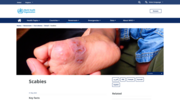
Human scabies is a parasitic infestation caused by Sarcoptes scabiei var hominis. The microscopic mite burrows into the skin and lays eggs, eventually triggering a host immune response that leads to intense itching and rash. Scabies infestation may be complicated by bacterial infection, leading to t
...
Cardiovascular disease (CVD) is often thought to be a problem of wealthy, industrialized nations. The term “cardiovascular disease” is used throughout the report to refer to cardiac disease, vascular diseases of the brain and
...

COVID-19, a disease caused by a novel corona virus (SARS CoV-2), is currently a pandemic, which produces high morbidity in the elderly and in patients with associated comorbidities. Chronic kidney disease stage-5 (CKD-5) patients on dialysis [mainte
...
Diabetes is one of the leading causes of chronic kidney disease (CKD). Up to 40% of people living with diabetes develop CKD, and the number of new cases of CKD in people with type 2 diabetes increased by 74% between 1990 and 2017. The prevalence of
...
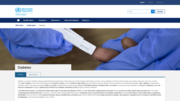
The number of people with diabetes has risen from 108 million in 1980 to 422 million in 2014.
The global prevalence of diabetes* among adults over 18 years of age has risen from 4.7% in 1980 to 8.5% in 2014.
Diabetes prevalence has been rising more rapidly in middle- and low-income countries.
Dia
...

The World Health Organization's fact sheet on diabetes provides an overview of the disease, highlighting its increasing prevalence, particularly in low- and middle-income countries. It outlines the main types of diabetes—Type 1, Type 2, and gestational diabetes—detailing their characteristics an
...

The World Health Organization's fact sheet on diabetes provides an overview of the disease, highlighting its increasing prevalence, particularly in low- and middle-income countries. It outlines the main types of diabetes—Type 1, Type 2, and gestational diabetes—detailing their characteristics an
...

The World Health Organization's fact sheet on hypertension provides a comprehensive overview of high blood pressure, highlighting its prevalence, risk factors, and health implications. It emphasizes that hypertension is a major cause of premature death worldwide, with an estimated 1.28 billion adult
...

The NICE guideline "Hypertension in Adults: Diagnosis and Management" outlines recommendations for diagnosing and managing hypertension in adults over 18, including those with type 2 diabetes. It emphasizes accurate blood pressure measurement, recommending ambulatory or home monitoring to confirm di
...
