
Filter
260
Text search:
burnout
Featured
23
43
Language
Document type
104
56
42
23
10
10
8
4
2
1
Countries / Regions
11
10
9
8
7
6
4
4
4
4
4
4
3
3
3
3
3
2
2
2
2
2
2
2
2
2
2
2
2
2
1
1
1
1
1
1
1
1
1
1
1
1
1
1
1
1
1
1
1
1
1
1
1
1
1
1
1
Authors & Publishers
Publication Years
Category
78
19
15
12
11
7
1
Toolboxes
55
50
39
14
10
8
6
5
3
2
1
1
1
1
1
1
1
Volume 2019, Article ID 4157574, 7 pages
https://doi.org/10.1155/2019/4157574
Being a caregiver can be an exhausting and difficult task. It’s important to recognize caregiver burnout and cope healthily. Understanding caregiver burnout symptoms and coping mechanisms can help
...
Medicina 2019, 55, 553; doi:10.3390/medicina55090553
Results: Twenty-one studies were analyzed, most of them demonstrating an association between the existence of burnout and the worsening of patient safety. High levels of
...

The COVID-19 pandemic has affected job satisfaction among healthcare workers; yet this has not been empirically examined in sub-Saharan Africa (SSA). We addressed this gap by examining job satisfaction and associated factors among healthcare workers in Ghana and Kenya during the COVID-19 pandemic. W
...
In line with the National Mental Health Strategy for Lebanon (2015-2020), this guide answers the objective of the Mental Health and Psychosocial Support task force: “Development and provision of staff care interventions for persons working in the MHPSS and Protection sectors”. It aims at prevent
...

Compassion fatigue is characterized by physical and emotional exhaustion and a profound decrease in the ability to empathize. The term compassion fatigue was first used in the context of the study of burnout in nurses.
Health workers are at the front line of the COVID-19 outbreak response and as such are exposed to hazards that put them at risk of infection. Hazards include pathogen exposure, long working hours, psychological distress, fatigue, occupational burnout
...
Os trabalhadores da saúde estão na linha de frente para resposta ao surto de COVID-19, portanto, estão expostos a perigos que os colocam em risco de infecção. Os perigos incluem exposição ao patógeno, longas jornadas de trabalho, estresse emocional, fatiga, síndrome do esgotamento físico e
...
COVID-19, Update 13 January 2021
A global call to action to protect the mental health of health and care workers

The world faces grave consequences from the lack of available mental health services and treatment. Mental illness impacts every country, culture and community, with the World Health Organization (WHO) stating that 10% of the global burden of disease is related to mental, neurological and substance
...
Objetivo:
el presente folleto describe el impacto que
tiene el estrés sobre las organizaciones humanitarias y
sobre sus trabajadores, además de establecer
estrategias para reducir las consecuencias adversas que
se derivan del mismo.
Beneficios:datos recogidos en varios entornos de trabajo su
...
The nature of humanitarian work has also drastically changed over the last
decade. Humanitarian workers have paid dearly in the face of violence and
terrorism. Burn out and after-effects of traumatic experiences constitute a
major risk for humanitarian workers. After ten years of experience with
...
2017-2025
Accessed: 06.03.2019
In response to the COVID-19 outbreak this risk communication package for healthcare facilities provides healthcare workers (HCWs) and healthcare facility management with the information, procedures, and tools required to safely and effectively work. The package contains a series of simplified messag
...
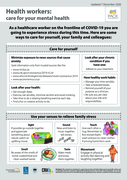
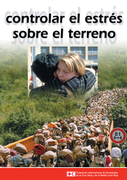
La presente publicación ha sido concebida como manual de carácter práctico. Los diferentes tipos de estrés experimentados por los delegados se describen junto con los síntomas asociados. Se pone de relieve la importancia de identificar y conocer los recursos personales, del equipo y de la organ
...
