Search database
Filter
67
Text search: antiepileptic medications
Featured
Language
Document type
No document type
52
Guidelines
7
Manuals
3
Studies & Reports
3
Fact sheets
2
Countries / Regions
South Africa
4
Ethiopia
3
Uganda
3
India
3
South Sudan
2
Kenya
2
Latin America and the Carribbean
2
Sierra Leone
1
Nigeria
1
USA
1
Ghana
1
Zimbabwe
1
Nepal
1
Zambia
1
Syria
1
Malawi
1
Middle East and North Africa
1
South–East Asia Region
1
Paraguay
1
Authors & Publishers
World Health Organization WHO
18
WHO
8
World Health Organization
7
IACAPAP
4
et al.
3
mhGAP
3
Ministry of Health & Family Welfare, India
2
World Health Organization (WHO)
2
1 A Pharma
1
A. Arzimanoglou
1
A. Sandoz Brand
1
AIDS Support and Technical Assistance Resources Project,
1
American Academy of Child and Adolescent Psychiatry
1
Appleton, R.E. & Cross, J.H.
1
B. Birmaher
1
B. K. Roy
1
Berkley, James A.
1
BMC Medicine
1
Bui, B., Ohye, B., Palitz, S., et al.
1
C. Acevedo
1
C. Bachmann
1
CDC
1
D. Radeloff
1
D.de Lange
1
Department of Health, Republic of South Africa
1
Drug Administration and Control Authority (DACA) of Ethiopia
1
E. B. Pérez
1
Eastern Mediterranean Region
1
Epilepsia
1
Epilepsy Foundation of America
1
F. Norström, M. Y. Bertram et al.
1
Federal Democratic Republic of Ethiopia -Ministry of Health
1
Flying Publisher
1
Food, Medicine and Health care Administration and Control Authority of Ethiopia (FMHACA)
1
G. L. Birbeck
1
Government of Sierra Leone, Ministry of Health and Sanitation
1
Haefele-Abah, C.
1
Healthcare Improvement Scotland
1
Idro R, Musubire K A, Byamah Mutamba B
1
Internal Medical Corps
1
International Bureau for Epilepsy
1
International League against Epilepsy
1
International League Against Epilepsy (UK Chapter) and Epilepsy Society
1
J. Katchanov
1
Jack, H.
1
Jones, L.
1
Kestel, D., et al.
1
Khuluza, F.
1
Kitchener – Hashem – Wahba – Khalaf – Zarif – Mansoor
1
L. F. Owolabi
1
Ministry of Community Development, Mother and Child Health, Zambia
1
Ministry of Health, Republic of Uganda
1
Ministry of Public Health and Sanitation, Kenya
1
N. M. Shehu
1
National Tuberculosis, Leprosy and Lung Disease Unit, Ministry of Health, Kenya
1
Neurology Asia
1
PAHO Pan American Health Organization
1
Pan African Medical Journal
1
Pan American Health Organisation (PAHO)
1
Pan American Health Organization (PAHO)
1
PLoS ONE
1
R. S. Diler
1
R. S. Fisher
1
R.G. Wagner, I. Petersen, et al.
1
Robert A. Scott, Samden D. Lhatoo & Josemir W.A.S. Sander
1
S. Bhattachrya
1
S. D. Owolabi
1
S. P. Saha
1
Scott F. Dowell, James J. Sejvar, Lul Riek, et al.
1
Scottish Intercollegiate Guideline Network
1
T. Lempp
1
UNICEF, World Health Organisation (WHO)
1
USAID
1
Wagner, R.C.
1
Williams, Phoebe CM.
1
World Federation of Neurology
1
World Health Organization, UN High Commissioner for Refugees
1
Publication Years
Category
Countries
18
Clinical Guidelines
5
Women & Child Health
3
Capacity Building
2
Toolboxes
Mental Health
36
Disability
4
COVID-19
3
Pharmacy
3
TB
2
Natural Hazards
1
Zika
1
[Updated 2015] Scoping Question: In adults with acute convulsive seizures in first-level care or in the community (when no IV access is available), which antiepileptic medications produce benefit ... more
Scoping Question: For adults and children living with HIV, which antiepileptic medications (such as phenobarbital, phenytoin, carbamazepine or valproic acid) produce benefits and/or harms when compa ... more
SCOPING QUESTION: In adults with established status epilepticus (i.e., seizures persisting after the first-line treatment with benzodiazepines [or benzodiazepines-resistant status epilepticus]), which anti-epileptic medications are associated with c ... more
Q12: Should the treatment be similar in individuals with intellectual disability and epilepsy compared to people with epilepsy only?
Q9. In adults and children with convulsive epilepsy in remission, when should treatment be discontinued?
SCOPING QUESTION: For adults and children with medication-resistant convulsive epilepsy, which anti-epileptic medications produce benefits and/or harm in the specified outcomes when compared to a placebo or a comparator?
The internationally recognized criteria for diagnosis of neurocysticercosis include a requirement for neuroimaging techniques, such as computerized tomography (CT) and/or magnetic resonance imaging (MRI), ideally supported by serology. These facilities are not available in all settings, especially i ... more
Bulletin of the World Health Organization, 2001, 79 (4)
Bridging the Gap
This is the fifteenth edition of the lecture notes. They were first published in 1987 as a summary of the material used in the biannual epilepsy teaching weekend organised under the auspices of the UK Chapter of the International League against Epilepsy. (Lecture series consist of a total of 59 cha ... more
SCOPING QUESTION: In adults with acute convulsive seizures, where intravenous access is available, which first-line anti- epileptic medication should be used to abort seizures when compared to comparator?
Treatment of psychostimulant dependence

World Health Organization (2012) C_WHO
Q3: Are pharmacotherapies safe and effective for the treatment of psychostimulant dependence (maintenance or relapse prevention) in non-specialized settings?
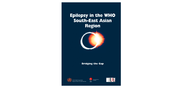
Epilepsy

World Health Organization (2004) C_WHO
Brief review of selected topics The following pages provide a focus on selected areas in relation to neurology. The specialists who contributed the reviews are listed in the Project Team and Partners Neurology Atlas (2004)
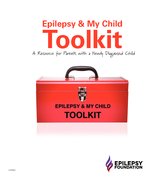
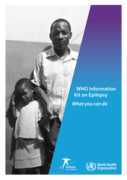
What you can do
Anxiety Disorders Chapter F.4
These guidance notes on stress, grief and loss have been compiled by IMC’s Mental Health Advisor, Dr. Lynne Jones, for organizations working with Hurricane Katrina-affected populations. They represent lessons learned regarding mental health activities from IMC’s international experiences in disa ... more
Module: Epilepsy

World Health Organization World Health Organization (2019) C_WHO
Accessed: 10.03.2019 mhGAP Training Manual for the mhGAP Intervention Guide for mental, neurological and substance use disorders in non-specialized health settings – version 2.0 (for field testing)
Low- and middle-income countries (LMICs) experience a high disease burden for epilepsy, a chronic neurological condition.The authors evaluate the cost-effectiveness of community health workers (CHWs) to improve adherence to medication for epilepsy in South Africa. They found that utilizing CHWs to i ... more