
Filter
60
Text search:
Thailand,
National
Disaster
Prevention
and
Mitigation
Committee
Featured
Recommendations
5
New Publications
32
Language
Document type
No document type
41
Manuals
9
Studies & Reports
5
Guidelines
3
Strategic & Response Plan
2
Countries / Regions
Myanmar / Burma
14
Global
4
Indonesia
3
South–East Asia Region
3
Asia
3
India
2
Nepal
2
Thailand
2
Laos
2
Philippines
1
Jordan
1
Syria
1
Kenya
1
Cambodia
1
Bangladesh
1
Papua New Guinea
1
Western Pacific Region
1
Africa
1
Vietnam
1
Authors & Publishers
Publication Years
Category
Countries
28
Key Resources
18
Public Health
2
Clinical Guidelines
1
Women & Child Health
1
Toolboxes
Natural Hazards
8
2.0 Rapid Response
5
Disability
3
Mental Health
3
Planetary Health
3
Conflict
2
Rapid Response
2
HIV
2
Specific Hazards
2
Global Health Education
2
Health Financing Toolbox
2
Typhoon
1
COVID-19
1
Caregiver
1

The National Strategy for Natural Disaster, Prevention, Response and
...
Lao People’s Democratic Republic (Lao PDR), also referred to as Laos, or Lao, is exposed to natural disasters such as flooding, typhoons, cyclones, drought, and earthquakes. The country is vulnerable to recurrent, sudden-onset
...
The Indonesian government has reformed its laws, policies, and institutions to better manage disaster risk since the significant 2004 Indian Ocean Tsunami. The Government of Indonesia now has contin
...
Thailand is exposed to flooding, landslides, drought, earthquakes, tsunamis, heat waves, forest fires, and epidemics. Thailand is also exposed to t
...
The National Disaster Management Plan (NDMP) provides a framework and direction to the government agencies for all phases of
...

The guide is designed to help disaster managers in national Governments gain basic knowledge of how to use international tools and services. It aim
...
Sectors in which Priority Adaptation Projects should be implemented first include:
- 1) Agriculture, Early Warning Systems and Forest (First Priority Level Sectors). This is followed by:
- 2) Public Health ...
- 1) Agriculture, Early Warning Systems and Forest (First Priority Level Sectors). This is followed by:
- 2) Public Health ...
Cambodia drafted and adopted the National Action Plan for Disaster Risk Reduction 2014-2018 in 2014. This plan finalized the required policies
...
Research results of sexual and gender-based violence (SGBV) prevention and response before, during and
...
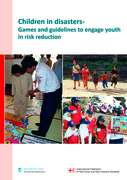
This guideline consists of two main parts:
i.) Guidelines for Red Cross and Red Crescent national societies on how to start up and engage with ...
i.) Guidelines for Red Cross and Red Crescent national societies on how to start up and engage with ...
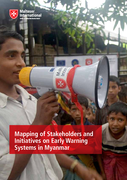
This study aims to analyze national and international stakeholders and their initiatives in Early Warning Systems in Myanmar, to identify priority
...
The purpose of the WHO Manual for the Public Health Management of Chemical Incidents is to provide a comprehensive overview of the principles and roles of public health in the management of chemical incidents
...
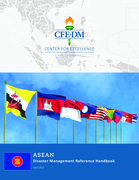
Disaster Management Reference Handbook Series Overview.
Floods, storms, and wind account for large proportions of displacement compared to other disasters. Floods are the most frequent type of
...

In Control. A Practical Handbook for Professionals Working in Health Emergencies Internationally
recommended
In Control imparts knowledge, provokes reflection and triggers curiosity. The first half of the book provides an overview of the organisations, principles, frameworks and themes that every professio
...
The need for a roadmap for risk assessment stemmed from the lack of standardised and systematic effort to national risk assessment effort to date. The road map details the process, activities necess
...
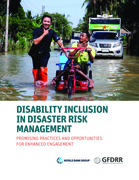
This paper provides information to assist World Bank and GFDRR staff in affecting disability-inclusive DRM. It is based upon desk reviews of existing practice, as well as consultations with experts in the field of disability-inclusive DRM. The paper
...

The strategic priorities of the CCS 2014–2018 are:
(1) Strengthening the health system.
(2) Enhancing the achievement of communicable disease control targets.
(3) Controlling the growth of the noncommunicable disease burden.
(4) Promoting health throughout the life course.
...
(1) Strengthening the health system.
(2) Enhancing the achievement of communicable disease control targets.
(3) Controlling the growth of the noncommunicable disease burden.
(4) Promoting health throughout the life course.
...
