
Filter
243
Text search:
Springer
Nature
Featured
Recommendations
17
New Publications
27
Language
Document type
Studies & Reports
107
No document type
81
Guidelines
23
Manuals
16
Training Material
5
Strategic & Response Plan
4
Fact sheets
4
Resource Platforms
2
Infographics
1
Countries / Regions
Global
24
India
8
Latin America and the Carribbean
7
South Africa
6
Africa
4
Uganda
3
Syria
3
Western and Central Europe
3
Burkina Faso
2
Zimbabwe
2
Philippines
2
Germany
2
Kenya
2
China
2
Malawi
2
East and Southern Africa
2
Sierra Leone
1
Nigeria
1
Senegal
1
Congo, Democratic Republic of
1
Morocco
1
USA
1
Ethiopia
1
Ghana
1
Iraq
1
Zambia
1
Cambodia
1
Thailand
1
Rwanda
1
Indonesia
1
Bangladesh
1
Peru
1
Brazil
1
Austria
1
Switzerland
1
Ukraine
1
Lesotho
1
Myanmar / Burma
1
Chile
1
South–East Asia Region
1
Western Pacific Region
1
Asia
1
Poland
1
Eastern Europe
1
Canada
1
Russia
1
Authors & Publishers
Publication Years
Category
Countries
39
Public Health
21
Clinical Guidelines
18
Women & Child Health
7
Key Resources
5
Pharmacy & Technologies
3
Capacity Building
2
Toolboxes
Planetary Health
46
Mental Health
35
COVID-19
19
NTDs
16
NCDs
14
HIV
13
Caregiver
9
AMR
8
Disability
7
Pharmacy
7
Social Ethics
6
Ebola & Marburg
5
Global Health Education
5
Refugee
4
Health Financing Toolbox
4
Natural Hazards
3
Rapid Response
3
TB
3
2.0 Rapid Response
3
Conflict
1
Specific Hazards
1
Malaria
1
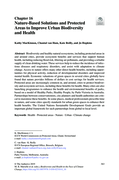
Biodiversity and healthy natural ecosystems, including protected areas in and around cities, provide ecosystem benefits and services that support human health, including reducing flood risk, filtering air pollutants, and providing a reliable supply of clean drinking water. These services help to red
...
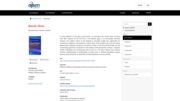
A major objective of this open access book is to summarize the current status of Buruli Ulcer (BU) research for the first time. It will identify gaps in our knowledge, stimulate research and support control of the disease by providing insight into approaches for surveillance, diagnosis, and treatmen
...
Accessed: 24.03.2020
It is now evident that we are living in a world of diabetes pandemic—despite the scientifically sound estimates, worldwide diabetes prevalence has been exceeding even the most pessimistic projections from the past. If we go back in history, it was estimated in 2004 that diabetes prevalence in 2030
...

South Africa’s mineral resources have produced, and continue to produce, enormous economic wealth; yet decades of colonialism, apartheid, capital flight, and challenges in the neoliberal post-apartheid era have resulted in high rates of occupational lung disease and low rates of compensation for e
...

Trypanosoma cruzi is the etiological agent of Chagas disease (CD), considered one of the most important parasitic infections in Latin America. Between 25 and 90 million humans are at infection risk via at least one of multiple infection mechanisms. Under natural conditions, the principal transmissio
...
The United Nations acknowledged diabetes as an epidemic of the 21st century. Global trends demonstrate a continuing growth in its prevalence at approximately 2.5 % per year. The aim of the study was to analyse selected epidemiological factors for type 2 diabetes mellitus in Poland, Central Europe
...
Severe and difficult asthma in a low- and middle-income country (LMIC) can relate to lack of availability of basic medications; potentially reversible factors such as poor adherence or comorbidities such as obesity inhibiting a good response to treatment; and (rarely) true severe, therapy-resistant
...
Climate change presents significant challenges to human health and biodiversity. Increased numbers of extreme climate events, such as heat waves, droughts or flooding, threaten human health and well-being, both directly and indirectly, through impaired ecosystem functioning and reduced ecosystem ser
...
Medizinische KlinikIntensivmedizin und Notfallmedizin
https://doi.org/10.1007/s00063-020-00674-3
Snakebite envenoming affects millions of people worldwide annually and is a significant source of mortality. Preventing and treating the problem is complex and requires collaboration among the fields of public health, medicine, ecology, and laboratory science. After being removed from the category A
...
The arrival and rapid spread of the mosquito-borne viral disease Chikungunya across the Americas is one of the most significant public health developments of recent years, preceding and mirroring the subsequent spread of Zika. Globalization in trade and travel can lead to the importation of these vi
...

The Global Burden of Disease Study (GBD) began 30 years ago with the goal of providing timely, valid and relevant assessments of critical health outcomes. Over this period, the GBD has become progressively more granular. The latest iteration provides assessments of thousands of outcomes for diseases
...
Air pollution is one of the leading causes of health complications and mortality worldwide, especially affecting lower-income groups, who tend to be more exposed and vulnerable. This study documents the relationship between ambient air pollution exposure and poverty in 211 countries and territories.
...
Chapter · January 2009 DOI: 10.1007/978-0-387-72711-0_25
D.D. Celentano and C. Beyrer (eds.), Public Health Aspects of HIV/AIDS in Low and Middle Income Countries, DOI: 10.1007/978-0-387-72711-0 25, c Springer Science+Business Media, LLC 2008

Health systems in Latin America face many challenges in controlling the increasing burden of diabetes. Digital health interventions are a promise for the provision of care, especially in developing countries where mobile technology has a high penetration. This study evaluated the effectiveness of th
...
Nature Sustainability | VOL 2 | APRIL 2019 | 267–273 | www.nature.com/natsustain

The biosphere underlies the whole sustainable development concept, as the layer on
which society and the economy rely. Nature and biodiversity fuel the natural cycles
and life-support systems of the planet, on which humanity ultimately depends.
