
Filter
1176
Text search:
S.
Lee
Featured
Recommendations
110
New Publications
167
Language
Document type
No document type
519
Studies & Reports
288
Guidelines
209
Manuals
72
Training Material
32
Strategic & Response Plan
28
Fact sheets
24
Situation Updates
2
Brochures
1
Resource Platforms
1
Countries / Regions
Global
71
India
35
Russia
28
Brazil
26
Western and Central Europe
23
Latin America and the Carribbean
20
South Africa
18
Indonesia
16
Africa
15
Philippines
14
Kenya
13
Germany
12
Syria
11
Middle East and North Africa
11
Myanmar / Burma
10
Nigeria
9
Nepal
9
Rwanda
9
Ukraine
9
Asia
9
Ethiopia
8
Zambia
8
Tanzania
8
Mozambique
8
Eastern Europe
8
Bangladesh
7
Malawi
7
Spain
7
Uganda
6
Peru
6
Eastern Europe and Central Asia
6
Venezuela
6
Burkina Faso
5
Congo, Democratic Republic of
5
USA
5
Cameroon
5
Zimbabwe
5
South Sudan
5
China
5
Chile
5
Yemen
5
Guinea-Bissau
4
Cambodia
4
Colombia
4
Ecuador
4
Angola
4
South–East Asia Region
4
Liberia
3
Senegal
3
Haiti
3
Pakistan
3
Botswana
3
Paraguay
3
France
3
Guinea
2
Sierra Leone
2
Ghana
2
Turkey
2
Thailand
2
Argentina
2
Lesotho
2
West and Central Africa
2
Kyrgyzstan
2
Vietnam
2
North America
2
Mali
1
Côte d’Ivoire / Ivory Coast
1
Iraq
1
Lebanon
1
Malaysia
1
Singapore
1
Sudan
1
Benin
1
Central African Republic
1
Namibia
1
Eswatini/ Swaziland
1
Switzerland
1
El Salvador
1
Bolivia
1
Madagascar
1
Mexico
1
East and Southern Africa
1
Western Pacific Region
1
Italy
1
Armenia
1
Mongolia
1
Laos
1
Canada
1
Tajikistan
1
Estonia
1
Iran
1
Kazakhstan
1
Japan
1
United Kingdom
1
Portugal
1
Authors & Publishers
Publication Years
Category
Countries
315
Clinical Guidelines
97
Public Health
95
Key Resources
51
Women & Child Health
49
Capacity Building
10
Pharmacy & Technologies
6
Toolboxes
COVID-19
181
Mental Health
169
Planetary Health
70
HIV
64
TB
59
Disability
56
Caregiver
51
NTDs
44
NCDs
43
Health Financing Toolbox
26
AMR
25
Global Health Education
22
Pharmacy
19
Rapid Response
16
Ebola & Marburg
15
Zika
11
Refugee
8
Malaria
8
Polio
7
Natural Hazards
7
Social Ethics
7
Conflict
6
2.0 Rapid Response
5
Specific Hazards
3
Cholera
2
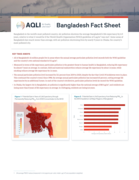
Bangladesh is the world’s most polluted country. Air pollution shortens the average Bangladeshi’s life expectancy by 6.9 years, relative to what it would be if the World Health Organization (WHO
...
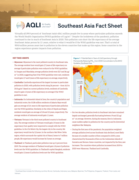
Virtually all (99.9 percent) of Southeast Asia’s 656.1 million people live in areas where particulate pollution exceeds the World Health Organization (WHO) guideline of 5 μg/m³. Despite the lockdowns of the pandemic, pollution continued to rise
...
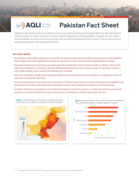
Pakistan is the world’s fourth most polluted country. Air pollution shortens the average Pakistani’s life expectancy by 3.8 years, relative to what it would be if the World Health Organization (
...
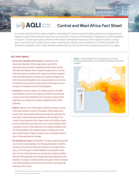
In Central and West Africa, regions together comprising 27 countries and 605 million people, the average person is exposed to particulate pollution levels that are more than 4 times the World Health Organization’s (WHO) guideline of 5 μg/m³1. If
...
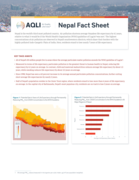
Nepal is the world’s third most polluted country. Air pollution shortens average Nepalese life expectancy by 4.1 years, relative to what it would be if the World Health Organization (WHO) guideline of 5 μg/m3 was met.1 The highest concentrations
...
During the first year of the Covid-19 pandemic, the world’s economy slowed. Yet, the global annual average particulate pollution (PM2.5) was largely unchanged from 2019 levels. At the same time, growing evidence shows air pollution—even when exp
...
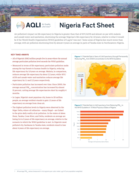
Air pollution’s impact on life expectancy in Nigeria is greater than that of HIV/AIDS and almost on par with malaria and unsafe water and sanitation, shortening the average Nigerian’s life expec
...
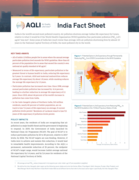
India is the world’s second most polluted country. Air pollution shortens average Indian life expectancy by 5 years,
relative to what it would be if the World Health Organization (WHO) guideline fine particulate pollution (PM2.5) of 5 μg/m3 was
...

We need to understand the constitutional determinants of planetary health. A constitution denotes one, or in a minority of countries, several, legal documents that contain basic rules and principles about how political power should be exercised and how public goods should to be provided.
Improving the quality of hospital antibiotic use is a major goal of WHO’s global action plan to combat antimicrobial resistance. The WHO Essential Medicines List Access, Watch, and Reserve (AWaRe) classification could facilitate simple stewardship
...
From 2000 to 2010, Rwanda implemented comprehensive health sector reforms to strengthen the public health system, with the aim of reducing maternal and newborn deaths in line with Millennium Development Goal 5, among many other improvements in national health. Based on a systematic review of the lit
...
Презентация на тему значимости скрининга больных с лекарственно-устойчивым туберкулезом на гепатит С. Как лучше всего лечить этих пациентов от гепатита С.
Руководство ВОЗ по информированию и гармонизации процессов обеспечения готовности и реагирования при пандемии на национальном и международном уровне
РуководсÑ
...
Cовершенствование теоретических знаний и практических навыков по вопросам диагностики и лечения туберкулеза с множественной лекарственной устойчивостью (МЛУ) ми
...
WHO-2019-nCoV-genomic_sequencing
MhGAP-IG – это примерное руководство, поэтому крайне важно адаптировать его в соответствии с уникальной национальной или местной ситуацией. Пользователи могут выбраÑ
...
Распространенность депрессивных расстройств и их роль в формировании различных вариантов патологии человека обусловливают актуальность поиска новых подходов к
...
