
Filter
248
Text search:
REACH:
Informing
more
effective
humanitarian
action
Featured
Recommendations
25
New Publications
75
Language
Document type
No document type
138
Studies & Reports
38
Manuals
25
Guidelines
24
Strategic & Response Plan
14
Training Material
5
Fact sheets
2
Situation Updates
1
Resource Platforms
1
Countries / Regions
Global
16
Myanmar / Burma
9
Sierra Leone
8
Liberia
8
Congo, Democratic Republic of
6
Syria
6
Uganda
5
South Sudan
5
Ukraine
5
Guinea
4
Kenya
3
Rwanda
3
Western and Central Europe
3
Vietnam
3
Nigeria
2
Ethiopia
2
Philippines
2
India
2
Pakistan
2
Afghanistan
2
Germany
2
Lebanon
2
Zambia
2
Indonesia
2
South Africa
2
Bangladesh
2
Malawi
2
Yemen
2
Middle East and North Africa
2
South–East Asia Region
2
Africa
2
Laos
2
Ghana
1
Zimbabwe
1
Haiti
1
Somalia
1
Nepal
1
Jordan
1
Tanzania
1
Cambodia
1
Malaysia
1
Mozambique
1
Sudan
1
Namibia
1
Peru
1
Botswana
1
El Salvador
1
Libya
1
Lesotho
1
Sri Lanka
1
Western Pacific Region
1
Latin America and the Carribbean
1
Asia
1
Palestine
1
Albania
1
Djibouti
1
Southern Africa
1
Canada
1
Tajikistan
1
Authors & Publishers
Publication Years
Category
Countries
52
Key Resources
45
Public Health
21
Women & Child Health
18
Clinical Guidelines
10
Capacity Building
6
Pharmacy & Technologies
1
Toolboxes
COVID-19
29
Mental Health
23
Conflict
21
Disability
18
HIV
18
Refugee
12
Ebola & Marburg
11
Planetary Health
8
Global Health Education
5
Natural Hazards
4
Rapid Response
4
2.0 Rapid Response
4
TB
3
Health Financing Toolbox
3
Polio
2
Zika
2
Specific Hazards
2
Caregiver
2
Malaria
2
Cholera
1
AMR
1
Pharmacy
1
NTDs
1
Since late August 2022, cases of severe acute watery diarrhoea have been increasingly reported across Syria, concentrated
particularly along the Euphrates river. These were later confirmed to be cholera cases.3 Cholera is a disease caused by
bacteria that can be found in faeces, and spreads throug
...
The paper sets out the specific communication challenge posed by Ebola and why it was so difficult to get to grips with this in the early months of the outbreak. It thendocuments when the health communication response became more useful and explores
...

Integrated Outbreak Analytics (IOA) applies a multidisciplinary approach to understanding outbreak dynamics and to inform outbreak response. It aims to drive comprehensive, accountable, and effective public health and clinical strategies by enabling
...
This paper aims to contribute to the reflection on effective practices to address protracted displacement, in support of the GP20 Plan of Action roll-out. It expands on the research conducted by Wal
...

3 June 2021. After 40 years of AIDS, charting a course to end the pandemic.
The report shows that countries with progressive laws and policies and strong and inclusive health systems have had the best outcomes against HIV. In those countries, people living with and affected by HIV are
...
More than 700 000 people lose their life to suicide every year. The world is not on track to reach the 2030 suicide reduction targets. WHO advocates for countries to take
...

The chapter Fostering Health Systems’ Monitoring to Better Serve Older Populations is part of the publication series entitled Decade of Healthy Aging: Situation and Challenges. The publications are designed to favor the prioritization of effective
...
This guidance is intended for people designing /or implementing feedback mechanisms in a humanitarian programme. It also available in Arabic, Spanish and French


Strengthening resilient agricultural livelihoods
Level 3 responses are activated in the most complex and challenging humanitarian emergencies, when the highest level of mobilization is required across the
...
The steps reassert the sequence of the HPC, with needs analysis directly informing decisions about the response and monitoring, whether for the preparation of new plans or adjustments to existing ones. The steps of the HPC have a rationale and canno
...
The International Organization for Migration (IOM) is appealing for USD 158.9 million to respond to the urgent humanitarian needs of millions of Afghans and to support recovery and resilience within the country and the region.
IOM’s Comprehensi
...
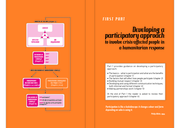
The Participation Handbook for humanitarian field workers contains detailed practical advice on the participation of affected people in humanitarian actio
...
How should humanitarian organisations prepare and respond to COVID-19 in humanitarian settings in low- and middle-income countries?
This Rapid Learning Review outlines 14 actions, insights and id
...
Annex I to: To stay and deliver, good practice for humanitarians in complex security environments
The principal findings of the report include that despite overall improvements in aid agencies’ security risk management, national aid workers perceive continued inequities in security suppor ...
The principal findings of the report include that despite overall improvements in aid agencies’ security risk management, national aid workers perceive continued inequities in security suppor ...
The Call to Action on Protection from GBV in Emergencies, formally launched in 2013 by the United Kingdom and Sweden, aims to fundamentally transform the way GBV is addressed in humanitarian operati
...
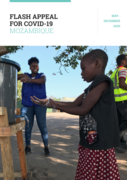
The first case of COVID-19 was reported in Mozambique on 22 March 2020. As of 26 May, Mozambique had 194 confirmed cases of COVID-19, of which 168 were locally transmitted. The country’s capital, Maputo, and the province of Cabo Delgado are currently the epicentres of the outbreak in Mozambique, w
...
This handbook is a quick-reference tool that provides practical, field-level guidance to establish and maintain a GBV sub-cluster in a humanitarian emergency. It provides the foundations for coordination.
...

Professional Standards for Protection Work
recommended
Carried out by humanitarian and human rights actors in armed conflict and other situations of violence
This guideline (third edition) constitutes a set of minimum but essential standards aimed at ensuring that protection work is safe and
...
