
Filter
220
Text search:
Inter-Agency
Standing
Committee
IASC,
Global
Protection
Cluster
Featured
Recommendations
41
New Publications
64
Language
Document type
No document type
123
Manuals
33
Guidelines
26
Studies & Reports
22
Strategic & Response Plan
12
Fact sheets
2
Training Material
1
Online Courses
1
Countries / Regions
Global
11
Syria
10
Myanmar / Burma
6
South Sudan
5
Bangladesh
5
Nepal
4
Ukraine
4
Congo, Democratic Republic of
3
Philippines
3
Latin America and the Carribbean
3
Ethiopia
2
Zimbabwe
2
Haiti
2
Indonesia
2
Mozambique
2
Sudan
2
East and Southern Africa
2
Western and Central Europe
2
Africa
2
Venezuela
2
Laos
2
India
1
Somalia
1
Iraq
1
Jordan
1
Afghanistan
1
Lebanon
1
Cambodia
1
Malaysia
1
Brazil
1
Hungary
1
Colombia
1
Yemen
1
West and Central Africa
1
Middle East and North Africa
1
South–East Asia Region
1
Western Pacific Region
1
Eastern Europe and Central Asia
1
Asia
1
Fiji
1
Poland
1
Romania
1
Moldova
1
Belarus
1
Authors & Publishers
Publication Years
Category
Key Resources
78
Countries
38
Women & Child Health
21
Public Health
13
Clinical Guidelines
5
Capacity Building
4
Pharmacy & Technologies
1
Toolboxes
Conflict
32
Mental Health
31
COVID-19
22
Disability
15
Natural Hazards
13
Refugee
11
Rapid Response
9
HIV
8
2.0 Rapid Response
5
Zika
4
Specific Hazards
2
Planetary Health
2
Health Financing Toolbox
2
Malaria
2
Cholera
1
Typhoon
1
TB
1
Global Health Education
1
Caregiver
1
Pharmacy
1
Réduction des risques, promotion de la résilience et aide au relèvement

Each humanitarian setting provides distinct opportunities and challenges for actors to coordinate and collaborate at strategic and operational levels. The Health and Protection Joint Operational Framework has been developed to ensure that the health
...
Child friendly spaces (CFS) have become a widely
used approach to protect and provide psychosocial
support to children in emergencies. However,
little evidence documents their outcomes and
impacts. There is widespread commitment among
humanitarian agencies to strengthen the evidence
base of pr
...
This document is for humanitarian health actors working at national and sub-national level in countries facing humanitarian emergencies. It applies to Health Cluster partners, including governmental and non-governmental health service providers.
Ba
...

The cluster approach is a mechanism that helps to address identified gaps in response and enhance the quality of humanitarian action
This note sets out actions to be undertaken throughout the humanitarian programme cycle (HPC) to fulfill commitments on Accountability to Affected Populations (AAP) and to ensure that protection is central to humanitarian response. It sets out the f
...
The purpose of this document is to provide agencies with a guide with three tools containing key assessment questions that are of common relevance to all actors involved in Mental Health and Psychosocial Support (MHPSS) independent of the phase of the emergency. This guide will be useful for rapid a
...

Specific action sheets offer useful guidance on mental health and psychosocial support and cover the following areas coordination assessment monitoring and evaluation protection and human rights standards human resources community mobilisation and s
...

A practical handbook. This Health Cluster Guide (2nd edition, 2020) provides practical advice on how WHO, Health Cluster Coordinators and partners can work together during a humanitarian crisis to a
...
This briefing pack serves this purpose by sharing RCCE/humanitarian coordination experience from country level, feedback from global consultations and addressing frequently asked questions. In parallel, the RCCE Core Group has been working to revise
...

Guidelines.
The guidelines set out essential actions that humanitarian actors must take in order to effectively identify and respond to the needs and rights of persons with disabilities who are most at risk of being left behind in humanitarian settings.
The recommended actions in each chapter pl
...
The Multi-Cluster/Sector Initial Rapid Assessment (MIRA) is a joint needs assessment tool that can be used in sudden onset emergencies, including IASC System-Wide Level 3 Emergency Responses (L3 Res
...
Guía del IASC sobre Salud Mental y Apoyo Psicosocial en Emergencias Humanitarias y Catástrofes
recommended
El Comité Permanente entre Organismos (IASC) ha elaborado esta Guía para posibilitar que quienes participan en acciones de ayuda humanitaria planifiquen, establezcan y coordinen un conjunto mínimo de respuestas multisectoriales para proteger y me
...

This document contains guidance for strengthening the disability inclusiveness of MHPSS responses and programmes in emergency settings. It is intended to supplement the IASC Guidelines on Mental Health and Psychosocial Support in Emergency Settings
...

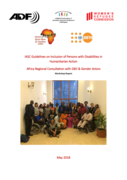
This one-day consultation workshop brought together both organizations of persons with disabilities (DPOs) and humanitarian actors to:-Identify priority areas for gender mainstreaming and GBV prevention and response across the Guidelines.-Collect useful resources, promising practices and other relev
...
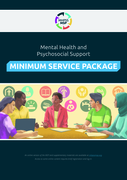
The MHPSS MSP is an easy-to-follow intersectoral package, which spells out the activities and actions that all humanitarian actors should put in place in all emergencies for an effective MHPSS response. It speaks to different actors at the global, r
...
