Filter
215
Text search:
Institut
Pasteur
Featured
Recommendations
20
New Publications
76
Language
Document type
No document type
112
Studies & Reports
39
Guidelines
30
Manuals
15
Strategic & Response Plan
7
Training Material
3
Fact sheets
3
Resource Platforms
2
Online Courses
2
Brochures
1
Situation Updates
1
Countries / Regions
Madagascar
24
Senegal
13
Congo, Democratic Republic of
11
Global
9
Guinea
8
Cameroon
8
Côte d’Ivoire / Ivory Coast
7
Central African Republic
7
Sierra Leone
6
Liberia
6
Nigeria
5
Burkina Faso
4
Mali
4
Guinea-Bissau
3
Niger
3
Latin America and the Carribbean
3
Western and Central Europe
3
Africa
3
Morocco
2
Ethiopia
2
Togo
2
Haiti
2
Germany
2
Chad
2
Kenya
2
Gambia
2
Rwanda
2
South Africa
2
Mozambique
2
Benin
2
Angola
2
West and Central Africa
2
Vietnam
2
France
2
Spain
2
Ghana
1
Zimbabwe
1
Philippines
1
South Sudan
1
Turkey
1
Tanzania
1
Mauritania
1
Malawi
1
Brazil
1
Cape Verde
1
East and Southern Africa
1
Eastern Europe
1
Laos
1
United Kingdom
1
Portugal
1
Authors & Publishers
Publication Years
Category
Countries
62
Clinical Guidelines
28
Pharmacy & Technologies
18
Public Health
10
Key Resources
5
Capacity Building
4
Women & Child Health
2
Toolboxes
Ebola & Marburg
31
Rapid Response
28
COVID-19
23
NTDs
17
Malaria
14
TB
11
Zika
8
2.0 Rapid Response
8
AMR
4
Cholera
3
Refugee
3
Planetary Health
3
Mental Health
2
Global Health Education
2
Pharmacy
2
Polio
1
HIV
1
Caregiver
1
Health Financing Toolbox
1
NCDs
1
The Institut Pasteur has created a MOOC entirely focused on Malaria, providing a glimpse of the wide range of disciplines involved and questions addressed in malaria researc
...
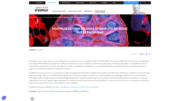
Le paludisme reste un enjeu majeur de santé publique dans de nombreux pays à faible et moyen revenu. En 2018, l’OMS estimait à environ 228 millions le nombre de cas de paludisme, responsable de 405 000 décès principalement en Afrique subsaharienne. L’utilisation intensive des outils antipal
...
Le paludisme est une maladie parasitaire grave transmise par le moustique Anopheles, principalement dans les zones tropicales.
This website provides comprehensive guidance on vaccinations, malaria prevention and general health measures for travellers to tropical and developing regions. It emphasises two main vaccination criteria: the administrative requirements of the destination country and the actual health risks to the t
...
Ce rapport présente les résultats clés de la cinquième Enquête Démographique et de Santé du Cameroun
(EDSC-V) réalisée sur le terrain du 16 juin 2018 au 19 janvier 2019, par l’Institut National de la Statistique
(INS), en étroite colla
...
BMJ Glob Health 2019;4:e001272. doi:10.1136/bmjgh-2018-001272
Trust is an essential component of successful cooperative endeavours. The global health response to the 2014–2016 West Africa Ebola outbreak confronted historically tenuous regional relationships of trust. Challenging sociopolitical co
...
ECDC Technical Report
In line with ECDC’s recommendations provided in the ’Risk Assessment of HTLV-1/2 transmission by tissue/cell transplantation’ dated 14 March 2012, this Directive replaces the term ‘incidence’ with ‘prevalence’ in the description of endemic areas of HTLV-1/2 i ...
In line with ECDC’s recommendations provided in the ’Risk Assessment of HTLV-1/2 transmission by tissue/cell transplantation’ dated 14 March 2012, this Directive replaces the term ‘incidence’ with ‘prevalence’ in the description of endemic areas of HTLV-1/2 i ...
This selection of online courses provides a comprehensive education in malaria and related infectious diseases, set within the broader frameworks of global health and epidemiology. Courses such as the Global Disease Masterclass and Immunology: The Immune System and Infectious Diseases (both offered
...
Research to develop point-of-care tests is in progress. Treatment of Buruli ulcer comprises 8 weeks of combined antibiotics (rifampicin and clarithromycin). Complementary therapies such as wound care, skin graft and prevention of disability are needed in some cases to ensure full recovery.
The targ
...
L’ulcère de Buruli, une infection causée par Mycobacterium ulcerans, touche plus de 33 pays dans le monde, mais un peu moins de la moitié seulement de ces pays communiquent régulièrement des données sur la maladie à l’OMS.
La publication des résultats de l’EDSC-V intervient quelques années seulement après l’échéance en 2015 des Objectifs du millénaire pour le développement (OMD), le lancement de l’Agenda 2065 de l’Union Africaine, de l’Agenda 2030 des Nations Unies pour le Développement Durable, et a
...