Filter
1555
Text search:
Billion
Lives
Featured
Recommendations
115
New Publications
377
Language
Document type
No document type
680
Studies & Reports
512
Strategic & Response Plan
115
Guidelines
99
Manuals
65
Fact sheets
30
Situation Updates
19
Training Material
12
Resource Platforms
10
Infographics
7
Brochures
4
Online Courses
1
Videos
1
Countries / Regions
Global
172
India
38
Syria
34
Africa
34
Kenya
33
Ethiopia
30
Nigeria
28
Asia
26
Myanmar / Burma
25
Nepal
24
Latin America and the Carribbean
23
Uganda
21
South Africa
20
Bangladesh
20
Western and Central Europe
20
South–East Asia Region
19
Liberia
17
South Sudan
16
Yemen
15
Sierra Leone
14
Zambia
14
Ukraine
14
Rwanda
13
Tanzania
12
Malawi
12
Pakistan
11
Namibia
11
Afghanistan
10
East and Southern Africa
10
Guinea
9
Philippines
9
West and Central Africa
9
Congo, Democratic Republic of
8
Central African Republic
8
Mozambique
7
Middle East and North Africa
7
USA
6
Ghana
6
Zimbabwe
6
Thailand
6
Indonesia
6
Sudan
6
Eastern Europe and Central Asia
6
Senegal
5
Somalia
5
Jordan
5
Lebanon
5
Cambodia
5
Western Pacific Region
5
Venezuela
5
Eastern Europe
5
Turkey
4
Egypt
4
Brazil
4
Sri Lanka
4
Cameroon
3
China
3
Papua New Guinea
3
Eswatini/ Swaziland
3
Colombia
3
Lesotho
3
Iran
3
Vietnam
3
Mali
2
Niger
2
Haiti
2
Iraq
2
Germany
2
Ecuador
2
Botswana
2
Libya
2
Guatemala
2
Bhutan
2
Palestine
2
Djibouti
2
Laos
2
Timor Leste/ East Timor
2
Kazakhstan
2
North America
2
Jamaica
2
Burkina Faso
1
Guinea-Bissau
1
Saudi Arabia
1
Chad
1
Benin
1
Argentina
1
Switzerland
1
Honduras
1
Greece
1
Chile
1
Fiji
1
Italy
1
Russia
1
Qatar
1
Moldova
1
Kyrgyzstan
1
Japan
1
United Kingdom
1
Morocco
1
Azerbaijan
1
Authors & Publishers
Publication Years
Category
Countries
456
Key Resources
113
Public Health
92
Women & Child Health
75
Clinical Guidelines
71
Capacity Building
14
Pharmacy & Technologies
5
Toolboxes
COVID-19
168
Planetary Health
151
HIV
113
Mental Health
100
Global Health Education
79
Disability
77
Health Financing Toolbox
72
Conflict
66
NCDs
47
TB
43
AMR
40
Refugee
39
Natural Hazards
37
NTDs
35
Caregiver
25
Ebola & Marburg
20
Malaria
18
Pharmacy
15
Social Ethics
13
2.0 Rapid Response
13
Rapid Response
12
Cholera
6
Polio
6
Specific Hazards
4
Zika
3
Typhoon
2
Almost half of the world's population, about 4 billion people, live in areas with a risk of dengue. Anyone who lives in or travels to an area with risk of dengue is at risk for infection.Before you
...

Over the 20 years that followed, this unique partnership has invested more than US$53 billion, saving 44 million lives and reducing the combined death rate from the three diseases by more than half
...

The WHO country office for Ghana, began the year 2019 with a 4-day staff retreat at the Busua Beach Resort in the Western Region from 04 to 08 March 2019. The theme for the retreat was ‘Impacting the Health and Lives of the people of Ghana through
...
This is a moment of reckoning in the fight against HIV, tuberculosis (TB) and malaria. For our Eighth Replenishment, the Global Fund needs US$18 billion to save 23 million lives, cut the death rate
...
Tobacco kills up to half of its users who don’t quit (1-3).
Tobacco kills more than 8 million people each year, including an estimated 1.3 million non-smokers who are exposed to second-hand smoke Around 80% of the world's 1.3 billion tobacco user
...
he statistics in this report are from the Emergency Events Database (EM-DAT) maintained by the Centre for Research on the Epidemiology of Disasters (CRED) which records disasters which have killed ten or more people; affected 100 or more people; resulted in a declared state of emergency; or a call f
...

Africa CDC Non Communicable Diseases, Injuries Prevention and Control and Mental Health Promotion Strategy
recommended
Non-communicable diseases (NCDs) & injuries and mental health conditions constitute a serious impediment to achieving the vision of Agenda 2063 to build an integrated, prosperous, and peaceful Africa driven by its own citizens. Each year, these conditions cause millions of premature deaths and disab
...
Malaria remains a significant public health concern, particularly in sub-Saharan Africa, where the majority of cases and fatalities occur, especially among children under five. Although there was a significant decline in global mortality and incidence between 2000 and 2015, progress has stalled sinc
...

On Global Handwashing Day, WHO and UNICEF have released the first-ever global Guidelines on Hand Hygiene in Community Settings to support governments and practitioners in promoting effective hand hygiene outside health care – across households, public spaces and institutions. Framing hand hygiene
...
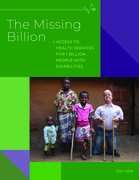
One billion people around the world live with disabilities. This report makes the case that they are being “left behind” in the global community’s work on health. This lack of access not only violates the rights of people with disabilities und
...

Drawing on the World Health Organization’s package of NCD best buys, the report demonstrates how these evidence-based measures can help countries reduce premature deaths, strengthen health systems, and advance progress towards the Sustainable Development Goals. It provides policymakers, donors, ad
...
The ECA, says over 300,000 Africans could lose their lives due to COVID-19. This, as the pandemic continues to impact on the Continent’s struggling economies whose growth is expected to slow down from 3.2 percent to 1.8 percent in a best-case sce
...
This report sets out the compelling case for repurposing harmful agricultural producer support to reverse this situation, by optimizing the use of scarce public resources, strengthening economic recovery from the COVID-19 pandemic, and ultimately driving a food systems transformation that can suppor
...

The purpose of the toolkit is to bring together existing learning and guidance as a starting point for stakeholders to begin SRH preparedness work. Within the SRH sector the field of preparedness is relatively new and growing. More collective effort is required to further evaluate the impact of prep
...
Globally, it is estimated that 128.6 million people are currently in need of humanitarian assistance. Of these individuals, approximately one-fourth are women and girls of reproductive age. Although family planning is one of the most life-saving, empowering, and cost-effective interventions for wome
...

Conflict, climate change, the COVID-19 pandemic, and the economic effects of the Ukraine crisis are interacting to create new and worsen existing hunger hotspots, reversing the gains families had made to escape poverty.
This report presents the most current data on four specific forms of violence – violent discipline and exposure to domestic abuse during early childhood; violence at school; violent deaths among adolescents; and sexual violence in childhood and adolescence. The statistics reveal that children expe
...