
Filter
218
Topics:
Treatment
Featured
Recommendations
19
New Publications
6
Language
Document type
Studies & Reports
54
Guidelines
49
Strategic & Response Plan
20
Resource Platforms
18
Fact sheets
17
No document type
13
Training Material
12
Manuals
9
Videos
8
Brochures
7
Infographics
6
Online Courses
5
Countries / Regions
Global
72
Africa
12
South Africa
6
Malawi
6
India
4
Tanzania
4
North America
4
Senegal
3
Namibia
3
Nigeria
2
Zimbabwe
2
Kenya
2
Mozambique
2
Brazil
2
South–East Asia Region
2
Latin America and the Carribbean
2
Mali
1
Côte d’Ivoire / Ivory Coast
1
USA
1
Ethiopia
1
Ghana
1
Germany
1
Zambia
1
Chad
1
Cambodia
1
Thailand
1
Benin
1
West and Central Africa
1
Asia
1
Venezuela
1
Southern Africa
1
Laos
1
Vietnam
1
Guyana
1
Authors & Publishers
Publication Years
Category
Non-communicable Diseases
65
Malaria
11
Capacity Building
10
Guidelines
9
Policies & Guidelines HIV & TB
8
Information, Education and Communication (IEC)
8
Studies & Reports
7
Capacity Building
6
Non-communicable Diseases NCD
6
Public Health
6
Community Health
5
Disease Prevention & Control
5
Clinical Training
4
Pharmacy & Technologies
4
Training Manuals
3
Diarrhoeal Disease/Cholera
3
Diabetes
2
Online Courses & Platforms
2
Community Health
2
Community Health
2
Statistics
2
Other
2
Key Resources
2
Child Health
1
Palliative Care
1
Training material & manuals
1
COVID-19
1
NCD
1
Clinical Guidelines
1
Policies
1
Drugs & Medical Equipment
1
Women & Child Health
1
Humanitarian Crisis
1
Leprosy
1
Diarrhoea
1
Quality Control & Assurance
1
Women & Child Health
1
Maternal Health
1
HIV & STI
1
Global Health
1
TB
1
Toolboxes
Capacity Building & Resources
15
Chemoprevention/preventive Treatment
15
Information & Education Material (IEC)
14
Prevention & Strategies
11
Studies & Reports
10
Context & Facts
10
Adherence
10
Treatment Guidelines
8
Postexposure Prophylaxis (PEP), Pre-Exposure Prophylaxis (PrEP)
8
Information & Education Material (IEC)
8
Prevention & Strategies
7
Resource Platform
7
Clinical Aspects & Diagnosis
6
Clinical Guidelines
6
Information & Education Material (IEC)
6
Video & Audios
6
Drug Abuse
5
Clinical Guidelines Women & Children
5
Key Population
5
Substance Use Disorders & Addiction
4
Health Worker
4
Studies & Reports
4
Prevention & Strategies
4
Roadmaps, Action Plans & Strategies
4
Country specific Guidelines
4
ART Drug Resistance, treatment failure
4
Prevention & Control
3
Capacity Building & Resources
3
Prevention & Strategies
3
Clinical Aspects & Diagnosis
3
Essential Medecines & Medical Devices
3
Advice for travellers
3
Context & Facts
2
Clinical Aspects
2
African Region
2
Clinical Aspects & Diagnosis
2
Statistics & Facts
2
Studies & Reports
2
Information & Education Material (IEC)
2
Capacity Building & Resources
2
Capacity Building & Resources
2
Studies & Reports
2
Communication Strategies
2
Online Courses & Webinars
2
Clinical Guidelines
1
Outbreak Prevention & Control
1
Diarrhoea
1
e-Learning
1
Capacity Building
1
Country Specific Information
1
Clinical Guidelines
1
Adults
1
Training
1
Detection & Diagnosis
1
IEC Materials
1
TB & Other Vulnerable Populations
1
Vision Loss & Blindness
1
Zambia
1
Databases & Maps
1
Meningitis & Encephalitis
1
HIV testing & services
1
Women
1
Drug resistance
1
Policies and guidelines
1
Eastern and Southern Africa
1
Behaviour Change/Life Skill Education
1
Online Courses & Resources
1
Online Courses
1
Primary Care
1
Pharmacy Management
1
Reports & Studies
1
Strategies & Roadmaps
1
Information & Education Material (IEC)
1
Geographical Distribution & Statistics
1
NTDs General
1
Policies & Strategies
1
Clinical Aspects & Diagnostics
1
Statistics & Facts
1
HIV
1
TB
1
Statistics & Facts
1
Diagnostic & Laboratory
1
Malaria and co-infection
1
Vaccination
1
Epidemiology
1
Life Cycle
1
Online Courses, Resources & Platforms
1
Antiretroviral therapies
1

In line with the Defeating meningitis by 2030: a global road map, the WHO guidelines on meningitis diagnosis, treatment and care Executive Summary provides a summary of the evidence-based recommendations for the clinical management of children and adults with community-acquired meningitis, including
...
Model List of Essential Medicines eEML
recommended
The eEML is a comprehensive, freely accessible online database containing information on essential medicine
This document provides an overview of malaria rapid diagnostic tests (RDTs) for Principal Recipients (PRs) of Global Fund grants, indicating their eligibility for procurement under the Global Fund's Quality Assurance Policy. The included products have been assessed and approved by the WHO Prequalifi
...

WHO guideline on balanced national controlled medicines policies to ensure medical access and safety
Access to medicines is essential for attainment of universal health coverage, which is central to achievement of the health-related Sustainable Development Goals. Controlled medicines include those such as opioids, benzodiazepines, barbiturates, amphetamines and others with identified or emergent cl
...

Informed reliance speeds national approvals, bringing innovative HIV prevention to people faster

Developed through broad and inclusive consultation, and aligned with the WHO Global Health Sector Strategies and the Sustainable Development Goals, the framework promotes a people-centred approach and antimicrobial stewardship across 5 key domains: prevention and response, surveillance, research and
...

Treatment adherence includes starting HIV treatment, keeping all medical appointments, and taking HIV medicines exactly as prescribed. For people with HIV, treatment adherence is key to staying healthy.

The information in the brief version is excerpted directly from the full-text guidelines. The brief version is a compilation of the tables and boxed recommendations.

Panel Recommendations
WHO guideline on preventive chemotherapy for public health control of strongyloidiasis
recommended
Human strongyloidiasis is a chronic parasitic disease caused by infection with Strongyloides stercoralis, a soil-transmitted helminth that is estimated to infect 300–600 million people worldwide. This neglected tropical disease (NTD) is endemic globally, predominately in the South-East Asia, Afric
...
These podcasts are produced for educational discussions only. Reference to any specific product, treatment, or entity does not constitute an endorsement. The views expressed by speakers are their own and do not necessarily reflect the view of GOLD in entirety.
The "Cystic Fibrosis Fact Sheet" by the National Heart, Lung, and Blood Institute provides an overview of cystic fibrosis (CF), a chronic and often fatal genetic disorder affecting the respiratory and digestive systems. The document outlines the causes, genetic inheritance patterns, and symptoms of
...

760 WEEKLY EPIDEMIOLOGICAL RECORD, NOS. 51/52, 20 DECEMBER 2024, pp.760-769. In French and English
The WHO Eastern Mediterranean Region's Noncommunicable Diseases (NCD) Data and Statistics page offers comprehensive information on NCD surveillance, including mortality rates, morbidity, and risk factor exposures. It emphasizes the importance of monitoring NCD trends to inform prevention and control
...
The WHO Eastern Mediterranean Region's Noncommunicable Diseases (NCD) Data and Statistics page offers comprehensive information on NCD surveillance, including mortality rates, morbidity, and risk factor exposures. It emphasizes the importance of monitoring NCD trends to inform prevention and control
...
The Federal Centre for Health Education (BZgA) emphasizes the critical role of drug prevention in enhancing public health in Germany. Annually, the country faces significant premature mortality due to substance use: at least 110,000 deaths from smoking, 40,000 from harmful alcohol consumption, and a
...

Medical devices are used for the prevention, diagnosis and treatment of illness and diseases and for rehabilitation. WHO developed guidance on medical device donation in 2011, which has been now reviewed, with new evidence, new references on considerations for medical device solicitation and provisi
...
People with diabetes mellitus are at an increased risk for foot ulcerations as a result of poorly controlled blood glucose which may lead to gangrene. These patients are at a high risk for lower limb amputations, higher healthcare costs, and lower quality of life. This course aims to cover the preve
...
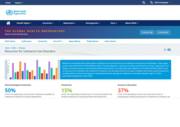
Welcome to the Global Information System on Resources for the Prevention and Treatment of Substance Use Disorders. These pages present data collected from WHO Member States in broad categories: governance, policy and financing, service organization and delivery, human resources and national informat
...
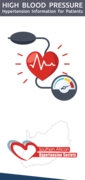
Brochure about high blood pressure for patients
