
Filter
216
Topics:
Lungs
Featured
Language
Document type
Studies & Reports
92
Fact sheets
46
Guidelines
22
Resource Platforms
14
Videos
11
Brochures
8
Infographics
8
Strategic & Response Plan
8
Manuals
4
Training Material
1
Dashboards/Maps
1
App
1
Countries / Regions
Global
157
Africa
40
South Africa
10
Asia
4
USA
3
Brazil
2
Latin America and the Carribbean
2
India
1
Egypt
1
Kenya
1
East and Southern Africa
1
Southern Africa
1
Authors & Publishers
Publication Years
Category
Non-communicable Diseases
198
COPD/Asthma
10
Non-communicable Diseases NCD
5
Capacity Building
2
Studies & Reports
2
Toolboxes
Information & Education Material (IEC)
82
Prevention & Strategies
39
Studies & Reports
33
Clinical Aspects & Diagnosis
26
Statistics & Facts
13
Capacity Building & Resources
10
Others
5
Studies & Reports
3
Capacity Building & Resources
3
Clinical Aspects & Diagnosis
2
IEC Materials
1
Prevention & Control
1
Prevention & Strategies
1

Using an inhaler is the most common and effective way of taking asthma medicines. If you’re NOT using your inhaler correctly, you might not be getting the full dose of medicine your doctor or asthma nurse prescribed because the medicine can’t reach your
lungs. Instead it might be hitting the ba
...

The Johns Hopkins Medicine webpage on occupational lung diseases provides an overview of lung conditions caused by exposure to harmful substances in the workplace. It explains various types of occupational lung diseases, including asbestosis, silicosis, coal workers' pneumoconiosis, and hypersensiti
...

Asthma is a chronic lung disease affecting people of all ages. It is caused by inflammation and muscle tightening around the airways, which makes it harder to breathe.
Symptoms can include coughing, wheezing, shortness of breath and chest tightness. These symptoms can be mild or severe and can co
...
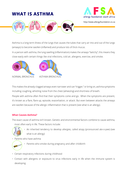
Asthma is a long term illness of the lungs that causes the tubes that carry air into and out of the lungs (airways) to become swollen (inflamed) and produce lots of thick mucus.
In a person with asthma, the lung swelling (inflammation) makes the airways “twitchy”; this means they close easily
...

Chronic noncommunicable diseases (NCDs) are the number one cause of death and disability in the world. The term NCDs refers to a group of conditions that are not mainly caused by an acute infection, result in long-term health consequences and often create a need for long-term treatment and care. The
...

We work with health care professionals and public health officials around the globe to reduce asthma prevalence, morbidity, and mortality.
As we approach World Asthma Day on the May 2, 2023, we reflect on the theme “ Asthma Care for All”. Prevalence of Asthma is increasing amongst children, adolescents and adults. Under-diagnosis, underutilization of inhaled corticosteroids, inaccessibility of treatment, and unaffordability of medi
...

Cystic fibrosis (CF) was earlier thought to be a disease prevalent in the West among Caucasians. However, quite a number of recent studies have uncovered CF cases outside of this region, and reported hundreds of unique and novel variant forms of CFTR. Here, we discuss the evidence of CF in parts of
...

The 2023 update of the Global Strategy for Asthma Management and Prevention incorporates new scientific information about asthma based on a review of recent scientific literature by an international panel of experts on the GINA Science Committee. This comprehensive and practical resource about one o
...

The Regional Action Framework for Noncommunicable Disease Prevention and Control provides a unified vision of objectives and recommended actions to combat the noncommunicable disease (NCD) epidemic in the Western Pacific Region. Implementation should be supported by cross-sectoral coordination
...
The World Health Organization's fact sheet on Chronic Obstructive Pulmonary Disease (COPD).

Asthma is one of the most common non-communicable diseases globally. This study aimed to assess asthma medicine use, management plan availability, and disease control in childhood, adolescence, and adulthood across different country settings.

Asthma is the most common chronic respiratory disease (CRD) worldwide and is estimated to affect 262 million causing significant mortality and morbidity, and has emerged as an important public health problem in many Latin American (LA) countries over the last 30 or so years. LA is a highly diverse r
...

The World Health Organization's fact sheet on Chronic Obstructive Pulmonary Disease (COPD)

The World Health Organization (WHO) fact sheet on Chronic Obstructive Pulmonary Disease (COPD) provides an overview of this common lung condition characterized by persistent respiratory symptoms and airflow limitation.

The document outlines a comprehensive package of interventions for the rehabilitation of cardiopulmonary conditions, emphasizing assessments, treatments, and support mechanisms aimed at improving patients' quality of life and functional ability, provided by a multidisciplinary team.

The World Health Organization's fact sheet on Chronic Obstructive Pulmonary Disease (COPD) - russian version

Asthma is a serious global health problem affecting all age groups. Its prevalence is increasing in many countries, espacially among children. Although some countries have seen a decline in hospitalizations and deaths from asthma, asthma still imposes an unacceptable burden on health care systems, a
...

The World Health Organization's fact sheet on Chronic Obstructive Pulmonary Disease (COPD) - chinese version

The World Health Organization's fact sheet on Chronic Obstructive Pulmonary Disease (COPD) - arabic version
