
Filter
99
Topics:
Inflammatory Bowel Disease (IBD)
Featured
Recommendations
20
New Publications
31
Language
Document type
Guidelines
30
Fact sheets
25
Infographics
13
Strategic & Response Plan
9
No document type
8
Videos
6
Studies & Reports
4
Resource Platforms
2
Training Material
1
Situation Updates
1
Countries / Regions
Haiti
9
Global
9
Yemen
4
Syria
3
Congo, Democratic Republic of
2
Ethiopia
2
Zimbabwe
2
India
2
Kenya
2
Tanzania
2
Mozambique
2
Uganda
1
Somalia
1
Zambia
1
Malaysia
1
South Africa
1
Singapore
1
Malawi
1
Sri Lanka
1
Djibouti
1
Authors & Publishers
Publication Years
Category
Diarrhoea
15
Diarrhoeal Disease/Cholera
14
Information, Education and Communication (IEC)
12
Guidelines
7
Emergency Health Kits
3
Policies
3
WASH
3
Paediatrics
2
Pediatrics
2
Disease Prevention & Control
2
Key Resources
2
Under-5 nutrition
1
Hand Hygiene
1
Bacteriology
1
Vaccine-preventable Diseases
1
NCD
1
Women & Child Health
1
Studies & Reports
1
Capacity Building
1
Humanitarian Crisis
1
Respiratory Infections
1
Surgery & Anaesthesia
1
General Guidelines
1
Toolboxes
Outbreak Prevention & Control
27
Diarrhoea
27
Treatment Guidelines
25
Information & Education Material (IEC)
25
Context & Facts
13
Cholera
9
Clinical Guidelines
8
Videos
7
Infection Control
6
WASH
5
Situation Reports & Updates
3
Training Material
3
Cyclones Idai & Kenneth
3
Public Health
2
Clinical Guidelines
2
Public Health
2
Emergency health kits
2
WASH
1
IEC
1
Communication & Training
1
Assessment & Response
1
War Surgery & Wound Care
1
Assessment & Response
1
Malnutrition
1
Training
1
Laboratory Guidance
1
Children
1
Psychosocial Support
1
Hand Hygiene
1
Country specific documents
1
Resources Kreyol Earthquake Haiti
1
Essential Medicines & Devices Lists
1
Pediatrics
1
Online Courses
1
Guidelines & Manuals
1
Emergency health kits
1
Cholera
1
International Guidelines and Protocols
1
Diseases Surveillance
1
Emergency Medical Team (EMT)
1
Laboratory Guidance
1
Mental Health & Psychosocial Support
1
Guidelines, Manuals & Toolkits
1
La vidéo "Choléra - Questions & Réponses" de l'Organisation Mondiale de la Santé (OMS) explique les aspects essentiels du choléra, une maladie diarrhéique aiguë causée par l'ingestion d'eau ou d'aliments contaminés par la bactérie Vibrio cholerae. Elle met en avant les principaux symptôme
...
The video "Cholera - Questions & Answers" by the World Health Organization (WHO) explains the essential aspects of cholera, an acute diarrheal disease caused by ingesting water or food contaminated with the Vibrio cholerae bacterium. It highlights the main symptoms, including severe watery diarrhea,
...
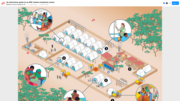
MSF often responds to outbreaks of cholera in the countries we work. But how do we set up our cholera treatment centres to ensure our patients get the best care possible - and that the disease doesn't spread? Learn more about the layout and activities of an MSF cholera treatment centre in this inter
...
The World Health Organization (WHO) African Region website provides comprehensive information on cholera outbreaks across the continent. In 2024, 14 countries, including the Democratic Republic of the Congo, Ethiopia, and Nigeria, experienced significant outbreaks, with these three nations categoriz
...
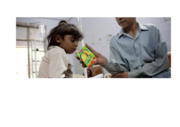
La página de la Organización Mundial de la Salud (OMS) sobre las enfermedades diarreicas destaca que son la tercera causa de muerte en niños de 1 a 59 meses, causando aproximadamente 443 832 muertes anuales en menores de 5 años. Estas enfermedades, aunque prevenibles y tratables, representan un
...
The WHO Cholera Rapid Diagnostic Test (RDT) Target Product Profile outlines the key requirements for developing improved cholera RDTs. It highlights the need for fast, accurate, and easy-to-use tests for early outbreak detection in resource-limited settings. The document sets desired and acceptable
...
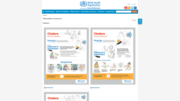
The WHO Eastern Mediterranean Regional Office's webpage on cholera information resources provides a comprehensive collection of materials to support understanding and management of cholera outbreaks. It includes posters for public education, recent publications such as Global Defence Against the Inf
...
Malawi's Ministry of Health officially declared on August 16, 2023, that the cholera outbreak is no longer a national health emergency. Since the outbreak began in February 2022, the country recorded 58,982 cholera cases and 1,768 deaths. Through coordinated efforts by the government, development pa
...
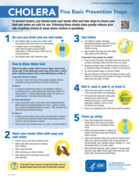
The CDC document outlines five essential steps for preventing cholera. It emphasizes the importance of using treated water for drinking and food preparation, washing hands thoroughly with soap and safe water, cooking food thoroughly and consuming it while hot, using latrines or properly burying fec
...
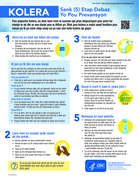
The CDC document titled "KOLERA: Senk (5) Etap Debaz Yo Pou Prevansyon" outlines five essential steps for preventing cholera. It emphasizes the importance of using treated water for drinking and food preparation, washing hands thoroughly with soap and safe water, cooking food thoroughly and consumin
...

The response to a cholera outbreak must focus on limiting mortality and reducing the spread of the disease. It should be comprehensive and multisectoral, including epidemiology, case management, water, sanitation and hygiene, logistics, community engagement and risk communication. All efforts must b
...
Response to the Periodic EpidemicThe document "Zanzibar's Victory Against Cholera Epidemic" details the successful efforts taken by Zanzibar to control and eliminate cholera outbreaks. It highlights the strategies implemented, including improved water and sanitation infrastructure, public health cam
...

The document is a comprehensive practical guide for managing cholera epidemics. It includes detailed instructions on outbreak investigation, control measures, case management, and the organization of treatment facilities. It emphasizes strategies such as rehydration therapy, water sanitation, hygien
...
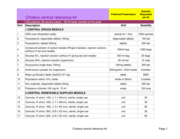
The document lists the components of various cholera kits designed for managing cholera outbreaks. It includes items for rehydration therapy (e.g., oral rehydration salts and IV fluids), medications, sanitation supplies, diagnostic tools, and logistical materials such as cholera beds and water purif
...
UNICEF reports that the Democratic Republic of the Congo (DRC) is experiencing its most severe cholera outbreak in six years, with over 31,000 suspected or confirmed cases and 230 deaths in the first seven months of 2023. The North Kivu province is particularly affected, recording more than 21,400 c
...
The CDC's "About Cholera" webpage provides essential information on cholera, an intestinal infection caused by the bacterium Vibrio cholerae. It highlights that cholera is primarily spread through contaminated water and food, leading to severe diarrhea, dehydration, and potentially death if untreate
...
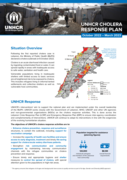
The UNHCR Cholera Response Plan (October 2022 – March 2023) outlines efforts to combat the cholera outbreak in Lebanon, which was declared in October 2022. The plan, led by the Ministry of Public Health with support from UNHCR, WHO, UNICEF, and NGOs, focuses on prevention, response, and surveillan
...
The World Health Organization's cholera fact sheet provides essential information about cholera, an acute diarrheal infection caused by ingesting food or water contaminated with Vibrio cholerae bacteria. The disease remains a global public health threat, particularly in areas lacking safe water and
...
La fiche d'information sur le choléra de l'Organisation mondiale de la santé fournit des informations essentielles sur le choléra, une infection diarrhéique aiguë causée par l'ingestion d'aliments ou d'eau contaminés par la bactérie Vibrio cholerae. La maladie reste une menace mondiale pour
...
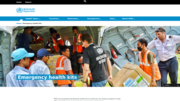
Emergency health kits
recommended
WHO has developed standardized health kits of medicines and medical supplies to meet different health needs in humanitarian emergencies and disasters.
These kits are developed to provide reliable and affordable medicines and supplies quickly to those in need. The kits are used by United Nations age
...
