
Filter
54
Featured
2
15
Language
Document type
14
9
9
6
5
4
3
2
1
1
Countries / Regions
12
7
2
2
2
1
1
1
1
1
1
1
1
1
1
Authors & Publishers
Publication Years
Category
8
3
2
2
2
2
1
1
1
1
1
1
1
Toolboxes
19
10
8
5
5
3
2
2
2
2
2
2
1
1
1
1
1
1
1
1
1
1
1
1
1
1
The Lancet Global Health, published online 18 August 2017;
http://dx.doi.org/10.1016/S2214-109X(17)30332-7
The article "The Political Determinants of the Cholera Outbreak in Yemen" examines how the ongoing civil war has contributed to Yemen’s severe cholera outbreak. The 2017 epidemic was des
...
The GTFCC Laboratory Support for Public Health Surveillance document provides guidelines on using DNA-based molecular techniques for identifying and monitoring Vibrio cholerae strains in cholera outbreaks. It highlights the importance of genetic sequencing for tracking transmission, detecting new va
...
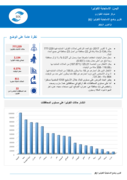
This document is a situation report (#6) from October 2, 2017, describing the cholera outbreak in Yemen. By October 1, 2017, there were 777,229 suspected cholera cases and 2,134 deaths across 22 of Yemen's 23 governorates. The response involves WASH partners providing hygiene supplies and water trea
...
The National Integrated Comprehensive Cholera Prevention and Control Plan (2017-2022) outlines Uganda's strategy to reduce cholera cases and mortality by 50% by 2022. The plan focuses on improving access to clean water, sanitation, and hygiene (WASH), strengthening disease surveillance, enhancing ca
...
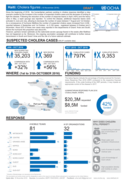
This document summarizes Haiti's cholera situation as of November 16, 2016. Between January and October 2016, Haiti reported 35,203 new suspected cholera cases (32% increase from 2015) and 369 deaths (56% increase). After Hurricane Matthew, cases rose dramatically, with 52% of new cases concentrated
...
The Interim Guidance on Cholera Rapid Diagnostic Tests (RDTs) by the Global Task Force on Cholera Control (GTFCC) provides recommendations for using RDTs to detect cholera in areas with limited laboratory capacity. It highlights the advantages of RDTs, such as rapid detection (within 30 minutes), ea
...
The CDC Self-Study Modules on Tuberculosis are a series of nine educational modules divided into two courses. The first course (Modules 1–5) provides fundamental information about tuberculosis, while the second course (Modules 6–9) offers more specific program-related details. These modules are
...
Le Plan Stratégique Multisectoriel d’Élimination du Choléra en République Démocratique du Congo (2013-2017) vise à réduire l’incidence du choléra à moins d’un cas pour 100 000 habitants. Ce plan repose sur une approche multisectorielle, combinant santé, eau, hygiène et assainissemen
...

The Cholera Outbreak Guidelines: Preparedness, Prevention, and Control provide a practical field guide for responding to cholera outbreaks. Developed by Oxfam GB, the guidelines combine lessons from past cholera interventions and best practices for effective outbreak management. The document outline
...
Early Warning and Response to Outbreaks and other Public Health Events: A Guide provides practical guidance for strengthening early warning functions within existing public health surveillance systems in WHO’s South-East Asia Region. The document explains how countries can detect, verify, and resp
...
A resposta a um surto de cólera focaliza geralmente os aspectos médicos que são importantes para reduzir a mortalidade. Contudo, há necessidade de uma resposta mais abrangente para limitar a propagação da doença. Como a resposta a surtos é geralmente dirigida por profi ssionais médicos, pod
...
The document is a World Health Organization publication about communicable disease surveillance and response systems. It explains that communicable disease surveillance is a core public health function used to collect, analyse and interpret health data so that outbreaks and other health threats can
...

The document “Communicable Disease Surveillance and Response Systems: A Guide to Planning” is a World Health Organization (WHO) guide designed to help countries develop and strengthen national surveillance and response systems for communicable diseases . It explains why surveillance is essential
...
La respuesta a los brotes de cólera suele centrarse en los aspectos médicos que son importantes para que disminuya la mortalidad. Sin embargo, para limitar la propagación de la enfermedad se necesita una respuesta más integral. Dado que la respuesta a los brotes a menudo la dirigen profesionales
...
