
Filter
37
Featured
4
2
Language
Document type
9
9
7
3
3
3
2
1
Countries / Regions
6
5
3
2
2
1
1
1
1
1
1
1
1
1
1
1
1
1
1
1
Authors & Publishers
Publication Years
Category
10
6
3
2
1
1
1
Toolboxes
10
10
8
7
6
3
2
1
1
1
1
1
1
1
1
1
This technical report presents the epidemiology of human and animal leishmaniases in the EU and its neighbouring countries and concludes that the disease remains widespread and underreported in many countries of southern Europe, northern Africa, and the Middle East and that there is a need to improv
...
Cutaneous leishmaniasis (CL) is a neglected infectious endemic disease that is transmitted through the bite of a vector insect (sandfly) of the Lutzomyia genus,typical of rural geographical territories, and causes disfiguring skin ulcers and disabilities. It is estimated that CL affects between 600
...
Leishmaniasis is a vector-borne disease with a wide variety of parasite species, reservoirs, and vectors involved in transmission. It is caused by different species of the protozoa Leishmania and is transmitted to animals and humans through a bite of insects in the Psychodidae family. Its presence i
...
In the Region of the Americas, the leishmaniases are a group of diseases caused by various species of Leishmania, which cause a set of clinical syndromes in infected humans that can involve the skin, mucosa, and visceral organs. The spectrum of clinical disease is varied and depends on the interacti
...
Leishmaniasis is a parasitic disease that is found in parts of the tropics, subtropics, and southern Europe. Leishmaniasis is caused by infection with Leishmania parasites, which are spread by the bite of infected sand flies. There are several different forms of leishmaniasis in people. The most com
...
The term leishmaniasis encompasses multiple clinical syndromes, including the cutaneous, mucosal, and visceral forms, which result from infection of macrophages in the dermis, in the naso-orpharyngeal mucosa, and throughout the reticuloendothelial system, respectively. The infection can range from a
...

J Glob Health Sci. 2020 Jun;2(1):e3. A group of enzootic and zoonotic protozoan infections, the leishmaniases constitute among the most severely neglected tropical diseases (NTDs) and are found in all continents except Oceania. Representing the most common infectious diseases, NTDs comprise an open-
...
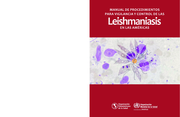
El manual tiene por objetivo ampliar los conocimientos sobre la enfermedad y aspira a ser una herramienta de trabajo para que el personal de salud y los equipos de gestión presten apoyo a los ministerios de salud en sus respectivos procesos de estructuración de los servicios de salud, así como en
...
El documento ayudará a los países a identificar las áreas de necesidades y determinar cómo se puede reforzar la red de entomología, especialmente en el contexto de un sistema de salud descentralizado. Las recomendaciones también tienen en cuenta los diferentes grados de desarrollo y las difere
...
1 billion people are at risk of infection with leishmaniasis, a neglected disease strongly linked to poverty. There’s no single, simple cure: current treatments are complex and need to be adapted to the form of the disease and geographical region.
Leishmaniasis is a parasitic disease caused by the Leishmania parasite. This parasite typically lives in infected sand flies. You can contract leishmaniasis from a bite of an infected sand fly.
The sand flies that carry the parasite typically reside in tropical and subtropical environments. Fatal
...
Cutaneous Leishmaniasis (CL) is a painful disease that exerts a serious toll on societies around the world that are afflicted by it. Although not life-threatening, the skin ulcers and scars it causes can lead to isolation and psychosocial pathologies due to social stigma, and its occurrence is often
...

La implementación de la presente Norma Nacional y Manual de Procedimientos Técnicos de la Leishmaniasis en el país, permitirá al personal de salud del sistema público y privado fortalecer sus capacidades técnicas y operativas a través de la estandarización y unificación de estrategias y acc
...

Leishmaniasis is among the most neglected diseases. The most common form is cutaneous leishmaniasis that forms lesions on the skin.
The only treatment available for cutaneous leishmaniasis is highly toxic. In some cases, patients have died because of the treatment, even though cutaneous leishmania
...

Rreport of a WHO Consultative Meeting Kolkata India 2012
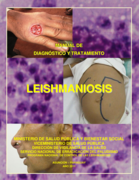
National Guideline
La leishmaniasis es un problema creciente de salud pública en el contextomundial. En Colombia, la situación es de alarma debido al incremento de casos de leishmaniasis cutánea que se viene registrando desde 2003 y el cambio en el patrón epidemiológico dado por la aparición de nuevos focos, el
...
