
Filter
193
Featured
1
Language
Document type
76
31
27
21
8
7
6
4
3
3
3
2
2
Countries / Regions
125
16
9
6
3
3
3
2
2
1
1
1
1
1
1
1
1
1
1
1
1
Authors & Publishers
Publication Years
Category
157
4
3
3
2
2
1
1
1
1
1
1
1
1
1
1
1
Toolboxes
39
25
23
18
15
15
9
9
7
7
6
5
3
3
3
3
2
2
2
2
1
1
1

Approximately 80% of the 463 million adults worldwide with diabetes live in low-income and middle-income countries (LMICs). A major obstacle to designing evidence-based policies to improve diabetes outcomes in LMICs is the scarce availability of nationally representative data on the current patterns
...
What is already known about this topic?
Roughly 80% of the global disease burden caused by diabetes comes from low-and-middle income countries, and 60% of diabetics are located in Asia; 6 of the top 10 countries with the highest prevalence of diabetes are in Asia.
Strict storage recommendations for insulin are difficult to follow in hot tropical regions and even more challenging in conflict and humanitarian emergency settings, adding an extra burden to the management of people with diabetes. According to pharmacopeia unopened insulin vials must be stored in a
...

While epidemiological data for type 1 diabetes (T1D) in low/middle-income countries, and particularly low-income countries (LICs) including Liberia is lacking, prevalence in LICs is thought to be increasing. T1D care in LICs is often impacted by challenges in diagnosis and management. These challeng
...
The burden of diabetes is high and increasing globally, and in developing economies like India, mainly fueled by the increasing prevalence of overweight/obesity and unhealthy lifestyles. The estimates in 2019 showed that 77 million individuals had diabetes in India, which is expected to rise to over
...
The United Nations acknowledged diabetes as an epidemic of the 21st century. Global trends demonstrate a continuing growth in its prevalence at approximately 2.5 % per year. The aim of the study was to analyse selected epidemiological factors for type 2 diabetes mellitus in Poland, Central Europe
...
Given that only 1.52 million of the 8.75 million people living with type 1 diabetes around the world in 2022 were less than 20 years old, the lack of data available for adult populations presents a stark gap in the research. Without rapid diagnosis and appropriate treatment, type 1 diabetes leads to
...

The IDF Guide for Diabetes Epidemiology Studies has been developed to create standardized epidemiological methods in diabetes studies to enable researchers to conduct high-quality studies that generate robust data
Brazzaville – Africa is expected to experience the highest increase in diabetes globally. The number of people suffering from the disease is predicted to rise to 55 million by 2045—a 134% spike compared with 2021. At 70%, the continent also has the world’s highest number of people who do not k
...
This short guide to the Global Diabetes Compact explains what diabetes is and why action to improve prevention efforts, diagnosis and treatment is so urgent. It outlines the key asks associated with the Compact and emphasizes that increasing access to insulin, strengthening health systems and meanin
...
Diabetes is a major public health problem in the Americas and worldwide, demanding special attention and integrated response. It is estimated that more than 62 million adults are living with diabetes in the Americas. The projections show that diabetes prevalence will continue to increase to at least
...
The World Health Organization (WHO) Global Diabetes Compact (GDC) was created as a global initiative to improve diabetes prevention and care, and to contribute to the global targets to reduce premature mortality due to noncommunicable diseases by one-third by 2030.

Diabetes is a significant public health issue that affects approximately one in 10 adults globally, with type 2 diabetes accounting for 90–95% of cases. This chronic condition causes considerable morbidity and mortality and is growing in impact, with cases projected to rise from 537 million in 202
...
Approximately 80% of the 463 million adults worldwide with diabetes live in low-income and middle-income countries (LMICs). A major obstacle to designing evidence-based policies to improve diabetes outcomes in LMICs is the scarce availability of nationally representative data on the current patterns
...

Since the discovery of insulin nearly 100 years ago, advances in diabetes treatments and therapies have transformed the lives of people
with diabetes (PwD), notably reducing the daily burden of its management.
Newer technologies, including those driven by artificial intelligence, have the potentia
...
It is now evident that we are living in a world of diabetes pandemic—despite the scientifically sound estimates, worldwide diabetes prevalence has been exceeding even the most pessimistic projections from the past. If we go back in history, it was estimated in 2004 that diabetes prevalence in 2030
...

The document "Management of Type 2 Diabetes Mellitus" provides comprehensive guidelines for the diagnosis, prevention, and treatment of type 2 diabetes in adults. It emphasizes the importance of individualized glycemic targets, lifestyle interventions like diet and exercise, and the use of medicatio
...
The uploaded document explores the Mediterranean diet and physical activity as effective strategies to prevent and manage non-communicable diseases (NCDs). It discusses the diet's nutritional components, such as olive oil, fruits, and vegetables, and their health benefits, including reduced risk of
...

The video titled "Physical Activity and Chronic Disease Prevention" emphasizes the importance of regular physical activity in reducing the risk of chronic diseases. It discusses how engaging in consistent exercise can help prevent conditions such as heart disease, diabetes, and certain cancers. The
...
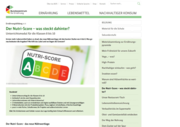
Die Webseite des Bundeszentrums für Ernährung (BZfE) bietet ein Unterrichtsmodul für die Sekundarstufe ab Klasse 8 an, das den Nutri-Score thematisiert. Dieses Material soll Schülerinnen und Schüler befähigen, den Nutri-Score beim Einkauf differenziert und reflektiert zu nutzen. Es umfasst Leh
...
