
Filter
28
Featured
Language
Document type
15
3
2
2
1
1
1
1
1
1
Countries / Regions
11
2
1
1
1
Authors & Publishers
Publication Years
Category
15
6
1
Toolboxes
11
10
8
2
2
1
1
1
Monitoring air quality (for example collecting continuous and quality data) is integral and critical to detecting air pollutants and to ensuring information sharing with the public, policy-makers, and regulatory compliance. Air quality monitoring is also one of the first and necessary steps for quan
...
La Hoja de Ruta del Grupo Regional de Expertos en AirQ+ representa un hito para la región de las Américas en la integración de la evidencia científica en la toma de decisiones sobre calidad del aire y salud pública. Fruto de un proceso de construcción colectiva que reunió a más de 100 especi
...
More than a quarter of the global population still cook meals over open fires and/or on simple stoves fuelled by firewood, agricultural waste, dried dung, charcoal, and coal. This practice results in the emission of harmful and dangerously high levels of household air pollution.
Exposure to this h
...
Exposure to air pollution has significant adverse health effects, leading to nearly 1 in every 8 deaths globally. Air pollution affects all age groups, from unborn children to older people, in both high- and low-income nations.

WHO, as the coordinating authority on international health, supports countries in protecting public health through evidence-based policies and actions. Considering the significant health burden and the multiple potential benefits of interventions, the WHO Air Quality, Energy and Health Unit aims to
...
By 2030, without accelerated scale-up of prevention and treatment coverage there may be an estimated 320 000 new HIV infections and 7.6 million people living with HIV
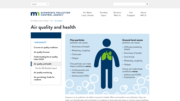
Exposure to air pollution can affect everyone’s health. When we breathe in air pollutants, they can enter our bloodstream and contribute to coughing or itchy eyes and cause or worsen many breathing and lung diseases, leading to hospitalizations, cancer, or even premature death.
Minnesota’s ai
...
The Our World in Data webpage on air pollution provides an extensive overview of the global impact of air pollution on health and the environment. It presents data on sources of pollution, such as industry, vehicles, and domestic energy use, and highlights the associated health risks, including resp
...
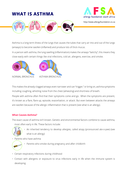
Asthma is a long term illness of the lungs that causes the tubes that carry air into and out of the lungs (airways) to become swollen (inflamed) and produce lots of thick mucus.
In a person with asthma, the lung swelling (inflammation) makes the airways “twitchy”; this means they close easily
...

Asthma is a chronic (long-term) lung condition that affects your airways or bronchial tubes. It can cause your airways to narrow and their lining to swell and to produce extra mucus, which makes it more difficult to breathe. The narrowing of the airways causes you to feel short of breath, wheeze, or
...
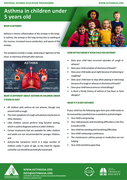
Asthma is chronic inflammation of the airways in the lungs.
In asthma, the airways in the lung narrow due to swelling of
the mucosa, increased mucus production, and spasm of the airways.
The World Health Organization (WHO) highlights the significant health risks associated with household air pollution, primarily resulting from the use of inefficient and polluting fuels and technologies for cooking, heating, and lighting. In 2020, approximately 2.1 billion people—about one-third of
...
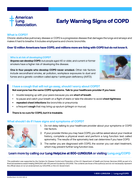
The document titled "Early Warning Signs of COPD" from the American Lung Association outlines what COPD is, its risk factors, and the importance of recognizing early symptoms such as persistent cough, breathlessness, and frequent chest infections. It emphasizes the need for early consultation with a
...
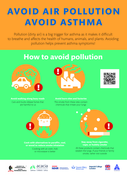
Pollution (dirty air) is a big trigger for asthma as it makes it difficult to breathe and affects the health of humans, animals, and plants. Avoiding pollution helps prevent asthma symptoms!

Asthma is a chronic lung condition that affects your airways or bronchial tubes. It causes your airways to narrow, swell and produce extra mucus, which in turn makes it more difficult to breathe. The narrowing of the airways causes you to feel short of breath, wheezy or trigger fits of coughing.

What is asthma?Lets learn together about asthma as Dr.Shema Christine explains to depth about asthma
Video about asthma:
What is asthma?
Lets learn together about asthma as Dr.Shema Christine explains to depth about asthma
Long-term exposure of humans to air pollution enhances the risk of cardiovascular and respiratory diseases. A novel Global Exposure Mortality Model (GEMM) has been derived from many cohort studies, providing much-improved coverage of the exposure to fine particulate matter (PM2.5). We applied the GE
...

Although air pollution is well known to be harmful to the lung and airways, it can also damage most other organ systems of the body. It is estimated that about 500,000 lung cancer deaths and 1.6 million COPD deaths can be attributed to air pollution, but air pollution may also account for 19% of all
...
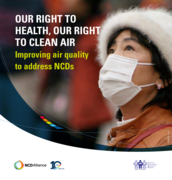
This policy brief explores the impact of air pollution on health and address the air quality issue in the response to noncommunicable diseases (NCDs). It also provides key actions that policy makers, NGOs and health professionals can take to ensure that every one can breathe clean air.
The article "Air Pollution: The Emergence of a Major Global Health Risk Factor" discusses the significant health impacts of air pollution, a leading risk factor for global mortality. It highlights the adverse effects of fine particulate matter (PM2.5) and tropospheric ozone, linking them to cardiova
...
