
Filter
56
Featured
5
Language
Document type
29
8
6
4
3
3
1
1
1
Countries / Regions
7
3
3
2
2
1
1
1
1
Authors & Publishers
Publication Years
Category
8
6
3
1
1
1
1
1
1
Toolboxes
12
9
8
5
4
4
4
3
3
3
3
3
2
2
2
2
1
1
1
1
1
1
1
1
1
1
1
1
1
1

Early Adolescent Skills for Emotions (EASE) is an evidence-based group psychological intervention to help 10–15-year-olds affected by internalizing problems (e.g. stress and symptoms of anxiety, depression) in communities exposed to adversity. Published by the World Health Organization (WHO) and U
...

he UNFPA “Programmatic guidelines: Cash and Voucher Assistance in Sexual and Reproductive Health programming in Emergencies” explains how CVA can be effectively integrated into humanitarian responses to help women, girls, and other vulnerable groups access lifesaving and comprehensive SRH servic
...

Building on the WHO guidelines for disclosure to children up to age 12 in 2011, this implementation guidance provides evidence on existing interventions that support children and adolescents living with HIV in the process of disclosure. It includes interventions that focuses on safe disclosure, as w
...
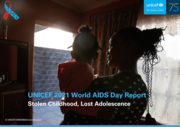
In order to ramp up our efforts in the fight against AIDS, there is a need for more concentrated focus on adolescents and young people
AIDS Research and Therapy, vol.22 (2025) article no. 48. A 2025 research article reports on task shifting HIV disclosure support from clinical staff to caregiver peer supporters — indicating a scalable model for community worker involvement in disclosure counseling, which is key for adherence and
...
Treatment and care in children and adolescents
recommended
WHO recommends that infants born to mothers living with HIV are tested for HIV by two months of age, during breastfeeding, and when breastfeeding ends given continued risk of transmission during this period. Older children, especially offspring and siblings of persons infected with HIV, should also
...
Eastern and Southern Africa
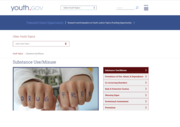
The Youth.gov webpage on "Substance Use/Misuse" provides information and resources about preventing and addressing substance abuse among youth. It highlights risk factors, prevention strategies, and support programs designed to reduce substance use and its negative impacts on young people. The site
...
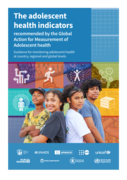
This document is an interactive guide for the uniform collection, compilation, reporting, and use of adolescent health data. See the details of each section below and click on the blocks to jump to the relevant section.

Adolescence is a critical stage in life for physical, cognitive and emotional development, shaping future health and well-being. Comprehensive measurement of adolescent health is essential to prioritize health issues, guide interventions and track progress. However, global, regional and national ado
...
Jordan has more than 3 million migrants (one third of the country's total population) and has witnessed three major waves of refugees in its modern history: Palestinians (1948 and 1967), Iraqis (1990 and 2000) and Syrians (since 2010). Under its commitment to achieving universal health coverage (UHC
...
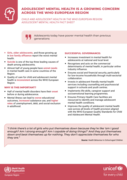
CHILD AND ADOLESCENT HEALTH IN THE WHO EUROPEAN REGION:
ADOLESCENT MENTAL HEALTH FACT SHEET

Evidence- and rights-based national policies, guidelines and legislation play a key role in improving sexual, reproductive, maternal, newborn, child and adolescent health (SRMNCAH), framing the enabling environment for equitable provision and accessibility of quality services. The SRMNCAH policy sur
...

Adolescents and young adults aged 10-24 remain underserved in the global response against HIV. Combination prevention, treatment and care programmes use a mix of evidence-based interventions to meet the current HIV prevention needs of adolescents and young adults. However, there needs to be a focus
...
Research Square https://doi.org/10.21203/rs.3.rs-4540081/v1

A Clinical Guideline for the Diagnosis and Treatment of Drug-susceptible TB in Children and Adolescents
in South Africa. This new guidance is aligned with the updated WHO guidelines but has been adapted specifically for the South African context.
The intention of this publication is to provide g
...
Presentation Slides
Asthma is the most common chronic respiratory disease among school-going adolescents worldwide. However, the burden of severe asthma is highest in Sub-Saharan Africa. This study aimed to explore teachers’ perceptions of asthma care across six African countries. We conducted focus group discussions
...
Background
Asthma remains highly prevalent, with more severe symptoms in low-income to middle-income countries (LMICs) compared with high-income countries. Identifying risk factors for severe asthma symptoms can assist with improving outcomes. We aimed to determine the prevalence, severity and ris
...
