
Filter
64
Breadcrumb:
Outbreak Control
Featured
3
2
Language
Document type
22
12
8
7
7
3
2
1
1
1
Countries
19
8
4
3
3
2
1
1
1
1
1
Authors & Publishers
Publication Years
Category
4
2
1
1
1
1
Toolboxes
13
11
9
6
5
4
4
4
4
3
3
3
2
2
2
2
2
2
1
1
1
1
1
1
1
1
1
1
1
1
1
1
1
1
1
1
1
1
1
1
1
1

Go.Data is a software for contact tracing and data collection in outbreak response developed by WHO in collaboration with partners in the Global Outbreak Alert and Response Network (GOARN). Go.Data focuses on case and contact data, including laboratory data, and on contact follow-up and visualizatio
...

EWARS is a surveillance system developed by the World Health Organization to detect and respond quickly to disease outbreaks in emergency settings where normal health systems are disrupted. It allows health facilities to report priority diseases on a regular basis and generates alerts when unusual p
...

Building true health security in a global age. Findings and recommendations of the Global Council. In landmark findings based on two years of research and convenings around the world, the new report shows that high levels of inequality are linked to outbreaks becoming pandemics and that inequality i
...
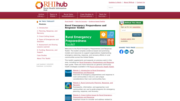
The Rural Emergency Preparedness and Response Toolkit provides a comprehensive overview of how rural and tribal communities can prepare for, respond to, and recover from emergencies and disasters. It explains the unique challenges rural areas face—such as limited resources, geographic isolation, a
...

The WHO Health Security Learning Platform (HSLP) is an online training hub that provides courses and toolkits to strengthen countries’ capacities in public-health preparedness, emergency response, and implementation of the International Health Regulations (IHR). It offers self-paced modules and pr
...
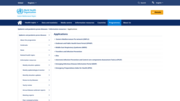
The page lists and describes a number of mobile apps and digital tools provided by WHO/EMRO to support prevention, monitoring and response to epidemic- and pandemic-prone diseases. These include apps focused on diseases such as Middle East Respiratory Syndrome (MERS), Zika virus disease, travel-rel
...

This chapter describes the step-by-step process required in performing an epidemiologic field investigation. The 10 steps covered here build on and further refine the steps that have been taught traditionally in the Centers for Disease Control and Prevention's (CDC) annual Epidemic Intelligence Serv
...
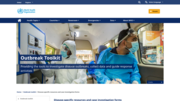
These pages contain links to critical guidelines, technical documents, tools and resources needed to investigate and respond to outbreaks.

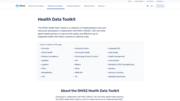
The DHIS2 Health Data Toolkit is a collection of implementation tools and resources developed in collaboration with WHO, UNICEF, CDC and other global health partners to improve the quality and effective use of integrated health information systems at national scale.

The Outbreak Toolkit is specifically designed for epidemiologists and field investigators operating at the frontline of complex emergencies and in resource-limited settings. It provides a comprehensive, up-to-date toolkit for investigating both infectious disease outbreaks and non-infectious events
...

The document “Strengthening the global architecture for health emergency prevention, preparedness, response and resilience” presents a report by the Director-General of the World Health Organization (WHO) to the World Health Assembly on global efforts to improve preparedness and response to heal
...

The document “Mpox Continental Response Plan 2.0” outlines the strategy developed by the Africa Centres for Disease Control and Prevention (Africa CDC) in collaboration with the World Health Organization (WHO) to respond to the ongoing mpox outbreak across Africa. The plan describes coordinated
...

The GHEC framework is designed to provide guiding principles for standardizing health emergency workforce structures to strengthen the capacity of countries in responding to health emergencies, and to enhance collaboration between countries by better connecting regional and global surge response mec
...
This multi-hazard Health Emergency Alert and Response Framework provides guidance for coordinating emergency response in countries, under the global Health Emergency Preparedness, Resilience and Response (HEPR) framework. It outlines the public health functions, coordination systems and actions need
...
A Simulation Exercise (SimEx) simulates an emergency situation to which a described or simulated response is made. The purpose of a simulation exercise is to validate and enhance preparedness and response plans, procedures and systems for all hazards and capabilities. WHO defines different types of
...

This toolkit lays out a framework for a waterborne disease investigation and consolidates resources to assist investigation activities.
The Waterborne Disease Outbreak Investigation Toolkit was designed to assist state and local health departments in conducting waterborne disease outbreak invest
...

Strengthening global health security to protect the world against future epidemics and pandemics requires well-tested and decentralized capacities for the local detection and rapid containment of outbreaks of infectious disease. For such capacities to translate into effective response actions, ind
...
The document provides guidance and tools for training health professionals in outbreak investigation. It explains why such training is essential, outlines the methodology for conducting short, practical courses, and describes how lectures, case studies, and exams are used to build skills needed for
...

The paper “Artificial Intelligence for Public Health Surveillance in Africa: Applications and Opportunities” examines how artificial intelligence (AI) can improve public health systems across Africa, particularly in low-resource settings. It explores how machine learning and other AI techniques
...
