
Filter
33
Breadcrumb:
Open WHO
Featured
5
Language
Document type
33
Countries
6
3
3
3
1
1
1
1
1
1
1
1
Authors & Publishers
Publication Years
Category
19
6
5
4
3
2
2
2
1
1
1
1
1
1
1
1
1
1
1
1
1
1
1
Toolboxes
18
8
5
4
3
3
2
2
2
2
2
1
1
1
1
1
1
1
1
1
1
1
1
1
1
1
1
1
1
1
1
1
1
1
1
1
1
1
1
1
1
1
1
1
1
1
1
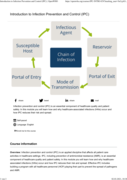
Online Course. Infection prevention and control (IPC) is an essential component of healthcare quality and patient safety. In this module you will learn how and why healthcare-associated infections (HAIs) occur and how IPC reduces their risk and spread.
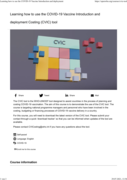
The CVIC tool is the WHO-UNICEF tool designed to assist countries in the process of planning and costing COVID-19 vaccination. The aim of this course is to demonstrate the use of the CVIC tool. The course is targeting national programme managers and personnel who have been involved in the costing, b
...
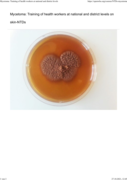
Mycetoma is a chronic, progressively destructive infectious disease of the subcutaneous tissues, affecting skin, muscle and bone. Mycetoma occurs in tropical and subtropical environments characterized by short rainy seasons and prolonged dry seasons that favour the growth of thorny bushes. Global bu
...
This e-learning course will provide the knowledge and skills necessary to support staff in countries in scaling-up targeted TB preventive treatment in their national TB strategy or supporting staff who seek guidance on implementation.
The main focus of this e-course is programmatic; clini
...
This course will provide you with the knowledge and skills needed to implement WHO-recommended TB tests and algorithms. It includes the latest recommendations for novel tests for TB diagnosis and detection of drug resistance, as well as the most recent WHO policy guidance for the use of those tests.
...
In this course, you will learn about the different categories of waste and the process for waste management. Health care waste includes all waste generated by health, research and laboratory facilities in the course of providing health care services. Health care waste in a facility should be managed
...
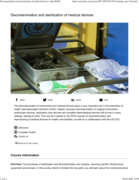
The decontamination of instruments and medical devices plays a very important role in the prevention of health care-associated infections (HAIs). Indeed, improper decontamination of surgical instruments, endoscopic devices, respiratory care devices and reusable haemodialysis devices still occurs in
...
Overview: In this course, you will learn about the causes of unsafe injection practices, how to safely give injections, and how to safely dispose of needles and other sharps. You will also learn what to do when needle-stick injuries occur, how to manage potential exposures, and ways to protect yours
...
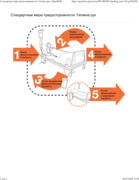
Большинство инфекций, угрожающих здоровью, можно предотвратить благодаря хорошей гигиене рук - мытью рук в нужное время и правильным способом. Руководящие принцип
...
Coronaviren sind eine grosse Familie von Viren, von denen bekannt ist, dass sie Krankheiten verursachen, die von Erkaeltungen bis hin zu schwereren Erkrankungen wie dem Atemwegssyndrom im Nahen Osten (MERS) und dem schweren akuten Atemwegssyndrom (SARS) reichen.
Ein neuartiges Coronavirus (COVID-
...
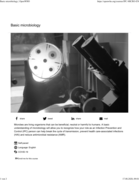
Microbes are living organisms that can be beneficial, neutral or harmful to humans. A basic understanding of microbiology will allow you to recognize how your role as an Infection Prevention and Control (IPC) person can help break the cycle of transmission, prevent health care-associated infections
...
Health workers participating in pandemic response are exposed to many different occupational risks to health and safety. These include: COVID-19 infection, illness, and transmission to others; fatigue from working longer hours and heavy workload, insufficient sleep or rest, dehydration, and inadequa
...
The Clinical Management of Patients with COVID-19 course series is developed for healthcare workers during the COVID-19 pandemic. The course provides crucial knowledge necessary to provide safe, effective quality patient care. Presentations address all aspects of clinical management, including facil
...
