
Filter
568
Featured
2
5
Language
Document type
248
79
64
42
35
22
16
14
12
10
10
8
7
1
Countries
353
64
16
12
8
6
4
4
4
3
3
2
2
2
2
1
1
1
1
1
1
1
1
1
1
1
1
1
Authors & Publishers
Publication Years
Toolboxes
540
10
3
3
3
2
1
1
1
Asthma is a common breathing condition. Chances are that at least one in every fifth person will have it. People with asthma might have a cough, or wheeze and a feeling of tightness in their chests. A group of researchers from the United Kingdom teamed up with seven African countries to learn about
...

Time has seen management for Cystic Fibrosis (CF) advance drastically, most recently in the development of the disease-modifying triple combination therapy ivacaftor/tezacaftor/elexacaftor. There is currently limited evidence regarding both the global epidemiology of CF and access to this transforma
...

This companion document to Ending the neglect to attain the Sustainable Development Goals: a road map for neglected tropical diseases 2021-2030 ("the road map") aims to support a range of stakeholders - including countries in which neglected tropical diseases (NTDs) are endemic, international organi
...
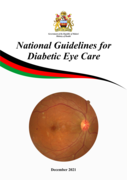
Diabetes mellitus (DM) is a global epidemic with significant morbidity. Diabetic
retinopathy (DR) is the specific microvascular complication of DM and affects 1 in 3 persons with DM. DR remains a leading cause of vision loss in working adult populations. Patients with severe levels of DR are report
...
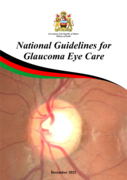
Glaucoma is a leading cause of irreversible blindness globally. In Malawi, glaucoma accounts for 15.8% of the blindness among people aged 50 years and above. Blindness from glaucoma is preventable with early detection and timely treatment. However, glaucoma management remains a challenge to eye care
...
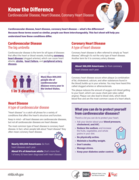
Cardiovascular disease, heart disease, and coronary heart disease may sound similar but they are not one in the same. This fact sheet will help you understand how these conditions differ.
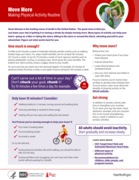
Moving more is one of the easiest ways you can lower your risk of getting heart disease. Not sure where to begin? This fact sheet can give you ideas on how to move more and stay motivated while you make physical activity part of your healthy routine.

Atlanta, GA—New stroke guidelines strongly encourage clinicians to prescribe antithrombotic therapy, including antiplatelet medications or anticoagulant medications, for nearly all at-risk patients who don’t have contraindications.

Interested in leading a more heart healthy lifestyle? Small steps go a long way especially when you connect with others to stay motivated. This fact sheet suggests several lifestyle changes you can make starting today and ways to get your friends, family, and colleagues involved.

On this website you can find information on high blood pressure, how to lower it and how blood pressure medicines work.

Atherosclerotic lower-extremity peripheral artery disease (PAD) is increasingly recognized as an important cause of cardiovascular morbidity and mortality that affects more than 230 million people worldwide. Traditional cardiovascular risk factors, including advanced age, smoking, and diabetes, are
...

Background
Cardiovascular diseases (CVDs) are one of the global leading causes of concern due to the rising prevalence and consequence of mortality and disability with a heavy economic burden. The objective of the current study was to analyze the trend in CVD incidence, mortality, and mortality-to-
...
Global cardiovascular disease (CVD) burden is high and rising, especially in low-income and middle-income countries (LMICs). Focussing on 45 LMICs, we aimed to determine (1) the adult population’s median 10-year predicted CVD risk, including its variation within countries by socio-demographic char
...
Objective: To identify gaps in national stroke guidelines that could be bridged to enhance the quality of stroke care services in low- and
middle-income countries.
Methods: We systematically searched medical databases and websites of medical societies and contacted international organizations.
Co
...

Approximately 80% of the 463 million adults worldwide with diabetes live in low-income and middle-income countries (LMICs). A major obstacle to designing evidence-based policies to improve diabetes outcomes in LMICs is the scarce availability of nationally representative data on the current patterns
...

Approximately 80% of the 463 million adults worldwide with diabetes live in low-income and middle-income countries (LMICs). A major obstacle to designing evidence-based policies to improve diabetes outcomes in LMICs is the scarce availability of nationally representative data on the current patterns
...

While epidemiological data for type 1 diabetes (T1D) in low/middle-income countries, and particularly low-income countries (LICs) including Liberia is lacking, prevalence in LICs is thought to be increasing. T1D care in LICs is often impacted by challenges in diagnosis and management. These challeng
...
The burden of diabetes is high and increasing globally, and in developing economies like India, mainly fueled by the increasing prevalence of overweight/obesity and unhealthy lifestyles. The estimates in 2019 showed that 77 million individuals had diabetes in India, which is expected to rise to over
...
The United Nations acknowledged diabetes as an epidemic of the 21st century. Global trends demonstrate a continuing growth in its prevalence at approximately 2.5 % per year. The aim of the study was to analyse selected epidemiological factors for type 2 diabetes mellitus in Poland, Central Europe
...
Diabetes mellitus (DM) is one of the commonest chronic diseases worldwide. Self-Management Education (SME) is regarded as a critical element of treatment for all people with diabetes, as well as those at risk of developing the condition. While a great variety of diabetes self-management education (D
...
