
Filter
132
Featured
20
20
Language
Document type
54
50
13
5
3
2
2
2
1
Countries
6
2
1
1
1
1
1
1
1
1
1
Authors & Publishers
Publication Years
Toolboxes
23
2
2
1
1
1
1
1
The ISUOG President and Board of Trustees express their sympathy, encouragement and support towards all health professionals fighting the COVID-19 virus. A free webinar series and other clinical resources have been made available to provide learning opportunities and practical guidance for Ob/Gyn an
...

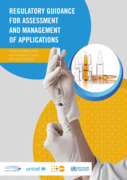
Pharmaceutical regulators are at the forefront of ensuring that only safe and effective medicines are authorized and available in the market. This document builds on the recommendations in the above publication and has been prepared to specifically assist national medicines regulatory authorities to
...
We bring care to life. Engaging, crystal clear, short, and practical, our videos enable learners of all levels to easily understand, and remember critical teaching points.
A Book for Midwives - draft chapters
This film explains the importance of screening, early detection and treatment of cervical cancer. This film is for use in skilled health worker training. Available in English, French, Somali and Swahili
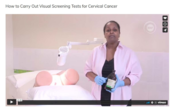
This film explains the importance of simple screening tests to identify cervical cancer. It shows how to carry out two visual inspection tests – they are called – Visual Inspection with Acetic Acid (or VIA) and Visual Inspection with Lugol’s Iodine (or VILI).
This film is for use in skilled h
...
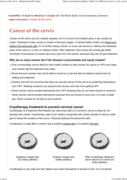
A Book for Midwives > Chapter 20: The Pelvic Exam: how to examine a woman's vagina and womb > Cancer of the cervix
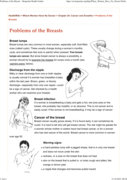
Where Women Have No Doctor > Chapter 24: Cancer and Growths > Problems of the Breasts
The United Nations Commission on Life-Saving Commodities (UNCLSC, 2012) defined 13 health products to end preventable deaths of woman and children. One of those 13 products is the neonatal resuscitator, is indispensable medical device to save newborns from asphyxia at birth. For the efficient use of
...

Surgical site infection (SSI) is the most common postoperative complication worldwide. WHO guidelines to prevent SSI recommend alcoholic chlorhexidine skin preparation and fascial closure using triclosan-coated sutures, but called for assessment of both interventions in low-resource settings. This s
...
Women Cancer
recommended
MEDBOX Issue Brief No.17, 21 November 2021
Women's cancers have a significant impact on women's health worldwide. According to the World Health Organisation, nearly three million women are diagnosed with breast or cervical cancer every year. In this Issue Brief you will find more information.

An essential resource that helps a community understand, treat, and prevent many health problems that affect women. Topics include reproductive health, violence, mental health, HIV, and more.
Updated 17 April 2020
Improving care for women during pregnancy and around the time of childbirth to prevent and treat pre-eclampsia and eclampsia is a necessary step towards the achievement of the health targets of the Sustainable Development Goals (SDGs). Efforts to prevent and reduce morbidity a
...
These guidelines provide evidence-based guidance on the use of peripartum antiviral prophylaxis in HBsAg-positive pregnant women for the prevention of mother-to-child transmission of HBV.
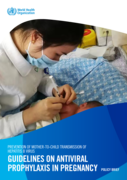
WHO estimates that in 2015, 257 million people were living with chronic hepatitis B virus (HBV) infection worldwide, and that 900 000 died from HBV infection, mostly through the development of cirrhosis and hepatocellular carcinoma. Worldwide, the majority of persons with chronic hepatitis B infecti
...
The primary audience of these recommendations includes healthcare providers who are responsible for developing national and local health protocols (particularly those related to hypertensive disorders of pregnancy), and those directly providing care to pregnant women and their newborns, including mi
...
